
Uganda Chimpanzee Safaris If mountain gorillas are Uganda’s kings, then chimpanzees are its poets. They swing through trees with a speed that makes your neck hurt. They use sticks to fish for termites. They greet each other with soft pants and hugs after a fight. And when you stand under a fig tree in Kibale Forest while 30 chimpanzees feed 20 meters above you, you don’t feel like a tourist. You feel like you’ve been invited into a conversation that’s been happening for 6 million years.
Uganda holds the largest population of wild chimpanzees in East Africa. Over 5,000 chimps live here, and nowhere on the planet is it easier to see them in the wild than in Uganda’s rainforests. That’s why chimpanzee safaris have exploded . Travelers who already did gorilla trekking are now coming back for chimps. Because gorillas are power. Chimps are personality.
At Fuga Tours & Travel, we guide chimpanzee safaris often. Most clients combine chimps with Bwindi gorillas for the ultimate primate experience. This isn’t an outline. It’s the full story of what a Uganda chimpanzee safari actually feels like, where to go, what it costs, and why booking with Fuga makes the difference between hearing chimps in the distance and standing beneath them as they pass overhead.
Why Uganda is the Chimpanzee Capital of Africa
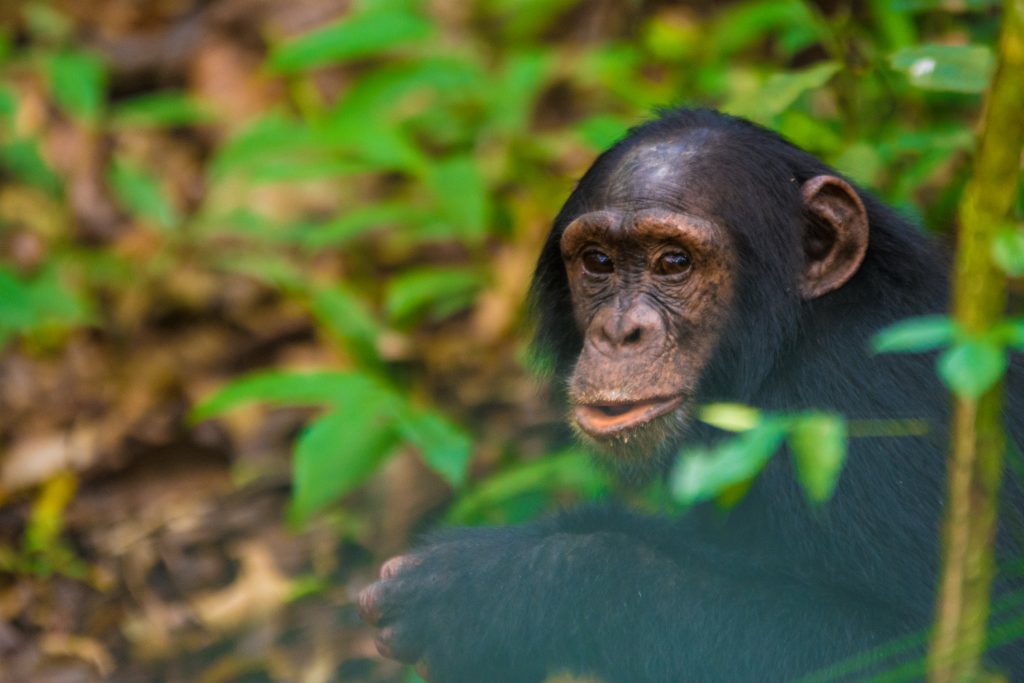
Tanzania has Gombe where Jane Goodall did her research. Congo has chimps in dense jungle you can’t reach. But Uganda has something rare: habituated chimpanzee communities that live close to the forest edge, in forests with good trails, and with a government that protects them seriously. Kibale National Park alone has 13 habituated chimp communities and 1,500 chimps.
That’s more chimps than the entire country of Rwanda has gorillas. In Kibale, researchers have studied these families for 30+ years. The chimps are used to humans. They don’t run when they see you. They go about their day while you watch, as long as you follow the rules. Budongo Forest in Murchison Falls National Park has the famous Sonso community. These chimps live in mahogany forest, so the trees are taller and the light is different. It feels like trekking through a cathedral.
Kyambura Gorge in Queen Elizabeth National Park is the opposite — chimps living in a deep gorge surrounded by savannah. You descend 100 meters into the earth, and suddenly you’re in a green world with chimps swinging above a river. Three completely different forests. One country. All within 5-6 hours of each other. That’s why Uganda wins for chimpanzee safaris
Kibale Forest: The Chimpanzee Capital of the World
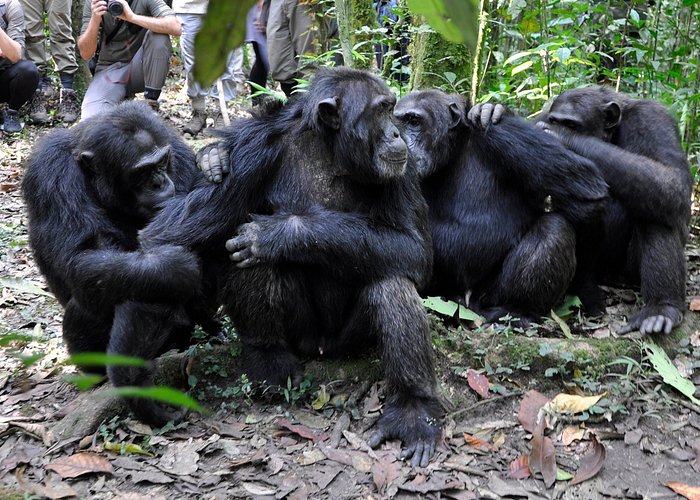
If there’s one place you must go for chimps in Uganda, it’s Kibale. 795 sq km of rainforest 6 hours west of Kampala, 1 hour from Fort Portal town. Kibale has 13 habituated communities. UWA runs two types of experiences here.
Chimpanzee trekking experience in Kibale
Costs $250 for foreign non-residents. You join a group of 8 people max. Trek 1-4 hours depending on where the chimps nested last night. One hour with them when you find them. The success rate is 95% because rangers track them every morning before you start. Fuga books this permit for you and emails the scanned UWA receipt so you know it’s real.
Chimpanzee Habituation Experience
Costs $300. This is Uganda’s secret weapon. Instead of 1 hour, you spend 4-6 hours with the chimps from the time they wake up at 6 a.m. until they build nests at noon. Only 6 people are allowed per day. You see them feeding, playing, mating, fighting, making nests. It’s less polished, more raw, more real.
Researchers and photographers choose CHIMP H like this because it’s the closest you’ll get to Jane Goodall’s work without being a scientist. Kibale Forest is wet. It rains 8 months a year. The ground is muddy. But the forest is alive. You’ll see 13 primate species here, including red colobus, L’Hoest’s monkey, and the rare golden monkey.
Between chimp sightings, your ranger will stop and show you strangler figs, medicinal plants, and birds like the Great Blue Turaco that looks like it flew out of a painting. Fuga lodges clients at Primate Lodge or Isunga Lodge, both 10 minutes from the park gate. You wake up to chimp calls. That’s the kind of detail that turns a safari into a memory.
Budongo Forest: Chimps in a Mahogany Cathedral
If Kibale feels wild and tangled, Budongo feels old and grand. This is the largest mahogany forest in East Africa, inside Murchison Falls National Park. The trees here reach 60 meters high. Light filters down in shafts. The forest floor is cleaner because fewer vines grow under mahogany.
Budongo’s Sonso chimp community has been studied since 1990. They’re calm. They’re used to tourists. Trekking here costs $120, cheaper than Kibale, and it pairs perfectly with Murchison’s game drives and Nile boat cruise. Imagine seeing lions in the morning, tracking chimps at midday, and watching hippos at sunset. That’s a Murchison and Budongo combo Fuga runs more often.
The chimps in Budongo live higher in the trees because mahogany is tall. So you’ll spend more time looking up. But when they come down to drink at a stream or feed on figs, you get face-to-face moments that are just as powerful as Kibale. Plus Budongo has fewer tourists, so your group of 8 feels like your private forest. Fuga’s tip: If you’re already doing Murchison Falls for wildlife, add Budongo chimps. It’s only 1.5 hours extra drive from the main gate. You get two of Uganda’s best experiences without extra flights.
Kyambura Gorge: Chimps Living in the Earth
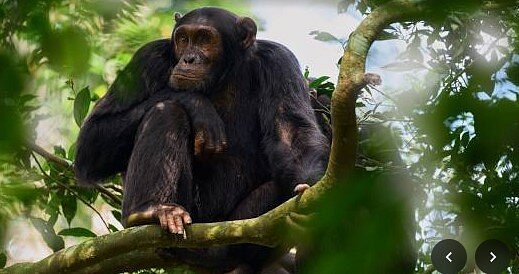
Kyambura is weird and wonderful. It’s called the “Valley of Apes” because a 16km gorge cuts through the savannah of Queen Elizabeth National Park. You drive past elephants and lions, then suddenly the ground drops away, and you’re descending into a green world 100 meters below the plains. The chimps here are different. They’re isolated. Their population is only 30-40 individuals because the gorge is small. Trekking costs $100, the cheapest chimp permit in Uganda.
The success rate is lower, about 70-80%, because the gorge is steep and chimps sometimes move to inaccessible cliffs. But when you do find them, the setting is unreal. You’re standing on the gorge floor looking up while chimps swing on vines above a river, with savannah elephants walking on the rim 100 meters above you. Fuga Tours only recommends Kyambura if you’re already in Queen Elizabeth for game drives. Don’t come here just for chimps because of the lower success rate. But if you’re combining Queen Elizabeth safari plus chimps, Kyambura adds magic that nowhere else in Africa has.
The Cost Reality: Cheaper Than Gorillas, Same Connection
This is what surprises people most. Gorilla permit = $800. Chimp permit = $250 in Kibale, $120 in Budongo, $100 in Kyambura. Same DNA. Same intelligence. Same 1-hour experience, or 4-6 hours if you choose habituation.
Why cheaper? Chimps are more numerous and more widespread. There are 5,000+ in Uganda vs 1,060 mountain gorillas total. But cheaper doesn’t mean less valuable. Chimps are more active, more vocal, more playful. Gorillas give you awe. Chimps give you laughter.
What Trekking Chimps Feels Like Compared to Gorillas
Clients always ask Fuga: “Which is better, gorillas or chimps?” The answer is they’re different. Gorillas are quiet. They move slowly. They sit. They stare. The power is in their presence. You feel small, humbled, honored. Chimps are noisy. They move fast. They swing. They scream. The power is in their energy. You feel excited, alive, curious. Gorilla trekking is meditation. Chimpanzee trekking is a concert. Physically, chimps are harder because they live in trees. You’re constantly looking up, walking faster to keep up, ducking branches. But the trek time is usually shorter — 1-3 hours vs 2-6 hours for gorillas — because rangers can hear chimps calling from far away.
Emotionally, chimps hit different. When a baby chimp looks at you and reaches for your camera, you’ll laugh out loud. When two males charge and scream to show dominance, your adrenaline spikes. When the group settles to feed, and the forest goes quiet except for chewing, you feel peace. Do both if you can. Fuga’s 7-day “Uganda Primates” tour does Kibale chimps Day 2 and Bwindi gorillas on Day 5. Clients say it’s like meeting two sides of themselves.
The Rules That Protect Chimps and Make Your Experience Better
Uganda Wildlife Authority has strict rules for a reason. Chimps share 98.7% of our DNA. That means our cough, our flu, our COVID can kill them. So when you trek, you follow 7-meter distance rules, you wear a mask if you have any cold symptoms, you don’t eat or drink near them, you turn away if you need to cough. These rules sound restrictive, but they make the experience better.
Because when you’re quiet, the chimps ignore you. They stop treating you like a threat and start treating you like a tree. That’s when you see real behavior. Mothers nursing. Males grooming each other. Babies learning. Fuga guides brief you properly before every trek. We give you masks, hand sanitizer, and we explain why “no eye contact” matters. Not because chimps are aggressive, but because direct staring is a challenge in chimp language. Look at their feet, not their eyes, and they’ll accept you.
Why Book Your Uganda Chimpanzee Safari With Fuga Tours
Chimp permits are easier to get than gorilla permits, but they still sell out in peak season, June- August and December- January. Kibale only allows 8 people per chimp group per day. The habituation experience only allows 6 people. Fuga has live access to UWA’s permit system.
We check availability daily. We’ve secured last-minute Kibale permits for clients who decided to come 3 days before travel. We also know which ranger is best for photography groups vs which ranger is best for first-timers who need patience. Transport matters more for chimps than people think.
Kibale is 6 hours from Kampala. Budongo is 5 hours to Murchison. Kyambura is 6 hours to Queen Elizabeth. Fuga uses 4×4 Land Cruisers with pop-up roofs, fridges, and charging ports. Our drivers know every shortcut and every police checkpoint. They speak English, and they love telling stories about growing up near these forests.
Lodges near Kibale fill fast because only 3 good lodges sit right at the park gate. Fuga reserves rooms 6 months ahead for peak season and holds options for last-minute clients. You don’t want to trek chimps then drive 1 hour on a rough road to a distant lodge when you’re tired. Most importantly,
Fuga understands that chimpanzee trekking is emotional. Our guides don’t rush you. If you want 10 extra minutes watching a mother and baby, they’ll ask the ranger. If you’re overwhelmed and need to step back, they’ll give you space. This is not a checklist tour. It’s a human experience.
The Truth About Timing and Seasons
Uganda’s chimp forests are wet year-round because they sit near the equator. But dry seasons June-September and December-February mean less mud, easier walking, and chimps feeding lower in trees where fruit is available. Book Fuga 4-6 months ahead for these months.
Rainy seasons March-May and October-November mean lush green forest, baby chimps being born, and 20-30% cheaper lodges. Trails are muddy but Fuga provides gumboots and porters for $15. Photographers love green season because the light is softer and the forest glows.
Chimps don’t migrate. They’re here 365 days. The only time we don’t recommend trekking is on heavy rain days when trails become dangerous. UWA will reschedule your permit if that happens. Fuga tracks the weather and warns you 24 hours ahead so you’re not surprised.
This Is Your Closest Connection to Wild
There are places you visit. Then there are places that visit you later, in your dreams. Uganda’s chimpanzee forests are the second kind. You’ll go home and tell friends about the silverback gorilla. But you’ll think about the chimp who looked at you, reached out, and touched a leaf near your hand like he was saying “look at this.” You’ll remember the sound of 20 chimps calling at dawn and how it made the hair on your arms stand up.
Chimpanzee trekking in Uganda is accessible. It’s affordable. It’s available year-round. And it connects you to something older than cities, older than countries, older than us.
Fuga Tours & Travel is ready to take you there.
Contact us and share your dates. We’ll check Kibale, Budongo, or Kyambura availability and send you real options in 30 minutes. No outlines. No pressure. Just honest guidance from people who know these forests like family. Come meet your cousins in Uganda’s rainforests. The chimps are waiting. And Fuga Tours will get you there.