
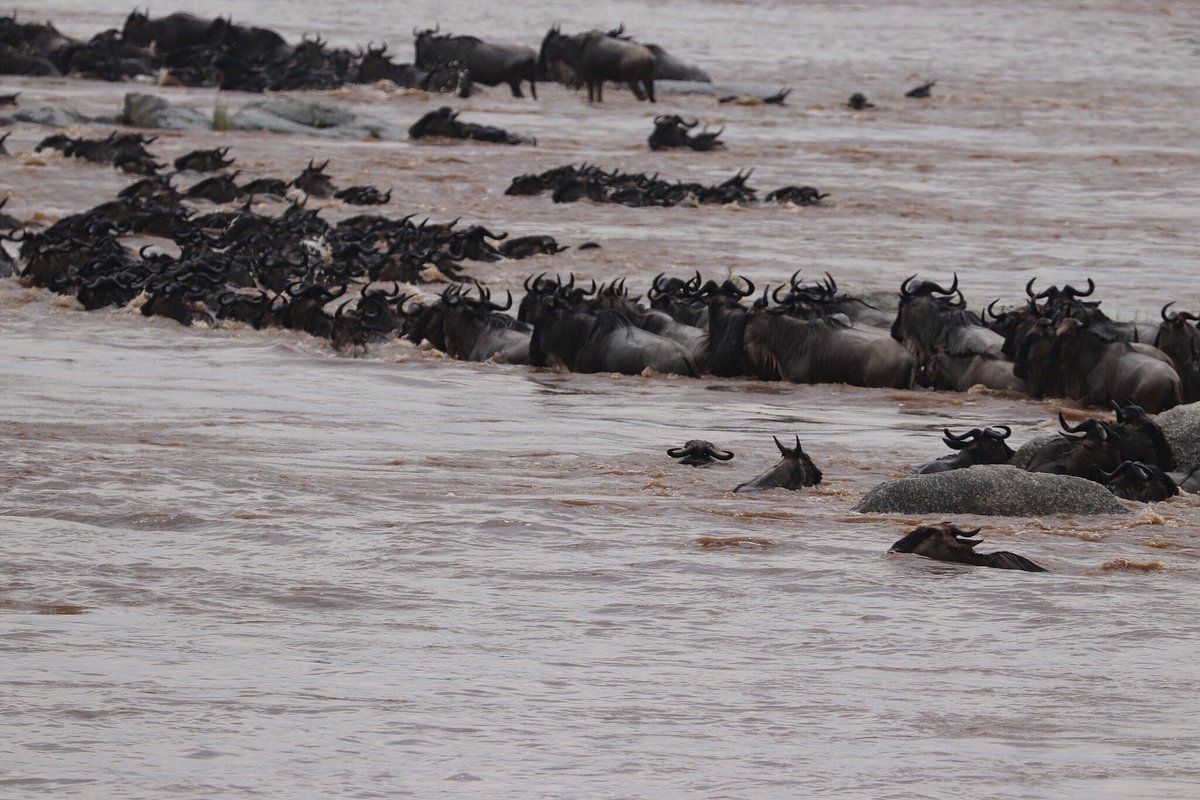
Mara River Crossing Points: Where Safari Guides Wait for the Great Wildebeest Migration in Kenya Every year, one of Africa’s most spectacular wildlife events unfolds across the plains of Tanzania and Kenya. Millions of wildebeest, accompanied by zebras and gazelles, move through the Serengeti-Mara ecosystem in search of fresh grazing and water. Among the most dramatic moments of this incredible journey are the famous Mara River crossings.
For wildlife enthusiasts, photographers, filmmakers, and safari travelers, witnessing thousands of wildebeest plunging into the Mara River is a dream experience. The river is home to large Nile crocodiles, while steep banks, strong currents, and enormous herds make every crossing unpredictable.
But where exactly do safari guides wait for the herds? Are there specific Mara River crossing points? Which areas offer the best opportunities to witness the migration?
The Mara River has several recognized crossing areas, particularly within the Mara Triangle and the wider Masai Mara ecosystem. Experienced safari guides monitor herd movements, inspect the riverbanks, and position their vehicles strategically while waiting for the animals to make their move.
In this detailed guide, we explore the major Mara River crossing areas, where guides commonly position themselves, what makes each location special, and how to plan a safari around this extraordinary natural spectacle.
Whether you are visiting Kenya for the first time or returning specifically for the Great Wildebeest Migration, understanding the Mara River crossing points can help you plan a more rewarding safari.
Understanding the Mara River and the Great Migration
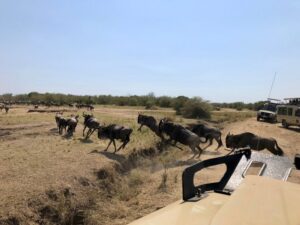
The Mara River is one of the most important waterways in the Serengeti-Mara ecosystem. It flows through Tanzania’s northern Serengeti before entering Kenya’s Masai Mara region.
The river plays an essential role in the annual Great Wildebeest Migration because it stands between migrating herds and important grazing areas.
During the migration season, large groups of wildebeest gather along the riverbanks. They may spend hours or even days moving back and forth before finally entering the water.
When a crossing begins, thousands of animals can follow one another into the river, creating a breathtaking wildlife spectacle.
However, crossings do not happen according to a fixed timetable. Herds may approach a riverbank, retreat, split into smaller groups, or cross at a completely different location.
This unpredictability is part of what makes the Mara River crossings so fascinating.
Why is the Mara River crossing so famous?
-
It is one of the most dramatic stages of the Great Wildebeest Migration.
-
The river contains large Nile crocodiles.
-
Strong currents and steep riverbanks create natural challenges.
-
Thousands of wildebeest may cross together.
-
Predators such as lions, hyenas, and crocodiles take advantage of migration movements.
-
It offers exceptional wildlife photography opportunities.
When Do Wildebeest Cross the Mara River?
The main Mara River crossing season generally falls between July and October, although the timing changes every year depending on rainfall, grazing conditions, and herd movements.
| Month | Migration activity |
|---|---|
| June | Herds move through the western and northern Serengeti |
| July | Some herds begin reaching the Mara River system |
| August | Major crossing activity often occurs |
| September | Crossings may continue across different river sections |
| October | Herds may continue moving between the Mara and northern Serengeti |
| November | Rains often encourage movement southwards |
These are general seasonal patterns, not guaranteed dates.
Some herds may arrive earlier, while others may cross later. It is also possible to experience several crossings in one week and then have periods without any crossing activity.
Best recommendation: If your main objective is to witness a Mara River crossing, consider planning your safari between August and September, while remaining flexible with your travel dates.
The Main Mara River Crossing Points Where Guides Wait for the Herds
There is no single place where all wildebeest cross the Mara River. Instead, the river has several crossing areas that migrating herds use depending on water levels, vegetation, riverbank conditions, and their direction of movement.
Safari guides familiar with the Masai Mara often refer to these locations by names such as Lookout Hill, Serena Crossing, Cul-de-Sac, Paradise Plains, and Mortuary Crossing.
It is important to understand that these are commonly recognized local crossing-area names, not a permanent schedule of crossing locations. Some names describe a wider river sector rather than one precise entry point.
Here are some of the important locations to know.
Lookout Hill Crossing Lookout Hill is one of the best-known landmarks in the southern Mara Triangle. The surrounding landscape provides impressive views of the Mara plains and the river system.
During the migration season, safari guides monitor the area because herds moving northwards from the southern Serengeti and Sand River region may approach the Mara River through this wider landscape.
Why guides visit this area:
-
It is an important geographical reference for migration movements.
-
The surrounding plains offer opportunities to monitor approaching herds.
-
It provides scenic views for wildlife photography.
-
It is useful when tracking herds moving into the Mara ecosystem.
Best period: Late July and August can be productive, depending on migration movements.
Lookout Hill is a landmark and viewing area; the actual river entry point may be some distance away.
Serena Crossing
Serena Crossing is one of the most recognized crossing areas in the Mara Triangle, near the Mara Serena Safari Lodge.
It is particularly popular with safari guides and wildlife photographers because of the dramatic river scenery and opportunities to observe wildebeest gathering along the banks.
During the migration season, large herds may approach this section of the river, sometimes remaining on the banks for extended periods before deciding to cross.
The presence of crocodiles adds another dimension to the experience, although the animals do not cross at the same location or time every year.
Why guides wait here:
-
It is a recognized migration viewing area.
-
The surrounding landscape offers excellent photography opportunities.
-
Herds may gather along the riverbanks before crossing.
-
Its location makes it accessible to some camps in the Mara Triangle.
Best period: August to September, depending on the movement of the herds.
Cul-de-Sac Crossing Cul-de-Sac is another name frequently mentioned by safari guides when discussing the Mara River crossings.
The name refers to a particular river bend or section where the landscape and river configuration can influence how migrating herds approach the water.
When wildebeest gather in this area, they may move along the riverbank before identifying a suitable place to enter.
This can create dramatic scenes as thousands of animals wait behind one another.
Why it attracts safari guides:
-
The river bend can create interesting wildlife-viewing opportunities.
-
Herds may gather and hesitate before entering the water.
-
It offers opportunities to observe herd behavior.
-
It is a recognized location in Mara Triangle crossing discussions.
Best period: August and September, subject to herd movements.
Paradise Plains Crossing
Paradise Plains is another important geographical reference associated with the Great Wildebeest Migration.
The surrounding open grasslands are attractive to grazing animals, making the wider area relevant when herds move through the Mara ecosystem.
Guides often monitor this sector because large groups of wildebeest can gather on the plains and approach the river.
The open landscape also creates excellent opportunities for observing wildlife movements from safari vehicles.
Why guides wait around Paradise Plains:
-
Open grasslands make it easier to observe large herds.
-
It is associated with some well-known Mara River crossing areas.
-
The landscape offers excellent wildlife photography opportunities.
-
It can be useful when monitoring herds moving between grazing areas and the river.
Best period: August to September, although activity varies from year to year.
Mortuary Crossing
Mortuary Crossing is another locally recognized name associated with the Mara Triangle’s river-crossing landscape.
It is often discussed in connection with the dramatic nature of river crossings, where steep banks, deep water, and strong currents can create challenging conditions for migrating animals.
The name should not be interpreted as a guarantee of a particular wildlife event. Like other crossing areas, its activity depends on the location and behavior of the herds.
Why guides monitor this area:
-
It is a recognized crossing-area reference.
-
The river landscape can create dramatic viewing opportunities.
-
Guides may check it when following herds moving along the river.
-
It can be relevant during different stages of the migration.
Best period: August to September, with timing dependent on the herds.
Kichwa Tembo and Oloololo SectorThe Kichwa Tembo and Oloololo areas are important geographical references in the western Masai Mara ecosystem.
Located near the Oloololo Escarpment, this landscape offers beautiful views of the Mara plains and access to different sections of the river system.
Safari camps around this region can provide convenient access to selected western Mara wildlife-viewing areas.
Depending on migration movements, guides may monitor the wider sector for herds approaching or leaving the river.
Why this area matters:
-
It offers access to the western Mara landscape.
-
It is convenient for visitors staying at selected camps nearby.
-
The escarpment provides beautiful panoramic scenery.
-
It is useful for tracking wildlife across different parts of the ecosystem.
Best period: August to October, depending on herd movements and the specific river section.
Sand River Crossing
The Sand River is an important waterway near the southern boundary of the Masai Mara and Tanzania’s Serengeti ecosystem.
It is particularly relevant during the early stages of the northward migration when herds move from the northern Serengeti towards Kenya.
Unlike the main Mara River crossing areas, the Sand River provides another opportunity to observe migrating animals moving between the two ecosystems.
Safari guides monitoring the southern Mara may visit this area when tracking the leading herds.
Why guides visit Sand River:
-
It is an important route in the migration landscape.
-
It is relevant for observing early seasonal herd movements.
-
It offers opportunities to see wildebeest and zebras.
-
It can provide a quieter alternative to some of the busier Mara River viewing areas.
Best period: July and August, depending on rainfall and migration progress.
Comparison of the Main Mara River Crossing Areas
| Crossing area | General location | What makes it important |
|---|---|---|
| Lookout Hill | Southern Mara Triangle | Landmark for monitoring approaching herds |
| Serena Crossing | Near Mara Serena area | Recognised river-crossing sector |
| Cul-de-Sac | Mara Triangle | River bend and herd gathering area |
| Paradise Plains | Mara plains | Open landscape and migration movements |
| Mortuary | Mara Triangle | Recognised crossing-area name |
| Kichwa Tembo/Oloololo | Western Mara | Access to western river sectors |
| Sand River | Southern Mara boundary | Early migration movements |
These locations are useful safari-planning references, not guaranteed crossing sites. Guides may use different local names, and the actual entry point can change.
Where Do Safari Guides Actually Position Their Vehicles?
One of the most interesting parts of the Great Migration is watching safari guides prepare for a possible river crossing.
Experienced guides do not simply drive to the river and wait at random. They use their knowledge of animal behavior, the landscape, weather conditions, and information from other guides to identify promising locations.
Here is how they typically work.
a) Monitoring the Herds Guides observe the movement of wildebeest across the plains.
They look for signs that animals are moving towards the river rather than simply grazing nearby.
A large group approaching the river may indicate a possible crossing opportunity, but it does not mean a crossing will happen immediately.
b) Communicating with Other Guides During the migration season, guides may communicate through professional radio networks and other permitted communication channels.
Information about herd movements can help them decide which section of the river to visit.
However, a report of wildebeest gathering at one location does not guarantee that they will cross there.
c) Studying the Riverbanks Guides pay attention to the physical characteristics of the river.
They consider:
-
The steepness of the riverbanks.
-
Water depth and current.
-
Available entry and exit routes.
-
The presence of crocodiles.
-
The number of vehicles already waiting.
-
The direction in which the herd is moving.
These factors help guides position their vehicles responsibly.
d) Waiting Patiently
Sometimes wildebeest gather at the river for several hours before crossing.
They may approach the water, retreat, move along the bank, or wait for other members of the herd.
Guides must remain patient and avoid disturbing the animals.
The most experienced safari guides understand that the migration cannot be rushed. Their responsibility is to observe wildlife behavior and give the animals enough space to move naturally.
e) Choosing a Suitable Viewing Position Once guides identify a promising area, they position their vehicles at designated viewing locations or permitted tracks.
They must avoid blocking animal access routes, crowding the riverbanks, or driving too close to the herds.
Responsible viewing is essential for protecting the migration experience.
Which Side of the Mara River Is Best for Watching Crossings?
The Mara River flows through different parts of the greater Masai Mara ecosystem. Visitors can watch migration activity from different locations depending on where the herds are moving and where their accommodation is situated.
Two important areas to understand are the Mara Triangle and the main Masai Mara Reserve.
The Mara Triangle – Western Side
The Mara Triangle is located west of the Mara River and is managed by the Mara Conservancy.
It is famous for its beautiful landscapes, wildlife populations, and relatively organized safari operations.
Advantages include:
-
Access to recognized western Mara crossing areas.
-
Beautiful views of the river and Oloololo Escarpment.
-
Opportunities for wildlife photography.
-
Access to selected luxury tented camps and safari lodges.
-
Conservancy-managed wildlife viewing and vehicle regulations.
Main Masai Mara Reserve – Eastern Side
The main reserve covers extensive grasslands east of the river and offers access to different migration routes and wildlife habitats.
Advantages include:
-
Access to central and eastern Mara wildlife areas.
-
Several accommodation choices.
-
Opportunities to follow herds moving across the plains.
-
Access to different river-viewing locations.
-
Excellent opportunities for traditional game drives.
Which should you choose?
Both areas offer rewarding wildlife experiences. Your decision should depend on where the migration herds are concentrated during your visit, your accommodation, and the river sections accessible from your camp.
Do not assume that staying on one side guarantees a better crossing experience. The herds may change direction and use different sections of the river.
What Happens When Wildebeest Finally Decide to Cross?
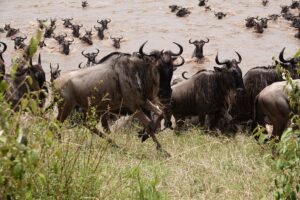
The actual river crossing is one of the most dramatic wildlife experiences in Africa.
After spending hours gathering along the riverbank, one wildebeest may suddenly enter the water. Other animals quickly follow, creating a massive movement of hooves, splashing water, and dust.
The crossing usually involves several stages.
Stage 1: Herd gathering
Large numbers of wildebeest assemble near the river. They may graze, move along the bank, or stand watching the water.
Stage 2: Hesitation
The animals approach the edge but may retreat several times. Crocodiles, steep riverbanks, and unfamiliar water conditions can make them cautious.
Stage 3: The first animal enters
Eventually, one or more wildebeest take the first step into the water. This can trigger other animals to follow.
Stage 4: The dramatic crossing
Hundreds or thousands of animals may enter the river, swimming against the current while trying to reach the opposite bank.
Stage 5: Crocodile encounters
Nile crocodiles may attack animals crossing the river. However, not every crossing involves a crocodile attack.
Stage 6: Reaching the opposite bank
The wildebeest climb out of the water and continue their migration across the plains.
Some animals may become separated from their herds, while others continue moving together towards fresh grazing areas.
Wildlife You May See Around the Mara River Crossing Points
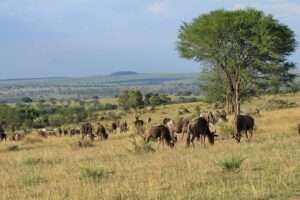
The Mara River crossing areas are not only important for wildebeest. They also support a wide range of wildlife species.
During your safari, you may encounter:
-
Nile crocodiles: Large reptiles that inhabit the Mara River and prey on animals crossing the water.
-
Hippopotamuses: Commonly seen resting in deeper sections of the river.
-
African lions: Predators that may follow migrating herds.
-
Spotted hyenas: Opportunistic hunters and scavengers that benefit from migration activity.
-
Leopards: Occasionally spotted in the surrounding riverine forests.
-
African elephants: Often seen moving through the surrounding grasslands and woodlands.
-
Zebras: Frequent companions of migrating wildebeest.
-
Giraffes: Often spotted browsing on acacia trees.
The Mara ecosystem is particularly rewarding for wildlife photographers because it offers opportunities to observe predator-prey relationships and large herbivore movements.
Best Time to Visit the Mara River Crossing Points
Although river crossings can happen at different times, certain months are generally more favourable for visitors hoping to witness this extraordinary event.
| Month | What to expect |
|---|---|
| July | Early herds may arrive in the Mara and begin approaching the river |
| August | Often an excellent month for major crossing activity |
| September | Continued migration and possible repeated crossings |
| October | Some herds begin moving southwards towards Tanzania |
| November | Many herds return towards the Serengeti following seasonal rains |
August – A Popular Month for River Crossings August is one of the most popular months for visiting the Masai Mara.
Large herds may gather along different sections of the Mara River, and guides spend considerable time monitoring the animals.
However, the high demand for migration safaris also means more safari vehicles around popular viewing locations.
September – Another Excellent Month September is another excellent period for migration viewing.
Some herds remain in the Mara, while others may move between Kenya and Tanzania.
Travelers can enjoy extensive wildlife viewing, including possible river crossings, large herds, and predator activity.
October – Late Migration Opportunities October can still offer rewarding migration experiences.
Some wildebeest may remain in the Mara, while others begin returning southwards towards the Serengeti.
Crossing activity depends on rainfall, grass availability, and the direction of herd movement.
Our recommendation: Plan a safari of at least three to four nights in the Mara during August or September if river crossings are your main priority. More time gives you additional opportunities, but no particular crossing can be guaranteed.
How to Choose Accommodation Near the Mara River Crossing Points
Accommodation location is an important consideration when planning a migration safari.
If you want to spend time monitoring the river, choosing a camp with convenient access to the relevant crossing areas can save considerable driving time.
Some well-known accommodation options to investigate include:
Mara Serena Safari Lodge
Located in the Mara Triangle, this lodge offers beautiful views across the surrounding wilderness and convenient access to selected western Mara wildlife areas.
Governors’ Camp
This established safari camp is situated in the northern Masai Mara near the Mara River and offers excellent access to wildlife-viewing areas.
Kichwa Tembo Tented Camp
Situated near the Oloololo Escarpment, Kichwa Tembo provides a beautiful wilderness setting and access to western Mara safari areas.
Little Governors’ Camp
This camp offers an intimate safari setting near the wildlife-rich Musiara area.
Before booking, confirm the actual distance to the crossing areas your guide intends to monitor. A camp described as being near the Mara River may not necessarily be close to every crossing location.
Responsible Safari Behavior at Mara River Crossing Points
The Great Wildebeest Migration is a natural event that deserves protection.
Unfortunately, overcrowding and irresponsible safari driving can interfere with animal movements.
Visitors and guides should observe the following principles:
-
Never block the path of migrating wildebeest.
-
Avoid driving too close to animals gathering at the river.
-
Do not surround herds with safari vehicles.
-
Never shout, hoot, or make unnecessary noise.
-
Remain inside your safari vehicle unless at an authorized location.
-
Follow instructions from park rangers and conservation authorities.
-
Do not drive off designated tracks where prohibited.
-
Avoid littering or leaving food waste in the wilderness.
-
Respect vehicle limits and designated viewing positions.
-
Allow animals enough space to cross naturally.
The goal should always be to observe the migration without changing the behavior of the animals.
Are There Numbered Mara River Crossing Points?
This is an important question, especially for visitors researching the migration online.
You may come across references to Crossing Points 1, 2, 3, 4, 5, 6A, 6B, 7A, 7B, 8, 9, and 10.
These numbered locations appear in official migration-crossing management material for the Tanzania side of the Mara River, within the northern Serengeti.
Tanzania’s national parks authority has published a map identifying designated crossing sites, vehicle limits, and viewing distances.
These numbered points should not automatically be confused with the commonly used local crossing names on the Kenyan side of the river.
When booking a safari, ask your operator whether a crossing-point reference relates to the Kenyan Masai Mara or the Tanzanian Serengeti.
This distinction is particularly useful for travelers combining both countries in one Great Migration safari.
Tips for Photographing the Mara River Crossings
For photographers, the Mara River crossings offer some of the most exciting opportunities in African wildlife photography.
Here are a few practical recommendations:
-
Carry a camera with a good telephoto lens.
-
Use a fast shutter speed to capture animals jumping into the water.
-
Bring spare camera batteries and memory cards.
-
Consider using burst mode for action sequences.
-
Protect your camera equipment from dust and splashing water.
-
Pay attention to changing light conditions.
-
Avoid distracting the animals to obtain a photograph.
-
Ask your guide to position the vehicle responsibly.
Early morning and late afternoon light can create beautiful photographic conditions, although crossings may happen at any time of day.
Suggested 5-Day Masai Mara Great Migration Safari
If witnessing a Mara River crossing is your main objective, a longer stay gives you more opportunities to explore different river sectors.
Here is a sample five-day safari itinerary.
Day 1: Nairobi to Masai Mara
-
Depart Nairobi for the Masai Mara.
-
Enjoy scenic views of the Great Rift Valley.
-
Arrive at your lodge or tented camp.
-
Enjoy lunch and an afternoon game drive.
-
Dinner and overnight at your accommodation.
Day 2: Exploring the Mara Triangle
-
Early morning game drive.
-
Explore the western Mara landscape.
-
Visit selected river-viewing areas depending on herd movements.
-
Observe elephants, giraffes, lions, and other wildlife.
-
Return to camp for dinner.
Day 3: Mara River Crossing Search
-
Depart early with your experienced safari guide.
-
Monitor herd movements along the Mara River.
-
Visit promising crossing sectors such as Serena or other active locations.
-
Wait patiently for possible crossing activity.
-
Enjoy a picnic lunch during your full-day safari.
-
Return to camp in the evening.
Day 4: Exploring Different Crossing Areas
-
Follow updates on migration movements.
-
Explore other accessible crossing locations.
-
Search for predators and other wildlife.
-
Enjoy photography opportunities along the river.
-
Return to your accommodation.
Day 5: Masai Mara to Nairobi
-
Enjoy breakfast.
-
Have a short morning game drive if time allows.
-
Depart for Nairobi.
-
Arrive in Nairobi and continue with your onward journey.
This itinerary is flexible and should be adjusted according to the actual herd locations, road conditions, and accommodation arrangements.
14. Frequently Asked Questions About Mara River Crossing Points
Where are the main Mara River crossing points located?
Some commonly recognized Kenyan crossing-area names include Lookout Hill, Serena Crossing, Cul-de-Sac, Paradise Plains, Mortuary Crossing, and areas around Kichwa Tembo and Oloololo. Sand River is another important migration area near the southern boundary.
Which is the best Mara River crossing point?
There is no universally best crossing point. Serena, Paradise Plains, Lookout Hill, and other locations can offer excellent opportunities depending on where the herds are moving.
When do wildebeest cross the Mara River?
The main crossing season generally occurs between July and October, with August and September being particularly popular months.
Can I see a river crossing every day?
No. Crossings are unpredictable. Wildebeest may gather along the river for hours or days without entering the water.
Do safari guides know where the wildebeest will cross?
Experienced guides use their knowledge, wildlife observations, and communication with other guides to identify promising locations. However, nobody can predict the exact time and place with certainty.
Are crocodiles present at every crossing point?
Nile crocodiles inhabit the Mara River, but their numbers and locations vary. Not every crossing involves a crocodile encounter.
Is the Mara Triangle better than the main reserve?
Both offer rewarding wildlife experiences. The best choice depends on migration movements, accommodation location, vehicle regulations, and your safari preferences.
How many days should I spend in the Masai Mara?
Three to four nights is a good starting point for travelers prioritizing river crossings. Five nights or more allows additional flexibility.
Can I combine the Mara River crossings with a Serengeti safari?
Yes. A Kenya and Tanzania combination is an excellent way to explore different stages of the Great Migration, provided you plan the border crossing and logistics carefully.
10. Are the Mara River crossings suitable for family safaris?
Yes. Families can enjoy migration safaris, although parents should consider children’s ages, long game drives, and the sometimes intense nature of predator-prey encounters.
Book Your Great Wildebeest Migration Safari with Fuga Tours and Travel
The Mara River crossings are among the most extraordinary wildlife experiences in Africa. Watching thousands of wildebeest gather along the riverbanks, listening to the sounds of the wilderness, and witnessing the animals make their dramatic journey across the water is an unforgettable safari adventure.
However, experiencing this natural spectacle requires more than simply arriving in the Masai Mara during migration season. It requires careful planning, suitable accommodation, experienced guides, flexible game drives, and knowledge of the different migration areas.
At Fuga Tours and Travel, we help travelers plan memorable African wildlife adventures, including Kenya and Tanzania Great Migration safaris.
We can help organize:
-
Masai Mara Great Wildebeest Migration safaris.
-
Mara River crossing-focused itineraries.
-
Luxury, midrange, and budget safari packages.
-
Kenya and Tanzania combined migration safaris.
-
Private guided wildlife photography safaris.
-
Family and honeymoon safari holidays.
-
Uganda, Kenya, and Tanzania multi-country adventures.
Whether you dream of witnessing the famous Serena Crossing, exploring the Mara Triangle, or following migrating herds across the wider ecosystem, we can help you plan an adventure around your interests and budget.
Contact Fuga Tours and Travel today to plan your Masai Mara Great Wildebeest Migration safari. Let us help you experience one of Africa’s greatest natural spectacles!