
5-Day Mount Elgon Hiking Experience
Summit Wagagai on the rim of one of the world's largest calderas.
Hiking in Uganda and Rwanda means glaciers on the equator, volcano crater lakes, a 40 km-wide caldera and waterfall trails: East Africa's quieter mountains.
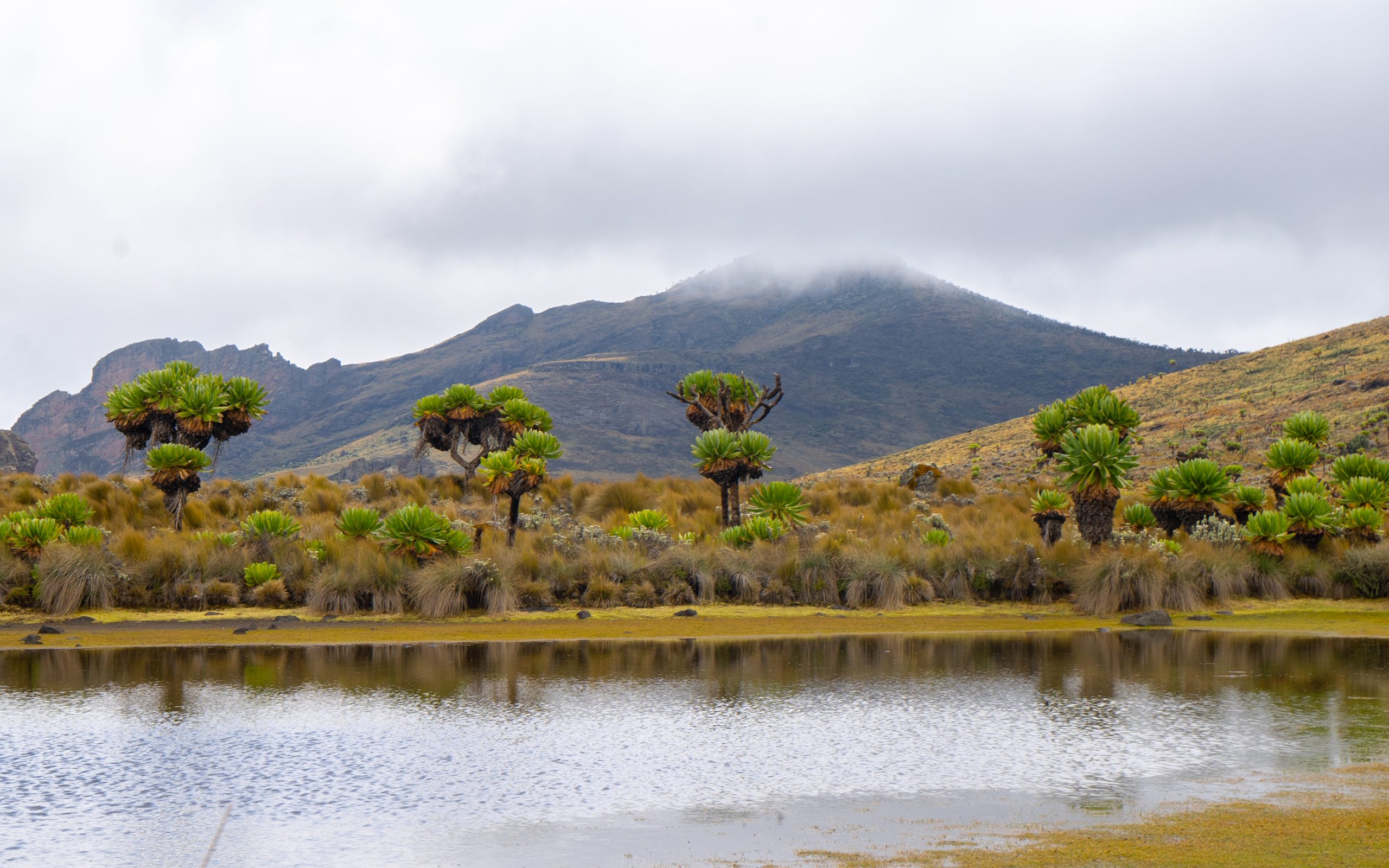
Kilimanjaro gets the crowds, but the mountains of Uganda and Rwanda offer something rarer: routes where you may meet no other trekkers all day, and ecosystems found nowhere else, from giant lobelias to bamboo forests full of golden monkeys.
| Hike | Height | Duration | Difficulty |
|---|---|---|---|
| Rwenzori: Margherita Peak | 5,109 m | 8–10 days | Very hard, with glacier travel |
| Rwenzori: short treks | up to ~3,500 m | 1–3 days | Moderate to hard, muddy |
| Mount Elgon: Wagagai | 4,321 m | 4–7 days | Hard (steep first day on the Sasa trail) |
| Sipi Falls trail | ~1,800 m | Half day | Easy to moderate |
| Mount Bisoke (Rwanda) | 3,711 m | 6–7 hours | Hard, steep and muddy |
| Mount Karisimbi (Rwanda) | 4,507 m | 2 days | Hard, with a cold overnight camp |
| Muhavura, Gahinga and Sabyinyo (Mgahinga) | 3,474–4,127 m | 1 day each | Moderate to hard |
| Congo Nile Trail (Lake Kivu) | Lakeside hills | 1–10 days in sections | Easy to moderate |
Mountain days fit easily around wildlife. Climb Bisoke the day after your gorilla trek in Volcanoes, add a Muhavura summit to a Mgahinga gorilla trip, or spend a few days at Sipi and Elgon after rafting in Jinja. Rwenzori short treks pair with Queen Elizabeth, just an hour away.
We arrange guides, porters, park fees and hut or camp bookings through the licensed operators for each mountain.
| Level | What it means | Examples |
|---|---|---|
| Easy | A few hours on good paths, with little climbing | Sipi Falls walk, Lake Bunyonyi terrace walks, Congo Nile Trail sections, Bigodi Wetland |
| Moderate | Half to full day, with some steep sections | Mount Gahinga, the Nyungwe waterfall trail, gorilla trekking in most sectors |
| Hard | A full day, steep and muddy, at altitude | Mount Bisoke, Mount Sabyinyo, Mount Muhavura, Nkuringo gorilla treks |
| Very hard | Multi-day, at high altitude, sometimes technical | Rwenzori Margherita Peak, Mount Karisimbi, Mount Elgon summit |
All mountain hikes in the national parks are led by UWA or RDB rangers, and on multi-day treks by licensed mountain guides. Porters carry your bags and equipment, and on longer treks cooks and camp staff come too. Rangers carry radios, and on high-altitude treks, guides are trained to recognise altitude sickness. Travel insurance should cover trekking at your planned altitude and helicopter rescue where available.
The driest months, June to August and December to February, are best for mountain hikes, when trails are firmer and views clearer. The Rwenzori is wet all year, but these windows are the best. Hiking in the rains is possible with good gear, but expect mud, slippery trails and clouds on the summits. See best time to visit.
See our packing list for more detail.
Hiking fits naturally into a wider safari. Rwenzori day hikes combine with Queen Elizabeth and Kibale. Mount Elgon and Sipi Falls combine with Jinja and Kidepo. The Virunga volcanoes combine with gorilla trekking in Mgahinga and Volcanoes. The Congo Nile Trail combines with Lake Kivu and Nyungwe. We plan rest days and lighter activities between hard hikes.
For moderate and hard hikes, prepare with regular hill walks, stair climbing or cycling in the weeks before your trip, ideally carrying a loaded daypack. For multi-day high-altitude treks, build endurance over several months and consider a practice multi-day hike at home. See fitness guide.
| Volcano | Country | Height | Hike |
|---|---|---|---|
| Karisimbi | Rwanda | 4,507 m | 2 days, with a cold camp |
| Muhabura (Muhavura) | Uganda and Rwanda | 4,127 m | A long day, with a summit crater lake |
| Bisoke | Rwanda | 3,711 m | 6–7 hours, with a crater lake |
| Sabyinyo | Uganda, Rwanda and DR Congo | 3,669 m | 8 hours, with ladders and a three-country summit |
| Gahinga | Uganda and Rwanda | 3,474 m | 6 hours, with a swampy crater |
Most visitors combine one or two volcano hikes with gorilla and golden monkey treks. See Mgahinga and Volcanoes National Park.
For a gentler multi-day walk, the Congo Nile Trail follows Lake Kivu's shore from Rubavu to Rusizi for about 227 km, through coffee farms, fishing villages and hills. It can be done in stages over several days on foot or by mountain bike, with guesthouse and campsite stops. It is ideal for travellers who want to hike through rural Rwanda at their own pace. See Lake Kivu.
Not all hikes involve summits. Forest trails in Bwindi (the Buhoma waterfall trail, the Ivi River trail), Nyungwe (Isumo waterfall, Bigugu), Kibale and Semuliki offer rewarding hikes with primates, birds and waterfalls. They are ideal for rest days between treks, and they suit travellers who prefer lower altitude.
Many hikes pass through farming communities before reaching the park boundary, so they are also a window into rural life. On Mount Elgon, you pass Bagisu coffee farms. In the Rwenzori, Bakonzo villages. In the Virunga, Bakiga and Bafumbira farms on volcanic soils. On Lake Kivu's Congo Nile Trail, fishing and coffee communities. Local guides and porters share their knowledge of the mountains, their culture and their history, making every hike richer.
Before and after mountain treks, stay close to the trailhead: Kasese or the Rwenzori foothills for the Rwenzori, Sipi or Mbale for Mount Elgon, Kinigi or Musanze for Bisoke and Karisimbi, and Kisoro or Lake Mutanda for the Mgahinga volcanoes. On multi-day treks you stay in mountain huts (Rwenzori) or campsites (Elgon, Karisimbi), and we arrange equipment and meals.
Hikes often bring unexpected wildlife encounters: golden monkeys in Mgahinga's bamboo, blue monkeys and colobus on Elgon's forest trails, three-horned chameleons and Rwenzori turacos in the Rwenzori, and buffalo tracks on the Virunga slopes. Rangers carry radios and know the animals' habits, keeping hikers safe while pointing out wildlife along the way.
Margherita Peak on Mount Stanley in the Rwenzori, at 5,109 m, the third-highest in Africa.
The Sipi Falls trail and short Congo Nile Trail sections are the most accessible. Bisoke is short but steep.
Yes. Mgahinga and Volcanoes both combine volcano hikes with gorilla treks on separate days.
Yes. Each hike has a park fee and must be booked in advance with UWA or RDB. We arrange it as part of your itinerary.
Bisoke is usually harder: a steep, full-day climb to 3,711 m. Most gorilla treks are shorter and at lower altitude.
For Margherita Peak, you need glacier equipment (crampons, harness, ice axe, helmet), usually available to hire. Shorter treks need good boots, rain gear and warm clothes.
Yes. Sipi Falls, Lake Bunyonyi, the Congo Nile Trail and forest walks suit beginners. Volcano summits need good fitness.
Yes. Permits for Bisoke, Karisimbi and the Mgahinga volcanoes are booked with RDB or UWA, and we arrange them with your itinerary.
Margherita Peak in the Rwenzori, because of its length, weather, bogs and glacier travel.
It can be above about 3,500 m, on Karisimbi, Muhabura, Elgon and especially the Rwenzori. Ascend slowly, stay hydrated and tell your guide about symptoms.
Waterproof boots, gaiters, long trousers, layers for cold summits, a rain jacket, a hat and gloves. See our packing list.
Yes, on all park hikes and multi-day treks. Hiring one supports local communities and makes the climb easier.
June to August and December to February, when trails are drier and summit views clearer.
Summit Wagagai on the rim of one of the world's largest calderas.