
3-Day Uganda Shoebill and Murchison Falls Birding Safari
Shoebills, rhinos and the Nile delta in three days.
A Uganda birding safari reaches about 1,080 species, including the shoebill, 24 Albertine Rift endemics in Bwindi and Congo-basin specials in Semuliki. Rwanda adds Nyungwe and Akagera.
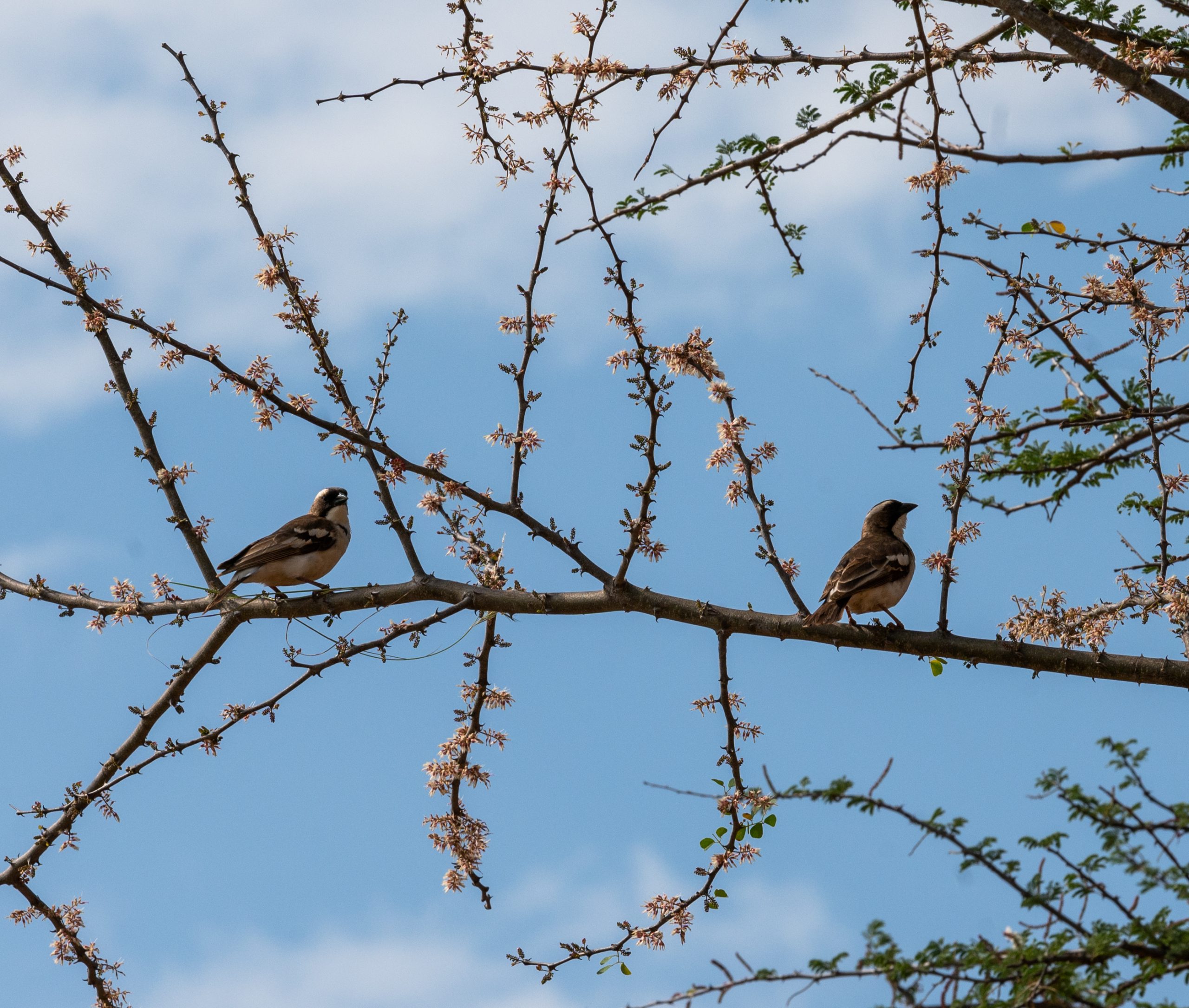
Uganda records around 1,080 bird species, roughly half of Africa's total, in an area smaller than the UK. The reason is geography: the country sits where East African savannah, the Albertine Rift mountains and the Congo-basin rainforest meet. A two-week birding trip can realistically produce 400–500 species. Rwanda, one-tenth the size, adds another suite of montane specials in Nyungwe.
| Site | Target birds |
|---|---|
| Mabamba Swamp (near Entebbe) | Shoebill, lesser jacana, blue-breasted bee-eater |
| Bwindi (Ruhija, Buhoma) | African green broadbill, handsome francolin, Rwenzori turaco and many Albertine Rift endemics |
| Semuliki | Nkulengu rail, hornbills, Congo serpent eagle and Guinea-Congo forest species |
| Kibale and Bigodi | Green-breasted pitta, great blue turaco, papyrus gonolek |
| Queen Elizabeth | Waterbirds on the Kazinga Channel, martial eagle, black bee-eater |
| Murchison Falls and Budongo | Shoebill on the delta, Puvel's illadopsis, chocolate-backed kingfisher |
| Lake Mburo | African finfoot, red-faced barbet, Tabora cisticola |
| Kidepo | Ostrich, Karamoja apalis, Kori bustard |
Nyungwe holds about 27 Albertine Rift endemics, including the red-collared mountain babbler, and the canopy walk gives views into the treetops. Akagera adds savannah and papyrus species, including the shoebill. See birding in Rwanda.
The shoebill is the bird most visitors want to see. It stands up to 1.5 m tall, with a clog-shaped bill and a slow, prehistoric presence. Your best chances are on a morning canoe at Mabamba near Entebbe, on the Murchison delta cruise, or at Ziwa's Lugogo swamp. See the shoebill in Uganda.
Birding is good all year. November to April brings Palearctic migrants, and many resident species breed during the rains, when they are at their most colourful and vocal. The wetter months also mean muddier forest trails, so allow extra time.
A specialist bird guide who knows the calls, early starts, longer stays at forest sites, and a slower pace than a standard safari. We plan birding trips around target species, whether that is a shoebill-only half-day or a 13-day endemic hunt. See popular birds in Uganda.
| Bird | Where to look |
|---|---|
| Shoebill | Mabamba, the Murchison delta, Ziwa, Lake Mburo, Toro-Semliki |
| African green broadbill | Bwindi (Ruhija, Mubwindi Swamp) |
| Green-breasted pitta | Kibale |
| Great blue turaco | Kibale, Bigodi, Entebbe Botanical Gardens |
| Rwenzori turaco | Bwindi, Mgahinga, Rwenzori, Nyungwe |
| Handsome francolin | Bwindi, Mgahinga, Nyungwe |
| Grey crowned crane | Wetlands and farmland across Uganda, especially the south-west |
| Papyrus gonolek | Papyrus swamps: Mabamba, Bigodi, Lake Mburo |
| African finfoot | Lake Mburo |
| Red-faced barbet | Lake Mburo, Akagera |
| Nkulengu rail | Semuliki |
| Black-wattled hornbill | Semuliki |
| Puvel's illadopsis | Budongo |
| Karamoja apalis | Kidepo |
| Ostrich | Kidepo |
| Abyssinian ground hornbill | Murchison, Kidepo |
| Short-tailed warbler | Bwindi |
| Shelley's crimsonwing | Bwindi (rare) |
| Blue-headed sunbird | Bwindi, Nyungwe |
| Red-throated bee-eater | Murchison Falls |
Longer trips add Semuliki, Budongo and Murchison. See our 13-day Uganda ultimate birding and gorilla safari and 7-day Uganda bird watching safari.
The Albertine Rift, the western arm of the Great Rift Valley, runs along Uganda's and Rwanda's western borders. Its mountains and forests hold dozens of endemic bird species found nowhere else on Earth. Bwindi, Mgahinga, the Rwenzori, Nyungwe and Volcanoes National Park all fall within it, which is why the region is a priority for world birders. Many endemics are skulking forest species, so finding them needs patience, early starts and a guide who knows their calls.
We choose lodges close to the best birding trails, so you can start at dawn: Ruhija lodges near the Mubwindi trail, Buhoma lodges near the waterfall trail, Kibale lodges near Bigodi, and lakeside lodges at Mburo for the finfoot. Many have excellent gardens, where birding begins before breakfast.
Rwanda has about 700 recorded species. Nyungwe is the highlight for Albertine Rift endemics, Akagera for savannah and wetland species, and the Rugezi wetland in the north for the endangered Grauer's swamp warbler. The Kigali wetlands and Lake Kivu add more. A 7–10 day Rwanda birding trip combines Nyungwe, Akagera and Volcanoes. See bird watching safaris in Rwanda.
With a specialist guide, a focused 7-day Uganda birding trip typically records 250–350 species. A 14–16 day trip covering forest, savannah and wetland sites can exceed 450, and dedicated birders sometimes reach 500 or more. Even on a standard wildlife safari without a birding focus, most guests see well over 150 species, including shoebills, crowned cranes, fish eagles, kingfishers, bee-eaters, hornbills and turacos. Counts depend on the season, the pace and how much time you spend in forest habitats.
The grey crowned crane appears on Uganda's flag and coat of arms. With its golden crown of feathers, red throat pouch and elegant dancing displays, it is one of Africa's most beautiful birds. It lives in wetlands and nearby farmland, especially in the south-west, around Lake Mburo, Lake Bunyonyi and Queen Elizabeth. Habitat loss has made it endangered, and community conservation projects work to protect its nesting wetlands.
Birding tourism supports conservation directly: park fees fund rangers, community birding guides earn a living, and wetlands such as Mabamba and Bigodi are protected because visitors come to see their birds. Choosing local guides and community-run sites makes a real difference. Organisations such as NatureUganda monitor Uganda's Important Bird Areas and work with communities to protect them.
If you're not a dedicated birder, you can still enjoy excellent birding on a standard safari. Add a Mabamba shoebill morning, spend an extra hour on the Buhoma waterfall trail or the Bigodi Wetland, and ask your guide to point out birds on game drives and boat cruises. See gorilla tours and wildlife safaris.
Uganda's papyrus swamps and lakeshores host specialised birds that live nowhere else: the papyrus gonolek, papyrus canary, white-winged swamp warbler, Carruthers's cisticola and papyrus yellow warbler. Wetlands such as Mabamba, Bigodi, Lutembe Bay near Entebbe and the Lake Mburo swamps are the best places to find them, usually from a canoe or boardwalk.
About 1,080 recorded species, one of the highest totals of any African country.
Mabamba Swamp near Entebbe (half-day), the Murchison Falls delta, and Ziwa's Lugogo swamp.
For serious birders, yes, since forest species are found mostly by call. Our birding tours use specialist guides.
Bwindi, for its Albertine Rift endemics, closely followed by Semuliki, Kibale, Queen Elizabeth and Murchison Falls.
Yes. Bwindi is both Uganda's gorilla park and one of its best birding sites, so combining them is easy.
November to April, when migrants are present and many residents are breeding. Birding is good all year.
Yes. Our birding safaris use experienced bird guides who know the calls and habitats of Uganda's key species.
Yes. Guides help you identify birds, and many species, such as turacos, kingfishers and crowned cranes, are easy to see and colourful.
Seven days covers key sites near Entebbe and the south-west. Ten to fourteen days adds Semuliki, Kibale, Murchison and more habitats.
Shoebills, rhinos and the Nile delta in three days.
7-Day Uganda Bird Watching Safari, takes you for 1000 and more species Mabamba Shoebill, Murchison Falls, Kibale forest birds, Queen Elizabeth savannah…
Albertine Rift endemics, Congo-basin birds and gorillas.