
3-Day Masai Mara Safari from Nairobi
This 3-day Masai Mara safari from Nairobi gives you two nights in Kenya's best-known reserve, with a full day of game drives…
The Masai Mara National Reserve is Kenya's best-known safari park: open grassland full of lions, leopards and cheetahs, and from about July to October the Great Migration.
The Masai Mara National Reserve covers about 1,500 km² of rolling grassland, acacia country and riverine forest in south-western Kenya. It is the northern end of the same ecosystem as Tanzania's Serengeti, and the two are joined with no fence between them. Around the reserve, Maasai landowners have leased their land into private conservancies, which together add a large area of wildlife country with fewer vehicles.
| Location | Narok County, south-western Kenya, on the Tanzanian border |
| Size | About 1,500 km², plus the surrounding conservancies |
| Main rivers | The Mara and the Talek |
| Known for | Lions, leopards, cheetahs, the Great Migration |
| From Nairobi | About 5–6 hours by road, or a 45–60 minute flight |
| Best time | July to October for the migration; January to February is also dry |
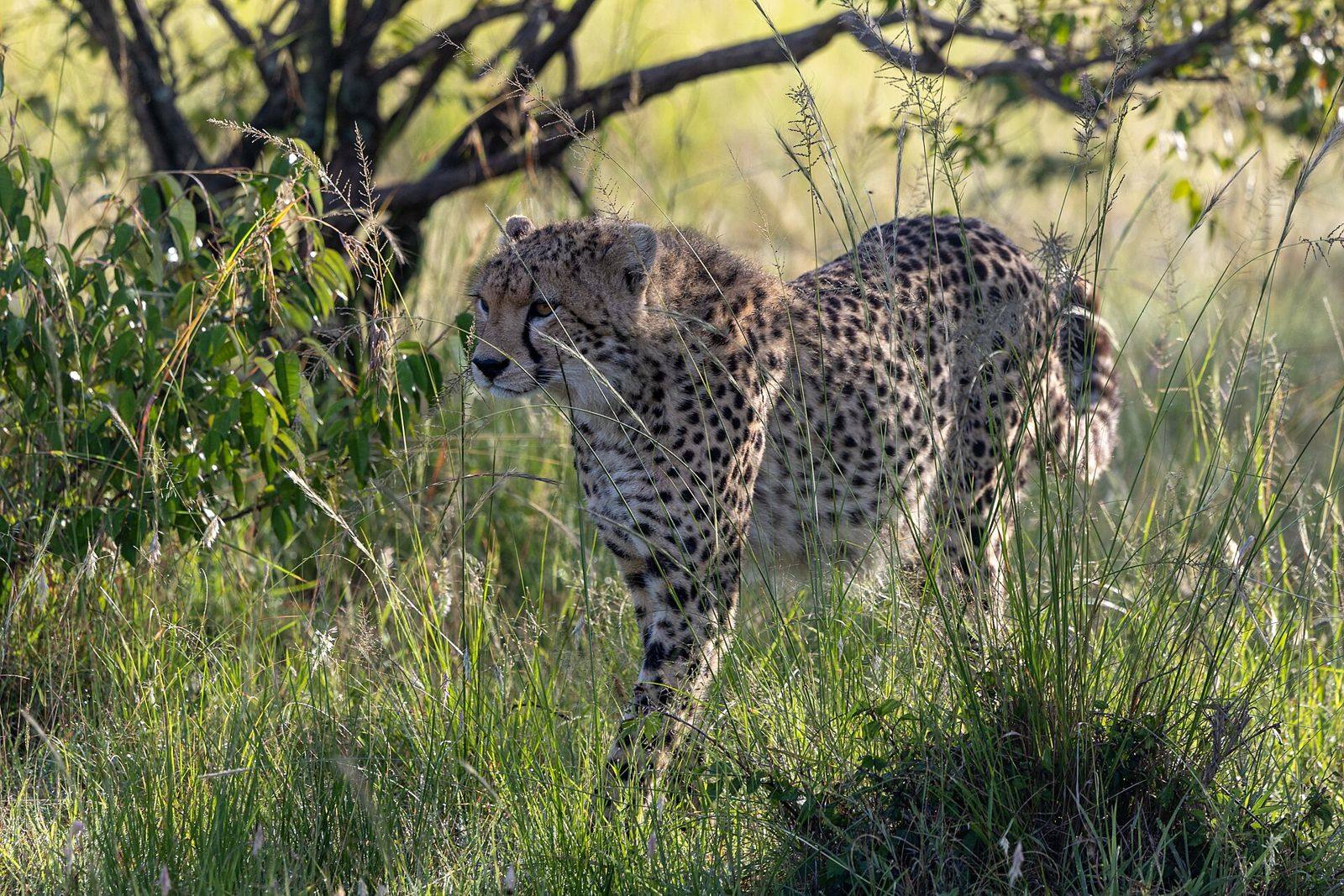
The Mara is one of the best places in Africa to watch big cats. Lions are common and live in large prides, cheetahs hunt on the open plains, and leopards use the trees and thickets along the rivers. Elephants, buffaloes, giraffes, topis, zebras, hippos and crocodiles are all easy to see. Black rhinos live here too, but in small numbers, so they are a lucky sighting rather than something to count on.
Each year well over a million wildebeest, with large numbers of zebras and gazelles, follow the rains between the Serengeti and the Mara. The herds usually arrive in the Mara around July and stay until about October, when they move back south. While they are here, they cross the Mara River again and again, and these crossings, with crocodiles waiting in the water, are what most people come to see.
The timing changes from year to year with the rain, so no one can promise a crossing on a particular day. Staying three nights or more, and choosing a lodge near the river, gives you the best chance. Outside the migration months the Mara is still excellent for resident wildlife and is quieter. See our month-by-month guide to the Great Migration in the Masai Mara.
Inside the reserve you can drive anywhere on the tracks, and in the migration months the river crossing points can get busy with vehicles. The private conservancies around it, such as Mara North, Olare Motorogi and Naboisho, limit the number of guests, and they allow walking safaris, night drives and off-road driving to sightings, which the reserve does not. Many visitors split their stay between the two.
The western part of the reserve, between the Mara River and the Oloololo Escarpment, is called the Mara Triangle and is managed separately. It has fewer lodges, good roads and some of the main river crossing points, which makes it a good choice in migration season.
| Activity | Why it's worth it |
|---|---|
| Game drives | Early morning and late afternoon are best for cats. A full day with a picnic lunch lets you reach the river and the far plains. |
| Hot-air balloon flight | A dawn flight over the plains, followed by a bush breakfast. Book ahead in high season. |
| Maasai village visit | A visit to a Maasai community near the reserve to learn about their homes, cattle and traditions. |
| Walking safari | Only in the conservancies, with an armed ranger and a guide. |
By road, the drive from Nairobi takes about 5–6 hours, down the escarpment into the Great Rift Valley and through Narok town. Most road safaris stop at a Rift Valley viewpoint on the way. By air, scheduled light aircraft fly from Nairobi's Wilson Airport to several airstrips in and around the reserve in about 45–60 minutes. Flying saves a long day on the road and is the usual choice when Kenya is added to a Uganda or Rwanda trip.
There are lodges and tented camps for every budget, from simple camps near the Talek and Sekenani gates to classic tented camps on the Mara River. Where you stay matters: in migration season a camp near the river saves driving time, while a conservancy camp gives a quieter experience. See the Masai Mara section of our Kenya safari lodges guide.
Two nights is the minimum to see the Mara properly. Three nights is better, and in migration season it gives you a real chance of a river crossing. If you are flying in from Uganda or Rwanda, three nights in the Mara is a good add-on to a gorilla trek.
The migration months, from about July to October, are the busiest and most dramatic. January and February are also dry, with good game viewing and fewer vehicles. The long rains, usually April and May, make some tracks muddy and a few camps close, but prices are lower and the grass is green. Big cats live in the Mara all year.
The herds are usually in the Mara from around July to October. The exact timing depends on the rains, and river crossings happen on unpredictable days within that period.
At least two nights, and three if you want a good chance of a river crossing in migration season.
Driving takes about 5–6 hours from Nairobi and costs less. Flying takes about 45–60 minutes and suits shorter trips or travellers coming from Uganda or Rwanda.
Lions, leopards, elephants and buffaloes are seen regularly. Rhinos live in the reserve in small numbers, so they are not guaranteed.
Yes. Trek gorillas in Uganda or Rwanda, then fly to Nairobi, which takes about an hour, and connect to the Mara.
The western part of the reserve, between the Mara River and the Oloololo Escarpment. It is managed separately, has fewer lodges and includes some of the main crossing points.
This 3-day Masai Mara safari from Nairobi gives you two nights in Kenya's best-known reserve, with a full day of game drives…
This 4-day Masai Mara fly-in safari replaces the long road trip with a short light-aircraft flight from Nairobi, giving you three nights…
This 6-day Kenya safari covers the classic first circuit from Nairobi: big cats in the Masai Mara, rhinos at Lake Nakuru and…