
What to Do If It Rains During a Gorilla Trek: A Complete Uganda & Rwanda Guide, Gorilla trekking is one of Africa’s most unforgettable wildlife experiences, but it also takes place in some of the continent’s wettest and most mountainous forests.
If you are planning a gorilla trek in Uganda or Rwanda, one question you may have is:
What happens if it rains during the gorilla trek?
The short answer is simple: you normally continue the trek unless conditions become unsafe or park authorities and your guides decide otherwise.
Rain is a natural part of the mountain-forest environment. It can arrive unexpectedly, sometimes changing from light showers to heavy rain within a short period.
Rather than worrying about rain, the key is to prepare properly.
This guide explains what to do if it rains during your gorilla trek, what to wear, how to protect your camera, how rain affects the trails, and why a rainy trek can still become a memorable experience.
Does Gorilla Trekking Continue When It Rains?
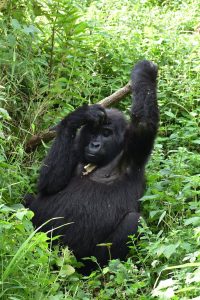
gorilla trekking generally continues during rainy weather.
Gorillas live in natural rainforest and montane forest environments, so rain is a normal part of their habitat.
A rainy morning does not automatically mean your trek will be cancelled.
Your trekking team will assess the conditions and guide you through the forest.
However, safety comes first.
If weather conditions create a serious safety concern, guides and park authorities can make decisions based on the circumstances.
This is one reason why travelers should listen carefully to their guides and avoid making assumptions about what will happen based solely on the weather forecast.
Why Does It Rain So Much in Gorilla Trekking Areas?
Uganda’s Bwindi Impenetrable National Park, Mgahinga Gorilla National Park and Rwanda’s Volcanoes National Park are located in mountainous environments.
The forests receive significant rainfall, and weather can change rapidly.
In Bwindi, for example, the rainforest environment can remain wet even when the weather appears favorable at the beginning of the day.
The mountains also influence local weather patterns.
This means that:
A sunny morning does not guarantee a dry afternoon.
And:
Rain at the trailhead does not necessarily mean it will rain throughout your entire trek.
What Should You Do If It Starts Raining During Your Gorilla Trek?
If rain begins while you are already in the forest, don’t panic.
Follow these steps.
Put on Your Rain Jacket
Your rain jacket should be easily accessible rather than buried at the bottom of your backpack.
As soon as rain begins, put it on.
A good waterproof or highly water-resistant jacket can make a major difference in comfort.
Choose one that:
Fits comfortably, Allows easy movement, Covers your upper body. Has a hood. Can be packed easily
Avoid relying only on an umbrella because trekking through dense vegetation with an umbrella can be inconvenient.
Protect Your Backpack
Your backpack should ideally have a waterproof rain cover.
Even if your backpack is advertised as water-resistant, a rain cover provides additional protection.
Keep important items inside waterproof bags or dry bags.
Protect:
Passport, Phone, Camera, Extra batteries, Money, Documents, Snacks, Power bank
A simple waterproof bag inside your backpack can provide another layer of protection.
Protect Your Camera
Rain and cameras are not always good friends.
If you are carrying a camera, prepare before entering the forest.
Consider bringing:
A waterproof camera cover, Dry bags, Zip-lock bags, Lens cloths, Microfiber cloth, Extra batteries
If heavy rain begins, protect the camera immediately.
Do not wait until your equipment is already soaked.
Listen to Your Gorilla Trekking Guide
This is one of the most important rules.
Your guide and trackers understand the terrain and forest conditions.
If the trail becomes slippery, they may:
Slow the pace, Recommend a different route, Help trekkers across difficult sections, Ask the group to wait, Adjust the walking formation
Do not try to move ahead of the group simply because you are uncomfortable with the rain.
Stay together and follow instructions.
Slow Down on Slippery Trails
Rain can transform a forest trail.
Mud can become slippery, roots can become difficult to see, and steep slopes can become more challenging.
When this happens:
Slow down.
Do not rush.
Take smaller steps and use your walking poles if you have them.
Where necessary, ask your guide for assistance.
Remember:
Reaching the gorillas safely is more important than reaching them quickly.
Use Walking Poles
Walking poles can be extremely useful during a wet gorilla trek.
They can help with:
Balance, Slippery slopes. Muddy trails, Descents. Steep sections, Crossing uneven ground
If you do not normally hike with poles, your safari operator may be able to arrange them.
Wear Waterproof Hiking Boots
Good footwear is one of the most important items for a gorilla trek.
When it rains, trails can become:
Muddy, Wet, Slippery, Uneven
Waterproof hiking boots with good grip can help you stay comfortable and stable.
Choose boots that have:
Good ankle support, Strong tread, Comfortable fit, Waterproof or water-resistant construction
Avoid ordinary sneakers.
They can become wet quickly and may provide poor traction on muddy mountain trails.
Keep Your Feet Dry
Wet feet can become uncomfortable, especially during a long trek.
Consider wearing:
Moisture-wicking hiking socks, Waterproof boots, Spare socks in a waterproof bag
If your feet become wet, change into dry socks when you return to your accommodation.
Protect Your Phone
Many travelers use their phones to take photographs.
Rain can damage electronic devices, so keep your phone in a waterproof pouch or dry bag when you are not using it.
A simple waterproof phone case can be very useful.
Do not assume that your phone’s water resistance makes it completely safe in heavy rain.
Keep Moving When Appropriate
If the rain is light or moderate, continuing to walk can actually help you stay warm.
However, your guide will determine the appropriate pace.
If the group stops, follow the guide’s instructions.
Avoid standing exposed to heavy rain for longer than necessary.
What Happens to the Gorillas When It Rains?
The gorillas are already adapted to their forest environment.
Rain is a normal part of their habitat.
They may:
Continue feeding Move through vegetation, Rest under vegetation, Move to another location, Remain relatively undisturbed by the weather
You should not assume that rain means the gorillas will disappear.
Your trackers know how to interpret signs of gorilla movement and will continue searching according to the established procedures.
Does Rain Make Gorilla Trekking More Difficult?
It can.
The biggest difference is usually the condition of the trail.
A trail that is manageable when dry can become significantly more slippery when wet.
Rain can also:
Reduce visibility, Make vegetation heavier, Increase mud, Make steep slopes harder, Make photography more difficult, Increase the need for waterproof clothing
This is why physical preparation is important.
You do not need to be an elite athlete to go gorilla trekking, but you should be prepared for hiking in uneven and potentially wet terrain.
Can You Still See Gorillas When It Rains?
Yes.
Rain does not automatically mean you will fail to see gorillas.
Mountain gorillas live in the forest throughout the year and experience changing weather conditions naturally.
Your trackers continue looking for signs of the gorilla family.
However, wildlife encounters can never be guaranteed to occur in exactly the way you imagined.
The location and movement of the gorillas determine how long you may need to hike before finding them.
Can Rain Make the Gorilla Experience More Beautiful?
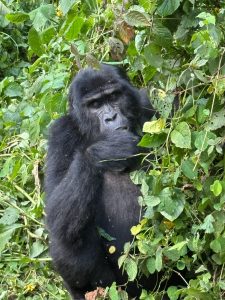
Absolutely.
Although rain can make trekking more challenging, it can also create a completely different atmosphere in the forest.
After or during rainfall, you may experience:
Mist drifting through the forest, Water droplets on leaves, Fresh forest smells, Lush green vegetation, Fog around the mountains, Dramatic photography conditions
The forest can feel particularly alive after rainfall.
For many travelers, these conditions become part of the adventure.
What Should You Pack for a Rainy Gorilla Trek?
Preparing your equipment before leaving your lodge can make the experience much easier.
Essential rain gear
Pack:
Waterproof hiking jacket, Waterproof trousers, Backpack rain cover, Waterproof dry bags, Waterproof hiking boots, Extra socks, Small towel, Waterproof phone pouch
Photography equipment
If you are taking a camera, consider:
Camera rain cover, Lens cloth, Dry bags, Spare batteries, Waterproof memory-card storage
Personal items
Also carry:
Drinking water, Snacks, Insect repellent, Sunscreen, Personal medication, Hand sanitizer, Walking poles if needed
Keep important items protected inside waterproof bags.
Should You Carry an Umbrella?
An umbrella is generally less convenient than proper rain gear in dense forest.
You may have to pass through:
Thick vegetation, Narrow paths, Branches, Steep terrain
A waterproof jacket and trousers usually allow much better freedom of movement.
However, whether an umbrella is useful depends on the conditions and your personal preference.
Your guide can advise you on what is practical for the particular trail.
What Clothes Should You Wear When It May Rain?
The best approach is to dress in layers.
A practical combination is:
Base layer
Wear a comfortable moisture-wicking shirt.
Middle layer
Bring a lightweight fleece or warm layer if needed.
Outer layer
Carry a waterproof rain jacket.
Lower body
Wear durable hiking trousers and consider waterproof trousers for wet conditions.
Feet
Wear waterproof hiking boots with good traction.
Head
A lightweight hat can provide protection from sun or light rain, while a rain jacket hood can help during heavier showers.
Should You Wear Jeans?
Jeans are generally not ideal for a wet mountain trek.
When jeans become wet, they can:
Become heavy, Take a long time to dry, Restrict movement, Become uncomfortable
Lightweight hiking trousers are generally more practical.
What If My Clothes Get Completely Wet?
Don’t worry.
This can happen during a rainforest trek even with good preparation.
When you return to your lodge:
Remove wet clothing., Dry your boots appropriately., Change into dry clothes., Hang wet clothing where it can dry., Dry your electronics carefully., Have a warm drink if available., Rest and recover.
If you have another trekking day, make sure your clothes and footwear are dry before the next morning.
Does Rain Affect Gorilla Photography?
Yes, but it does not necessarily ruin it.
Rain can create difficult lighting conditions and water droplets on your lens.
However, cloudy conditions can sometimes produce soft, natural light.
For better rainy-day photography:
Protect your camera, Carry a lens cloth, Avoid changing lenses in heavy rain, Use a fast enough shutter speed for moving subjects, Check your lens frequently, Follow photography rules, Never move closer to the gorillas just to get a better image
Remember that photography should always come after wildlife welfare.
What If There Is Heavy Rain During the Trek?
Heavy rain requires patience and careful decision-making.
Your guide and tracking team will assess the conditions.
Depending on the circumstances, they may:
Slow the group down, Find temporary shelter where appropriate, Wait for conditions to improve, Modify the route, Adjust the trekking plan
Never make your own decision to leave the group.
If conditions become unsafe, follow the instructions of the guides and park authorities.
What If It Rains Before the Trek Starts?
Don’t immediately assume the trek will be cancelled.
Arrive at the briefing point as scheduled unless your tour operator or park authorities tell you otherwise.
Your guide will explain the day’s arrangements.
Use this time to:
Put on waterproof clothing, Protect your backpack, Check your boots, Protect your camera, Drink water Use the restroom, Prepare your walking poles
Being properly prepared before entering the forest is much easier than trying to organize everything once the trek has started.
Should You Cancel Your Gorilla Trek Because of Rain?
Rain alone does not necessarily mean you should cancel.
Gorilla trekking takes place in a rainforest environment where rain is part of the natural ecosystem.
Instead of focusing entirely on whether the day will be dry, prepare for wet conditions.
A well-equipped traveler can often enjoy the experience even when the weather is unpredictable.
However, if park officials or your guides determine that conditions are unsafe, follow their advice.
Safety should always come first.
Rainy Season Gorilla Trekking
Many travelers avoid the rainy seasons because they are concerned about difficult trekking conditions.
However, wet-season travel can have its own advantages.
Depending on the destination and prevailing conditions, travelers may experience:
Lush green forests, Fewer travelers during some periods, Beautiful misty landscapes, Fresh vegetation, Excellent photographic scenery
The trade-off can be wetter and muddier trails.
This is why travelers considering a wet-season gorilla trek should come prepared with proper clothing and footwear.
Tips for First-Time Gorilla Trekkers
If this is your first gorilla trek, keep these practical tips in mind:
Start preparing before your safari
Break in your hiking boots before arriving in Uganda or Rwanda.
Carry waterproof protection
Never assume the weather will remain dry.
Pack light
A heavy backpack becomes more tiring on steep terrain.
Stay hydrated
Drink water throughout the trek.
Listen to your guide
Your guide understands the terrain and wildlife.
Take your time
Do not compete with other trekkers.
Accept the weather
Rain is part of the rainforest experience.
Protect your electronics
Use dry bags and waterproof covers.
Bring extra clothes
A dry change of clothes can make a big difference after the trek.
Rainy Gorilla Trekking: Quick Checklist
Before entering the forest, check that you have:
Waterproof hiking boots
Rain jacket
Waterproof trousers
Backpack rain cover
Dry bags
Extra socks
Water
Snacks
Walking poles
Camera protection
Phone protection
Insect repellent
Personal medication
Small towel
Waterproof pouch for important documents
Frequently Asked Questions About Rain During Gorilla Trekking
Can gorilla trekking be done in the rain?
Yes. Gorilla trekking generally continues in rainy weather, subject to safety conditions and instructions from guides and park authorities.
Will rain make it impossible to see gorillas?
Not necessarily. Rain does not automatically prevent a gorilla encounter. Trackers continue searching for the assigned gorilla family.
Is gorilla trekking harder when it rains?
Rain can make trails muddier and more slippery, which may make the hike more challenging.
What is the most important thing to carry during a rainy trek?
A waterproof jacket and good hiking boots are among the most important items. A backpack rain cover and waterproof bags for electronics are also highly useful.
Should I carry waterproof trousers?
Yes. Waterproof trousers can be particularly useful during prolonged or heavy rainfall.
Can I take photographs in the rain?
Yes, where permitted, but protect your camera and follow your guide’s instructions. Never compromise wildlife rules for a photograph.
What happens if the weather becomes dangerous?
Your guides and park authorities will make decisions based on safety conditions. Follow their instructions rather than attempting to continue independently.
Final Thoughts: Don’t Let Rain Stop Your Gorilla Adventure
Rain should not automatically be viewed as a problem during a gorilla trek.
You are entering a rainforest environment, and rainfall is part of what makes these forests so lush and biologically rich.
The secret is preparation.
Wear waterproof hiking boots, carry rain protection, protect your electronics, use walking poles when appropriate and listen carefully to your guide.
Most importantly, be flexible.
The weather is one part of the adventure that you cannot control. What you can control is how well you prepare and how responsibly you behave in the forest.
A rainy gorilla trek can still be an extraordinary experience—sometimes with mist-covered mountains, wet green vegetation and an atmosphere that makes the encounter even more memorable.
Plan Your Uganda or Rwanda Gorilla Trekking Adventure
Whether you are planning to trek gorillas in Bwindi Impenetrable National Park, Mgahinga Gorilla National Park or Volcanoes National Park, proper preparation can make your experience more comfortable in changing mountain weather.
Work with an experienced Tour operator like Fuga Tours and Travel safari operator to arrange your gorilla permit, accommodation, transportation, packing guidance and trekking itinerary.
Prepare for the rain, respect the forest, follow your guides and enjoy one of Africa’s most remarkable wildlife experiences.