
10-Day Uganda and Rwanda Combined Safari Cost: A Realistic Price Guide,
Planning a 10-day Uganda and Rwanda combined safari is an excellent way to experience some of East Africa’s most remarkable wildlife, primates, landscapes, cultures, and adventure activities in one carefully planned journey.
A combined Uganda and Rwanda safari can include gorilla trekking, chimpanzee trekking, Big Five wildlife viewing, boat cruises, golden monkey trekking, cultural experiences, and scenic drives. Because the two countries are neighboring destinations, travelers can combine them by road and create a diverse East African adventure without having to return to their international departure point between every destination.
One of the most common questions travelers ask before booking is:
- How much does a 10-day Uganda and Rwanda safari cost?
The answer depends on several factors, including the type of accommodation, number of travelers, gorilla trekking permits, transportation, activities, season, safari route, and level of service.
This guide provides a realistic overview of the 10-day Uganda and Rwanda combined safari cost, what is normally included, what is excluded, and how to plan your budget.
2. Quick Answer: How Much Does a 10-Day Uganda and Rwanda Safari Cost?
A 10-day Uganda and Rwanda combined safari can range from approximately US$3,500 to US$8,000+ per person, depending on the itinerary, accommodation category, group size, permits, transportation, and activities.
A general planning range can look like this:
| Safari Style | Approximate Cost Per Person |
|---|---|
| Budget | US$3,500–$4,500 |
| Mid-range | US$4,500–$6,000 |
| Luxury | US$6,000–$8,000+ |
These figures are planning estimates rather than fixed package prices. Gorilla permits alone can represent a significant part of the total safari cost, and accommodation and transport choices can substantially change the final quotation.
For an exact quotation, travelers should provide their preferred travel dates, number of people, accommodation level, and activities.
3. Why Does a 10-Day Uganda and Rwanda Safari Cost So Much?
Uganda and Rwanda are not simply beach or city-break destinations. A safari involves transportation over long distances, professional guides, national park fees, accommodation, meals, permits, game drives, border arrangements, and specialized activities such as gorilla trekking.
The biggest factors affecting the price include:
Gorilla trekking permits, Chimpanzee trekking permits, Accommodation, Private safari vehicle, Professional English-speaking guide, Fuel, Park entrance fees, Game drives, Boat cruises, Cross-border transportation, Meals, Airport transfers, Cultural experiences, Travel season, Number of travelers
Understanding these components makes it much easier to understand your safari quotation.
Gorilla Trekking Permit Cost

For many travelers, gorilla trekking is the main reason for combining Uganda and Rwanda.
Uganda’s mountain gorilla trekking takes place mainly in Bwindi Impenetrable National Park and Mgahinga Gorilla National Park, while Rwanda’s gorilla trekking takes place in Volcanoes National Park.
The gorilla permit is generally one of the largest individual expenses on a combined safari.
A gorilla permit covers the regulated trekking experience and contributes toward conservation and management of the gorilla habitat.
Because permit prices and tourism regulations can change, travelers should confirm the applicable permit rate for their travel date before making a final budget.
Uganda vs Rwanda Gorilla Permit Consideration
One important reason travelers compare Uganda and Rwanda is the difference in overall trekking and safari costs.
Uganda can be attractive for travelers who want to combine gorilla trekking with a longer wildlife safari through destinations such as:
Bwindi, Queen Elizabeth National Park, Kibale National Park, Murchison Falls National Park, Lake Mburo National Park
Rwanda, meanwhile, offers the convenience of accessing Volcanoes National Park relatively easily from Kigali.
Your tour operator can help you determine which country fits your itinerary and budget.
Chimpanzee Trekking Costs

If your 10-day itinerary includes chimpanzee trekking, you should budget for an additional chimpanzee permit.
Uganda is particularly well known for chimpanzee experiences in Kibale National Park, which is one of the country’s major primate destinations.
A combined Uganda and Rwanda itinerary could include:
Gorillas + chimpanzees + wildlife
This creates a very diverse safari experience.
For travelers interested in primates, a 10-day itinerary can potentially combine:
Gorilla trekking in Uganda. Chimpanzee trekking in Kibale, Wildlife safari in Queen Elizabeth National Park, Golden monkey trekking in Rwanda, Gorilla trekking in Rwanda
However, including every activity may make the itinerary expensive and physically demanding. A customized itinerary is often better.
Accommodation Costs
Accommodation is another major factor in determining the price of a 10-day Uganda and Rwanda safari.
You can choose from:
Budget Accommodation
Budget lodges and guesthouses are suitable for travelers who want to reduce accommodation costs while still enjoying comfortable rooms, meals, and convenient access to national parks.
Mid-Range Accommodation
Mid-range lodges offer a balance between comfort and price.
This category is popular among travelers looking for:
Comfortable rooms, Private bathrooms, Good meals, Scenic locations, Reliable services, Reasonable safari prices
Luxury Accommodation
Luxury safari lodges provide a higher level of comfort and service.
Depending on the property, luxury accommodation can include:
Spacious rooms or suites, Beautiful views, Premium dining, Private decks, Spa facilities, Personalized services, High-end safari experiences
Luxury accommodation can significantly increase the total cost of a 10-day combined safari.
Transportation Costs
Uganda and Rwanda are best explored through a carefully planned transportation network.
A private safari vehicle with a professional driver-guide is commonly used for customized safari trips.
Transportation costs depend on:
Distance covered, Type of vehicle, Fuel consumption, Number of travelers, Number of safari days, Cross-border travel, Pickup and drop-off locations
For example, an itinerary starting in Entebbe, traveling to Bwindi, crossing into Rwanda, visiting Volcanoes National Park and Kigali, will have different transportation costs from an itinerary starting and ending in Kigali.
A 4×4 safari vehicle is particularly useful for Uganda’s national parks and rural roads.
National Park Entrance Fees
Your safari budget should also account for national park entrance fees.
Uganda and Rwanda have different protected-area systems and fee structures.
Depending on your itinerary, you may visit:
Uganda
Bwindi Impenetrable National Park, Queen Elizabeth National Park, Kibale National Park, Lake Mburo National Park, Murchison Falls National Park
Rwanda
Volcanoes National Park, Akagera National Park, Nyungwe National Park
Not every park needs to be included in a 10-day itinerary.
Choosing fewer destinations can actually improve the safari because you spend more time enjoying each location rather than spending most of the trip driving.
Game Drives
Game drives are usually included when visiting Uganda’s major wildlife parks.
A Uganda and Rwanda safari may include wildlife viewing in places such as:
Queen Elizabeth National Park
Known for wildlife and the famous Kazinga Channel boat cruise.
Akagera National Park
A major Rwanda wildlife destination where visitors can experience savanna landscapes and wildlife.
Depending on the itinerary, travelers may see animals such as:
Lions, Elephants, Buffaloes, Hippos, Antelopes, Giraffes, Warthogs, Crocodiles, Monkeys, Numerous bird species
The actual animals seen cannot be guaranteed because wildlife is free-ranging.
Boat Cruise Costs
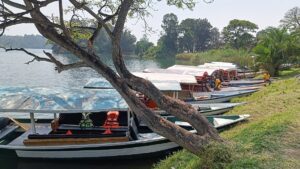
A boat cruise can add another memorable experience to your safari.
Popular options include:
Kazinga Channel Boat Cruise
The Kazinga Channel in Queen Elizabeth National Park provides opportunities to observe hippos, crocodiles, elephants, buffaloes, birds, and other wildlife along the water.
Lake Mburo Boat Experience
Depending on the itinerary and operating schedules, Lake Mburo can also provide a relaxing water-based wildlife experience.
Boat cruises are usually added to the safari package according to the selected itinerary.
Cross-Border Travel Between Uganda and Rwanda
Traveling between Uganda and Rwanda by road is a popular option for combined safaris.
The route can involve crossing through an official border point, with the necessary immigration and travel documentation.
A tour operator can assist with organizing the itinerary and transportation so that the border crossing fits smoothly into the safari schedule.
Travelers should make sure their passports, visas or applicable travel permissions, and other required documents are valid before departure.
Sample 10-Day Uganda and Rwanda Safari Itinerary
A possible itinerary could look like this:
Day 1: Arrival in Uganda
Arrive at Entebbe International Airport.
Meet your safari guide and transfer to your accommodation.
Depending on your arrival time, you may have an opportunity to relax or explore Entebbe.
Day 2: Entebbe to Kibale National Park
Travel toward Kibale National Park.
The journey provides opportunities to see Uganda’s countryside, communities, farms, and changing landscapes.
Overnight near Kibale.
Day 3: Chimpanzee Trekking in Kibale
Enjoy a chimpanzee trekking experience in Kibale Forest.
You may also encounter other primates and forest bird species.
Day 4: Kibale to Queen Elizabeth National Park
Travel toward Queen Elizabeth National Park.
Enjoy an afternoon game drive if time permits.
Day 5: Queen Elizabeth National Park
Enjoy a morning game drive followed by a Kazinga Channel boat cruise.
The day provides opportunities for wildlife and bird viewing.
Day 6: Queen Elizabeth to Bwindi
Travel toward Bwindi Impenetrable National Park.
The journey takes you through beautiful southwestern Ugandan landscapes.
Day 7: Gorilla Trekking in Bwindi
This is one of the highlights of the safari.
Spend the day trekking through the forest in search of a habituated mountain gorilla family.
After the trek, relax at your lodge.
Day 8: Bwindi to Rwanda
Cross into Rwanda and continue toward the Volcanoes region.
Depending on your route, you may visit local communities or enjoy views of the Virunga volcanic landscape.
Day 9: Rwanda Gorilla or Golden Monkey Experience
Depending on the selected package, this day can be dedicated to:
Gorilla trekking, Golden monkey trekking, Cultural experiences, Volcanoes National Park activities
Because gorilla trekking involves permits and considerable physical effort, many travelers may prefer a less intensive activity after already trekking in Uganda.
Day 10: Kigali and Departure
Travel to Kigali.
Depending on your departure time, you may have time for a Kigali city tour, local market visit, or Genocide Memorial visit.
Transfer to Kigali International Airport for your departure.
Sample Budget Breakdown for a 10-Day Safari
A typical quotation can consist of several components.
| Cost Component | Budget Impact |
|---|---|
| Gorilla permit | High |
| Chimpanzee permit | Moderate |
| Accommodation | Moderate–High |
| Private 4×4 vehicle | Moderate–High |
| Professional guide | Included in many packages |
| Fuel | Moderate |
| Park fees | Moderate |
| Game drives | Usually packaged |
| Boat cruise | Moderate |
| Meals | Usually included |
| Border logistics | Variable |
| Airport transfers | Usually included |
| Optional activities | Variable |
The final price depends on how these components are combined.
Budget, Mid-Range or Luxury: Which Safari Should You Choose?
There is no single safari budget that works for every traveler.
Budget 10-Day Uganda and Rwanda Safari
A budget safari focuses on controlling accommodation and transportation expenses while retaining the major experiences.
It may include:
Budget lodges, Shared or economical transport arrangements where practical, Selected wildlife activities, Gorilla trekking, Basic but comfortable accommodation
Budget does not necessarily mean sacrificing the main safari experience.
Mid-Range Uganda and Rwanda Safari
A mid-range safari offers a balance between comfort and price.
It is suitable for travelers who want:
Private transportation, Comfortable lodges, Good meals, Professional guiding, Gorilla trekking, Wildlife experiences, Well-organized transfers
For many travelers, this is a practical format for a 10-day combined safari.
Luxury Uganda and Rwanda Safari
Luxury travelers can choose premium lodges and upgraded transportation arrangements.
A luxury itinerary may include:
High-end safari lodges, Premium rooms or suites, Private 4×4 safari vehicle, Private guide, Personalized activities Fine dining, Additional cultural experiences
The final cost can rise substantially depending on the selected properties.
What Is Usually Included in a 10-Day Uganda and Rwanda Safari?
When requesting a quotation, check exactly what your tour operator includes.
A package may include:
Airport pickup, Private safari vehicle, Professional English-speaking driver-guide, Accommodation, Breakfast Lunch, Dinner, Gorilla trekking permit, Chimpanzee trekking permit where applicable, National park entrance fees, Game drives, Boat cruise, Cross-border transportation, Drinking water during safari, Airport transfer
The exact inclusions depend on your itinerary.
What Is Usually Not Included?
Some expenses are commonly excluded from safari quotations.
These may include:
International flights, Visa fees, Travel insurance, Personal shopping, Alcoholic drinks, Laundry, Tips, Souvenirs Personal expenses, Optional activities, Additional nights, Premium beverages
Always ask for a detailed quotation before making a booking.
How to Reduce the Cost of a 10-Day Uganda and Rwanda Safari
There are several legitimate ways to manage your safari budget.
Travel With More People
Private safari vehicle costs can become more affordable per person when shared among several travelers.
For example, a couple traveling privately may pay more per person than a family or small group sharing the same vehicle.
Choose Mid-Range Lodges
You do not necessarily need five-star accommodation to enjoy Uganda and Rwanda.
A well-selected mid-range lodge can provide excellent comfort while keeping the overall safari cost manageable.
Reduce Unnecessary Driving
An efficient itinerary can save both time and transportation costs.
Instead of visiting too many destinations, select parks that complement one another.
Book Permits Early
Gorilla trekking permits are limited.
Early planning gives you more opportunity to secure the preferred trekking date and build your accommodation and transportation arrangements around it.
Travel During Lower-Demand Periods
Some accommodation providers may offer different rates depending on the season.
Ask your tour operator about available seasonal pricing when planning your trip.
Is a 10-Day Uganda and Rwanda Safari Worth the Cost?
A 10-day combined safari offers an opportunity to experience two different tourism destinations within one journey.
Uganda provides opportunities for:
Gorilla trekking, Chimpanzee trekking, Wildlife safaris, Boat cruises, Bird watching, Cultural experiences
Rwanda adds opportunities for:
Gorilla trekking, Golden monkey trekking, Akagera wildlife experiences, Nyungwe primate experiences, Kigali cultural experiences, Scenic volcanic landscapes
The combination can therefore provide a broad East African experience rather than focusing on only one type of tourism.
How Much Money Should You Budget for Extras?
Besides your safari package, it is wise to keep some money available for personal expenses.
A traveler may need money for:
Tips, Souvenirs, Drinks, Snacks, Laundry, Local crafts, Optional activities, Emergency expenses
Carrying a combination of local currency and an internationally accepted payment method can be useful.
Your tour operator can advise you on practical payment options for the specific itinerary.
Why Book Your Uganda and Rwanda Safari With Fuga Tours and Travel?
Planning a cross-border safari can involve several moving parts.
At Fuga Tours and Travel, we can help travelers plan customized Uganda and Rwanda safari experiences based on their:
Budget, Travel dates, Number of travelers, Accommodation preferences, Gorilla trekking interests, Wildlife interests, Available time, Preferred transportation style
Instead of simply giving you a generic safari price, we can help develop an itinerary around the experiences that matter most to you.
Whether you are planning a budget, mid-range, luxury, honeymoon, family, private, or small-group safari, the itinerary can be customized to suit your travel plans.
Frequently Asked Questions About 10-Day Uganda and Rwanda Safari Cost
How much does a 10-day Uganda and Rwanda safari cost?
A realistic planning range is approximately US$3,500–$8,000+ per person, depending on accommodation, permits, transportation, activities, season, and group size.
Is Uganda cheaper than Rwanda for a safari?
The answer depends on the specific itinerary. Gorilla permit prices, accommodation, transportation, park fees, and activities all affect the final cost. Instead of comparing countries only by permit price, compare the complete safari package.
Does the safari price include the gorilla permit?
Many organized safari packages include the gorilla permit, but this is not universal. Always check your quotation carefully.
Can I do Uganda and Rwanda in 10 days?
Yes. Ten days can provide enough time for a carefully designed combination of wildlife, primate, gorilla, cultural, and city experiences.
However, the itinerary should avoid including too many destinations.
Can I trek gorillas in both Uganda and Rwanda?
Yes, it is possible to design an itinerary around gorilla trekking in both countries, subject to permit availability and applicable regulations.
However, doing two gorilla treks will increase the overall safari cost substantially.
Is food included in the safari price?
Many safari packages include breakfast, lunch, and dinner, but inclusions vary between operators and accommodation properties.
Always confirm this before booking.
Are international flights included?
Usually, international flights are separate from the safari package unless specifically stated otherwise.
Can I customize a 10-day Uganda and Rwanda safari?
Yes. A private safari can be customized around your preferred parks, activities, accommodation level, arrival airport, departure airport, and budget.
Final Thoughts: Planning Your 10-Day Uganda and Rwanda Safari Budget
A 10-day Uganda and Rwanda combined safari is a substantial investment, particularly when gorilla trekking and other primate experiences are included. However, careful planning can help you understand where your money goes and avoid unexpected costs.
As a general guide, travelers can plan around US$3,500–$8,000+ per person, with budget, mid-range, and luxury options available.
The most important step is to avoid choosing a safari based on price alone. Look at the complete package and confirm:
Gorilla permit, Chimpanzee permit, Accommodation, Meals, Transportation, Park fees, Activities, Guide services Border crossing arrangements, Airport transfers, Exclusions
A well-planned itinerary can combine Uganda’s exceptional wildlife and primate experiences with Rwanda’s gorilla, cultural, and scenic attractions while making the most of your 10 days.
Ready to Plan Your 10-Day Uganda and Rwanda Safari?
Let Fuga Tours and Travel help you design a customized Uganda and Rwanda safari based on your budget, travel dates, accommodation preferences, and preferred activities.
Whether your dream is to trek mountain gorillas, meet chimpanzees, watch African wildlife, explore Rwanda’s volcanic landscapes, enjoy a boat cruise, or experience the cultures of East Africa, we can help turn your travel plans into a practical safari itinerary.
Contact Fuga Tours and Travel today for a personalized quotation for your 10-day Uganda and Rwanda combined safari.