
Tipping Guide for Uganda and Rwanda Safaris: How Much Should You Tip Your Guide, Planning a safari in Uganda or Rwanda is an exciting experience, especially when your journey includes wildlife viewing, gorilla trekking, chimpanzee tracking, cultural encounters and beautiful national parks. One question many first-time travelers ask before their trip is: How much should I tip my safari guide in Uganda or Rwanda?
Tipping is an important part of safari etiquette in East Africa, but it can also be confusing because there are no single fixed rules covering every situation. Tipping is generally voluntary and should reflect the quality of service you receive. Guides, drivers, rangers, trackers, porters and lodge staff appreciate tips as a way of recognizing their work and hospitality.
At Fuga Tours and Travel, we want our guests to enjoy their Uganda and Rwanda safaris without worrying about unfamiliar tipping customs. This guide explains who to tip, how much to consider tipping, when to tip and which currency to use.
Is Tipping Mandatory on Uganda and Rwanda Safaris?
No. Tipping is not mandatory.
There is no official universal tipping tariff that every traveler must follow in Uganda or Rwanda. Safari tipping is generally a voluntary expression of appreciation for good service.
However, tipping has become common within the tourism industry, particularly for people who spend significant time helping travelers enjoy their safari.
These may include:
Safari driver-guides, Gorilla trekking guides and rangers, Chimpanzee trekking guides, Trackers, Gorilla and chimpanzee trekking porters, Boat guides, Local community guides, Lodge and hotel staff, Cultural performers, Restaurant and service staff
You should never feel pressured into giving a tip. At the same time, if a guide or staff member provides excellent service, a tip can be a meaningful way to say thank you.
Uganda Safari Tipping Guide
Uganda is known as the Pearl of Africa, offering gorilla trekking in Bwindi Impenetrable National Park and Mgahinga Gorilla National Park, chimpanzee tracking in Kibale Forest, wildlife safaris in Queen Elizabeth, Murchison Falls, Kidepo Valley and other destinations.
Because safari activities often involve several different service providers, understanding the tipping structure before departure is useful.
How Much Should You Tip a Uganda Safari Guide?
Your driver-guide is usually one of the most important people on your safari.
A guide may spend several days with you, driving long distances, explaining wildlife, identifying birds and animals, helping with logistics and making sure your itinerary runs smoothly.
A commonly used guideline is approximately:
US$10–30 per guest per day, depending on the level of service, type of safari and your personal satisfaction.
Different safari operators publish different recommendations. For example, some Uganda travel guidance suggests around US$10 per person per day, while other safari operators suggest higher amounts for dedicated driver-guides.
When should you tip your Uganda safari guide?
You can:
Tip at the end of the safari, Tip at the end of several days, Give a tip after particularly good service
For a private safari, many travelers prefer to give the driver-guide one final gratuity at the end of the journey.
Tipping Gorilla Trekking Guides in Uganda
Gorilla trekking is one of Uganda’s most memorable experiences.
Your trekking team may include:
Lead guides, Park rangers, Trackers, Porters
These people work together to make the trekking experience safe, informative and enjoyable.
There is no single mandatory amount. As a general safari guideline, travelers may consider US$10–30 per guest for the trekking team, depending on the structure of the group and the quality of service.
Some operators recommend distributing tips through the head guide, while others have different arrangements. It is therefore useful to ask your Fuga Tours and Travel representative about the specific tipping procedure for your trek.
Should You Tip Gorilla Trekking Porters in Uganda?
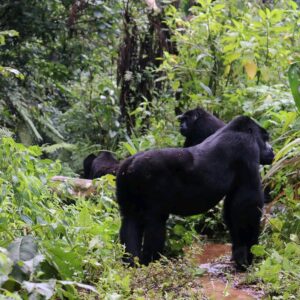
Yes, if you hire a porter, an additional tip is a thoughtful way of recognizing their assistance.
A porter may help you with:
Carrying your backpack, Carrying water, Supporting you on difficult sections, Helping you navigate steep terrain, Providing physical assistance when necessary, Carrying equipment
Porters are normally hired separately, so their porter fee and tip should not be confused.
A common additional gratuity is approximately US$5–20 per porter per trek, depending on the service provided and difficulty of the trek. Published Uganda/Rwanda safari guidance varies considerably, so treat this as a flexible guideline rather than a fixed rate.
Why hire a porter even if you can carry your own bag?
Hiring a porter can be more than just convenience. It can provide income to local community members living around major trekking destinations.
If you do not need physical assistance, you can still hire a porter and allow them to carry your daypack.
1. Tipping Chimpanzee Trekking Guides in Uganda
Chimpanzee trekking in places such as Kibale National Park involves guides and other field staff who help visitors locate chimpanzee communities and understand the forest ecosystem.
If you receive excellent service, a tip is appreciated.
A reasonable approach is to consider approximately:
US$5–20 per person, depending on the duration and quality of the experience.
For specialized or private guiding services, you may wish to tip more.
2. Tipping Boat Guides in Uganda
Boat cruises are among Uganda’s popular safari activities.
Examples include:
Kazinga Channel boat cruise, Murchison Falls boat cruise, Lake Mburo boat experiences, Other community or lake excursions
If your boat guide provides excellent wildlife interpretation and service, a tip of around US$5–10 per person can be considered.
Some safari operators use a range of approximately US$5–10 for park rangers, boat guides and walking guides.
3. Tipping Lodge Staff in Uganda
Lodge staff work behind the scenes to make your safari comfortable.
They may include:
Housekeepers, Waiters, Cooks, Reception staff, Gardeners, Laundry staff, Kitchen teams, Porters
Many lodges provide a general staff tip box at reception. This is often the easiest way to ensure that your gratuity is shared among the wider team.
A general guideline is approximately:
US$5–10 per guest per day
although the appropriate amount depends on the accommodation, length of stay and quality of service. Some safari operators recommend higher amounts for luxury properties.
4. Rwanda Safari Tipping Guide
Rwanda is famous for its mountain gorilla trekking in Volcanoes National Park, but the country also offers wildlife safaris in Akagera National Park, chimpanzee trekking and forest experiences in Nyungwe National Park, and cultural and scenic experiences around Kigali and Lake Kivu.
Tipping in Rwanda is similarly voluntary, with different safari operators offering different guidelines.
How Much Should You Tip a Rwanda Safari Guide?
For a private safari guide or driver-guide, a useful general guideline is approximately:
US$15–30 per guest per day
The amount can depend on:
Length of the safari, Number of travelers, Quality of guiding, Wildlife knowledge, Driving skills, Professionalism, Overall service
A driver-guide who accompanies you for several days may receive one final tip at the end of the safari.
Tipping Gorilla Trekking Guides in Rwanda
Rwanda’s gorilla trekking takes place in Volcanoes National Park.
Your experience may involve:
Gorilla trekking guides, Rangers, Trackers, Porters
Tipping is voluntary, but travelers commonly use separate gratuities to recognize different members of the trekking team.
As a broad guideline, some current safari sources suggest:
Gorilla guides/rangers: US$10–30 per guest per trek, Trackers: US$5–20 per guest or group, depending on the arrangement, Porters: an additional tip after the porter service
These figures vary between operators and should not be treated as official Rwanda government rates.
How Much Should You Tip a Gorilla Trekking Porter in Rwanda?
Hiring a porter is highly encouraged for many visitors, particularly when trekking on steep or challenging terrain.
A porter can help with:
Your backpack, Water, Rain gear, Camera equipment, Walking support, Difficult sections of the trail
The porter has a separate hiring fee. You can then provide an additional tip according to the service received.
A guideline of approximately US$5–20 per porter per trek can be used, with the amount adjusted according to the assistance provided.
Tipping Lodge Staff in Rwanda
Many Rwanda safari lodges and hotels have a communal tipping system.
Instead of tipping every member of staff separately, you can place your gratuity in the lodge’s staff tip box.
A general guideline is around:
US$5–15 per guest per day
Higher amounts may be appropriate at luxury properties or when the staff has provided exceptional service. Current safari guidance varies from approximately US$3–5 at some properties to US$15–20 at higher-end safari operations.
Rwanda Safari Tipping Guide
Rwanda is famous for its mountain gorilla trekking in Volcanoes National Park, but the country also offers wildlife safaris in Akagera National Park, chimpanzee trekking and forest experiences in Nyungwe National Park, and cultural and scenic experiences around Kigali and Lake Kivu.
Tipping in Rwanda is similarly voluntary, with different safari operators offering different guidelines.
How Much Should You Tip a Rwanda Safari Guide?
For a private safari guide or driver-guide, a useful general guideline is approximately:
US$15–30 per guest per day
The amount can depend on:
Length of the safari, Number of travelers, Quality of guiding, Wildlife knowledge, Driving skills, Professionalism, Overall service
A driver-guide who accompanies you for several days may receive one final tip at the end of the safari.
Tipping Gorilla Trekking Guides in Rwanda
Rwanda’s gorilla trekking takes place in Volcanoes National Park.
Your experience may involve:
Gorilla trekking guides, Rangers, Trackers, Porters
Tipping is voluntary, but travelers commonly use separate gratuities to recognize different members of the trekking team.
As a broad guideline, some current safari sources suggest:
Gorilla guides/rangers: US$10–30 per guest per trek, Trackers: US$5–20 per guest or group, depending on the arrangement, Porters: an additional tip after the porter service
These figures vary between operators and should not be treated as official Rwanda government rates.
How Much Should You Tip a Gorilla Trekking Porter in Rwanda?
Hiring a porter is highly encouraged for many visitors, particularly when trekking on steep or challenging terrain.
A porter can help with:
Your backpack, Water, Rain gear, Camera equipment, Walking support, Difficult sections of the trail
The porter has a separate hiring fee. You can then provide an additional tip according to the service received.
A guideline of approximately US$5–20 per porter per trek can be used, with the amount adjusted according to the assistance provided
Tipping Lodge Staff in Rwanda
Many Rwanda safari lodges and hotels have a communal tipping system.
Instead of tipping every member of staff separately, you can place your gratuity in the lodge’s staff tip box.
A general guideline is around:
US$5–15 per guest per day
Higher amounts may be appropriate at luxury properties or when the staff has provided exceptional service. Current safari guidance varies from approximately US$3–5 at some properties to US$15–20 at higher-end safari operations
Uganda vs Rwanda Safari Tipping Guide
| Service | Uganda Suggested Guideline | Rwanda Suggested Guideline |
|---|---|---|
| Private safari guide/driver | US$10–30 per guest/day | US$15–30 per guest/day |
| Gorilla trekking team | US$10–30+ per guest/trek | US$10–30+ per guest/trek |
| Trackers | US$5–20 | US$5–20 |
| Porter | US$5–20 extra tip | US$5–20 extra tip |
| Lodge staff | US$5–10+ per guest/day | US$5–15+ per guest/day |
| Boat/park guide | US$5–10 | US$5–10 where applicable |
| Restaurant service | Around 5–10% where appropriate | Around 10% where appropriate |
Important: These are planning guidelines, not mandatory rates. Published recommendations differ between safari companies and properties, so travelers should prioritize the quality of service and their own budget.
What Currency Should You Use for Tipping?
For travelers on Uganda and Rwanda safaris, you can carry a mixture of:
Uganda Shillings (UGX)
Ugandan shillings are particularly useful for:
Local purchases, Small tips, Community activities, Local markets
Rwandan Francs (RWF)
Rwandan francs are useful for:
Local purchases, Small gratuities, Community experiences, Restaurants and local services
US Dollars
US dollars are also commonly used within the tourism industry, particularly for larger gratuities. However, small denominations are much more practical.
For example, carry:
US$5 notes, US$10 notes, US$20 notes
Using smaller notes makes it easier to give appropriate gratuities without needing change.
Some safari operators specifically recommend carrying cash because tipping opportunities may occur in remote areas where ATMs and card facilities are limited.
Should You Tip in Cash or by Card?
Cash is generally the easiest option for safari tips.
Even when your lodge accepts credit cards for accommodation and meals, tipping arrangements may be handled separately.
Before leaving Kampala, Kigali or another major city, it is useful to organize your tipping money.
We recommend keeping your tips in a separate wallet or envelope so that you can easily access them during your safari.
When Should You Give Your Tip?
There is no single correct moment.
Safari driver-guide
Usually at the:
End of your safari
Gorilla trekking team
Usually:
At the end of the trekking experience
Porter
Usually:
At the end of the trek
Lodge staff
Usually:
At checkout through the communal tip box
Boat guide
Usually:
At the end of the boat cruise
Cultural performers
Usually:
Immediately after the cultural experience
Giving a tip at the appropriate time makes it clear what service you are recognizing.
Do You Tip Everyone Individually?
Not necessarily.
You don’t have to carry dozens of envelopes for every person you meet.
For lodge staff, a communal tip box is often the easiest approach.
For a private safari guide, tipping the guide directly is appropriate.
For a trekking team, ask your guide or Fuga Tours and Travel representative how the gratuity is normally distributed.
This helps avoid accidentally tipping the same person twice or leaving someone out.
What If You Are Traveling as a Group?
Group tipping requires a little planning.
For example, if four people are traveling together, you can decide whether:
- Each traveler tips individually, or
- Everyone contributes to a shared gratuity.
Both approaches can work.
The important thing is to make sure that the final amount reflects the service provided and the size of the group.
Do You Tip If the Service Was Poor?
No one should feel obligated to give a tip for poor or unacceptable service.
Tipping is intended to recognize service and hospitality.
If you experienced a serious problem during your safari, discuss it with your Fuga Tours and Travel representative so that the issue can be addressed.
If the service was good but not exceptional, you can simply choose a smaller gratuity.
If the service was outstanding, you may choose to give more.
Tipping Etiquette: What Travelers Should Know
Do not feel pressured
A tip should be voluntary.
Avoid showing off your money
Give gratuities discreetly and respectfully.
Carry small denominations
Small notes are much easier to use.
Tip according to service
A longer safari or more demanding service may justify a larger gratuity.
Ask your safari company
Your tour operator can explain how tipping is normally handled for your particular itinerary.
Don’t confuse fees with tips
A porter hiring fee, park fee or activity fee is different from a gratuity.
Consider the entire team
Remember the people working behind the scenes, including lodge and kitchen staff.
How Much Money Should You Budget for Tipping?
For a 7–10-day private Uganda or Rwanda safari, you may wish to create a separate tipping budget.
For example, a traveler could set aside approximately US$100–300 or more, depending on:
Number of safari days, Number of people traveling, Gorilla or chimpanzee trekking, Number of guides, Number of porters, Accommodation level, Number of activities, Personal tipping preferences
This is only a planning example. There is no compulsory amount.
A traveler doing a gorilla trek, chimpanzee trek and several days of wildlife safari may naturally encounter more people to tip than someone taking a short wildlife trip.
Tipping on a Uganda and Rwanda Combined Safari
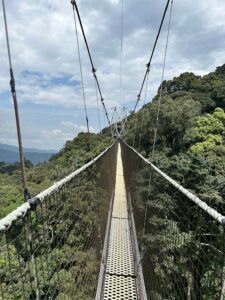
Many travelers choose to combine Uganda and Rwanda in one itinerary.
For example:
Kigali → Volcanoes National Park → Bwindi → Queen Elizabeth National Park → Kibale → Entebbe
During such a journey, you may work with different:
Driver-guides, Gorilla trekking teams, Rangers, Trackers, Porters, Chimpanzee guides, Boat guides, Lodge teams, Community guides
It is therefore important to budget separately for gratuities in each destination.
Fuga Tours and Travel can help explain the tipping arrangements for your individual itinerary before departure.
Why Tipping Matters on Uganda and Rwanda Safaris
Tourism creates employment for thousands of people across East Africa.
A safari may directly or indirectly support:
Guides, Drivers, Rangers, Trackers, Porters, Lodge workers, Restaurant staff, Community members, Cultural performers, Conservation initiatives
A thoughtful tip can therefore be more than a simple gesture of appreciation. It can provide additional support to people whose work contributes to your travel experience.
However, responsible tipping should always respect local customs and avoid creating pressure or unrealistic expectations.
Tipping and Responsible Tourism
At Fuga Tours and Travel, we believe responsible tourism should benefit both travelers and the communities they visit.
When you tip responsibly:
You recognize good service., You support tourism workers., You contribute to local livelihoods., You encourage professional hospitality., You create a positive relationship between visitors and local communities.
At the same time, travelers should remember that gratuities are voluntary and should never replace fair employment practices.
Frequently Asked Questions About Tipping in Uganda and Rwanda
Is tipping compulsory in Uganda?
No. Tipping is voluntary and is generally given as an expression of appreciation for good service.
Is tipping compulsory in Rwanda?
No. Tipping is also voluntary in Rwanda. Travelers can choose whether and how much to tip according to their experience
How much should I tip my Uganda safari guide?
A commonly used range is around US$10–30 per guest per day, although recommendations vary between operators.
How much should I tip a Rwanda safari guide?
A useful planning range is approximately US$15–30 per guest per day, depending on service and itinerary.
Should I tip my gorilla trekking porter?
Yes, if you hire one. An additional US$5–20 is a reasonable flexible guideline depending on the service provided.
Can I tip in US dollars?
Yes, US dollars are commonly used in the tourism sector, particularly for larger gratuities. Small denominations are recommended.
Can I tip in Ugandan shillings?
Yes. Ugandan shillings are useful and convenient for tipping in Uganda.
Can I tip in Rwandan francs?
Yes. Rwandan francs are useful for tips and other local purchases in Rwanda.
Should I tip lodge staff individually?
Not always. If the lodge has a communal staff tip box, this can be an easy way to distribute your gratuity among the wider team.
Should I tip my guide every day?
You can, but it is not necessary. Many travelers prefer to give their driver-guide one gratuity at the end of the safari.
Plan Your Uganda or Rwanda Safari with Fuga Tours and Travel
Understanding tipping etiquette is one small part of preparing for your East African adventure. At Fuga Tours and Travel, we help travelers plan memorable and well-organized Uganda and Rwanda safaris, including:
Uganda gorilla trekking safaris, Rwanda gorilla trekking safaris, Uganda wildlife safaris, Rwanda wildlife safaris Chimpanzee trekking tours, Uganda and Rwanda combined safaris, Birding safaris, Luxury safaris, Honeymoon safaris, Cultural experiences, Private safari packages, Family and group safaris
Whether you are dreaming of seeing mountain gorillas in Bwindi Impenetrable National Park, trekking golden monkeys in Rwanda, watching elephants and lions in Uganda, or combining gorilla trekking with chimpanzee and wildlife experiences, Fuga Tours and Travel can help you plan your journey.
Final Tip: Carry Cash and Enjoy the Experience
You do not need to stress about tipping.
Think of a tip as a voluntary thank-you for good service, not an additional compulsory safari fee. Prepare some small US dollar notes and local currency before traveling to remote parks, ask your Fuga Tours and Travel team about your specific itinerary, and tip according to the service you receive.
Ready to plan your Uganda or Rwanda safari?
Book or plan your African adventure with Fuga Tours and Travel and let us help you create a safari experience that combines wildlife, gorillas, primates, culture and unforgettable East African hospitality.