
13-Day Uganda Tour: Parks, Gorillas and Jinja
This 13-day Uganda tour covers Murchison Falls, Kibale chimps, Queen Elizabeth, gorillas in Bwindi, Lake Bunyonyi, Lake Mburo and adventure activities in…
Jinja sits at the source of the Nile, where the river leaves Lake Victoria to begin its 6,650 km journey to the Mediterranean. It is now Uganda's adventure capital, for rafting, kayaking and bungee.
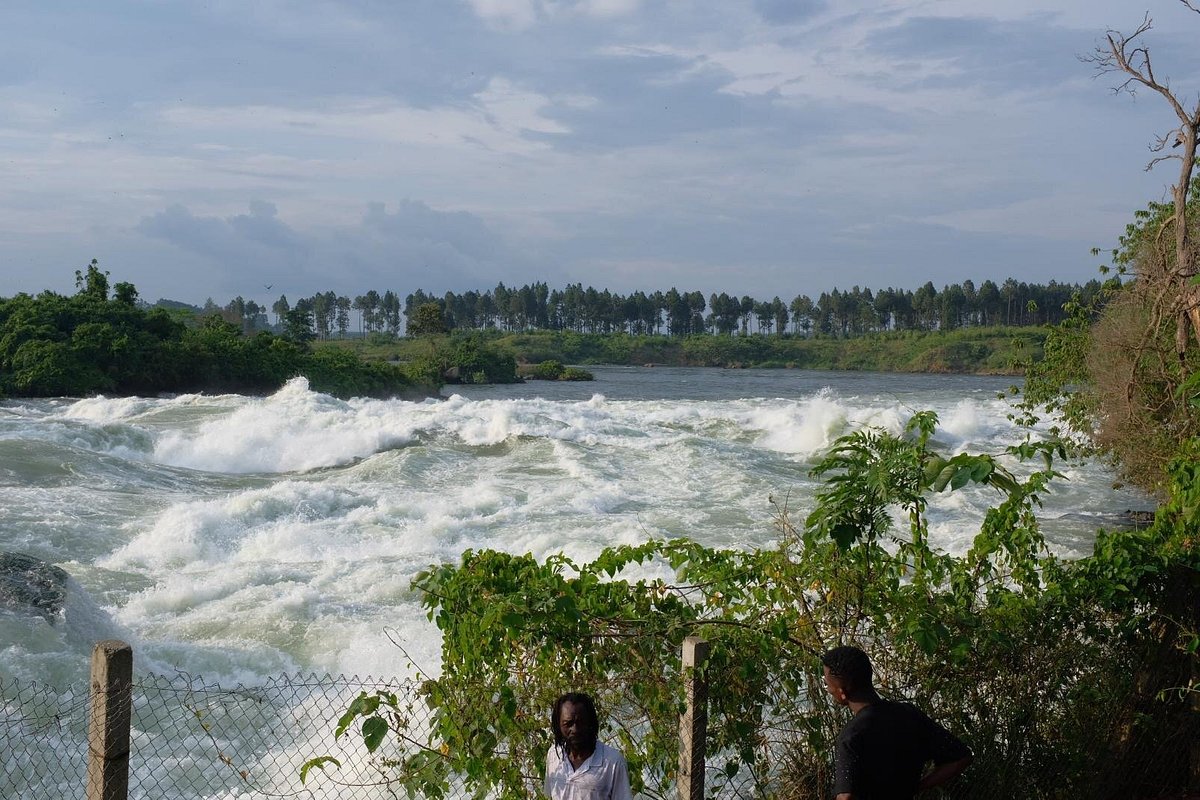
In 1862, the British explorer John Hanning Speke stood at a waterfall where Lake Victoria spilled north and declared he had found the source of the Nile. The falls he saw, Ripon Falls, disappeared under the reservoir of the Owen Falls Dam in 1954, but the point where the river begins still draws visitors from around the world. Jinja, the colonial-era town beside it, is about 80 km east of Kampala. It has grown into East Africa's centre for river adventure.
| Location | Eastern Uganda, on the northern shore of Lake Victoria, about 80 km east of Kampala |
| Known for | The source of the Nile, white-water rafting, adventure sports |
| History | John Hanning Speke identified the source in 1862, and Jinja became an industrial town in the colonial era |
| Nile length | About 6,650 km from Lake Victoria to the Mediterranean |
| Nearby | Mabira Forest, Sezibwa Falls, Itanda Falls, Mount Elgon and Sipi Falls |
The Kampala–Jinja road passes Mabira Forest Reserve, a 300 km² block of tropical forest with red-tailed monkeys, forest walks and a zipline. The sacred Sezibwa Falls is a short detour away. The Ssezibwa site is steeped in Buganda tradition and makes a peaceful stop.
| Option | Suits |
|---|---|
| Day trip from Kampala or Entebbe | Source of the Nile, Mabira and one activity. Allow for traffic, since Kampala to Jinja can take 2–3 hours. |
| 1–2 nights | Rafting or kayaking, plus a relaxed sunset cruise |
| Combined with Sipi Falls and Mount Elgon | An eastern Uganda loop of 4–6 days. See Mount Elgon. |
Jinja also works well as the last stop of a long safari, before the flight home from Entebbe. It's a good place for a final adrenaline day.
When Speke reached the northern shore of Lake Victoria in July 1862, he found the Nile pouring out of the lake over Ripon Falls and declared it the river's source. His claim was disputed for years. Other explorers argued for rivers feeding the lake, such as the Kagera, which rises in Rwanda and Burundi. But Jinja became internationally recognised as the source. The Owen Falls Dam, completed in 1954, submerged Ripon Falls. Today, a boat from the Jinja side or from the Source of the Nile gardens takes you to the point where the lake water becomes river current, marked by a plaque. A monument to Speke and a bust of Mahatma Gandhi, some of whose ashes were scattered here in 1948, stand on the banks.
The Nile below Jinja has some of the world's best big-volume white water. Established operators run full-day trips covering several major rapids (grades 3–5), with safety kayakers and experienced guides, plus calmer family float trips on gentler stretches. No experience is needed, and training is given on the water before the first rapid.
Kayak schools offer lessons on flat water, and experienced paddlers can join guided trips on the rapids. Tandem kayaks let beginners experience the rapids with an expert.
A jump of about 44 metres from a tower above the Nile. You can choose to touch the water at the bottom.
Relaxed ways to enjoy the river, often with birds and otters nearby.
Rides and guided quad-bike trips go through villages, farmland and along the riverbanks. Both suit beginners.
Evening boat trips on the Nile with drinks, birds and views of the setting sun.
Jinja's colonial-era buildings, markets and riverside cafés make it pleasant to explore on foot. The Busoga kingdom, whose people are the Basoga, has its seat nearby. A visit to a local market, a Busoga cultural site or a craft cooperative adds depth to an adventure-focused stay.
Jinja can be visited all year. Rafting runs in all seasons, and the dry months (June–August, December–February) are the most comfortable. The rains bring higher water and sometimes bigger rapids.
Jinja fits at the start or end of a Uganda safari, since it is less than 3 hours from Entebbe. It also leads naturally east to Mount Elgon and Sipi Falls, and north-east to Pian Upe and Kidepo. See our 13-day Uganda tour, which includes Jinja.
The river banks and islands near Jinja are rich in birds: pied and giant kingfishers, African fish eagles, cormorants, herons, weavers and the occasional great blue turaco. Otters are sometimes seen, and monitor lizards bask on the rocks. Early morning and evening boat trips give the best sightings.
Related reading: things to do in Jinja, Sezibwa Falls and day tours.
Mabira Forest Reserve, on the Kampala–Jinja highway, protects about 300 km² of tropical rainforest. It is home to red-tailed monkeys, grey-cheeked mangabeys, black-and-white colobus, more than 300 bird species and many butterflies. Guided walks and cycling trails start from the eco-tourism centre at Najjembe, and a zipline over the forest canopy adds adventure. It is a good stop on the way to or from Jinja.
North of Jinja, Itanda Falls is a powerful series of rapids and cascades where the Nile narrows through rocks. It is revered by the Basoga as a sacred site linked to river spirits. A viewpoint gives dramatic views, especially in the late afternoon.
About 80 km, typically 2–3 hours depending on traffic.
Established operators run trips with trained guides, safety kayakers and briefings, and offer gentler options for beginners and families. Follow the minimum-age rules for each section.
Yes. A day trip from Kampala or Entebbe covers the boat trip to the source, lunch and one short activity.
White-water rafting on the Nile. For something gentler, a boat trip to the source of the Nile and a sunset cruise.
Yes. Family float trips, boat trips, horse riding and gentle kayaking suit children, subject to each operator's age limits.
One night for the source and one activity, and two nights to include rafting and a relaxing evening on the river.
At the point where the Nile leaves Lake Victoria at Jinja. A marker on the river bank and a short boat trip show it.
Yes. Mbale and Sipi Falls are 2½–3½ hours east of Jinja, making a natural eastern Uganda loop.
No. Guides give full safety training before the first rapid, and calmer options are available for beginners.
Rafting runs all year. The dry months are the most comfortable, while the rains can bring higher water and bigger rapids.
This 13-day Uganda tour covers Murchison Falls, Kibale chimps, Queen Elizabeth, gorillas in Bwindi, Lake Bunyonyi, Lake Mburo and adventure activities in…