
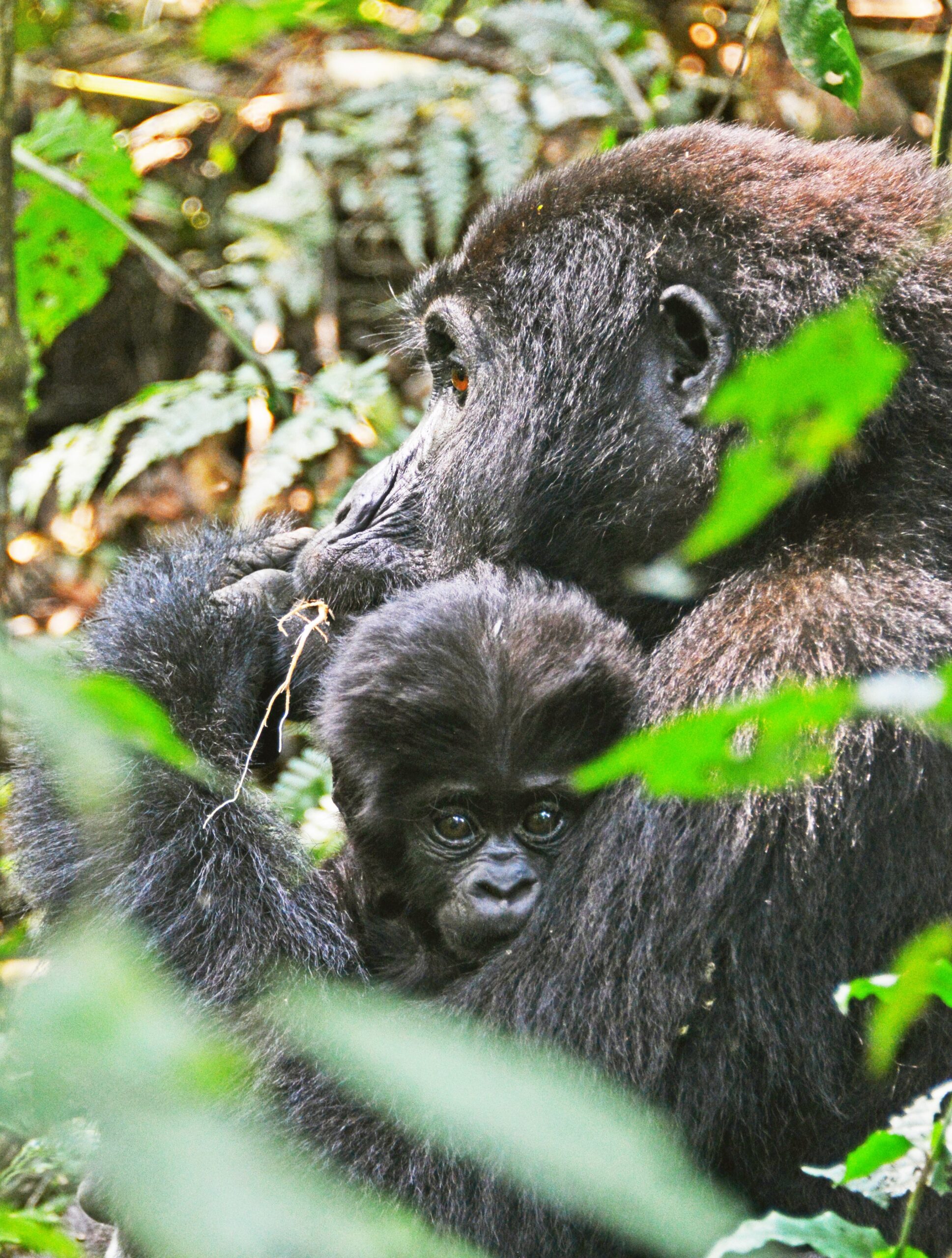
Best Month to See Newborn Gorillas in Bwindi: What Travelers Should Know, Seeing a tiny mountain gorilla clinging to its mother in the misty rainforest of Bwindi Impenetrable National Park is one of the most memorable experiences a wildlife traveler can have.
For many visitors planning a Uganda gorilla trekking safari, one question naturally comes up:
What is the best month to see newborn gorillas in Bwindi?
The answer may be surprising.
There Is No Specific Month for Newborn Gorillas
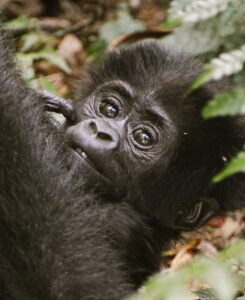
Unlike some wildlife events that follow predictable seasonal patterns, mountain gorilla births in Bwindi do not occur during one particular month.
Gorillas can give birth throughout the year. Historical veterinary records from Bwindi document newborns appearing in different months, while Gorilla Doctors has also reported multiple newborns being discovered at different times of the year.
This means that January, February, March, April, May, June, July, August, September, October, November and December can all offer the possibility of seeing a gorilla infant.
Therefore, no responsible safari company should promise that you will see a newborn simply because you travel during a particular month.
So, What Is the Best Month?
If your main goal is to maximize your chances of having a comfortable gorilla trekking experience while still having a possibility of encountering a young infant, the traditionally drier periods are attractive.
June to September
These months are generally among the more favorable periods for trekking because rainfall tends to be lower than during the wetter seasons.
The forest can still receive rain—Bwindi is a rainforest, after all—but trail conditions may be more manageable.
December to February
This is another generally favorable period for trekking, although conditions can still change quickly in the forest.
March to May and October to November
These periods tend to have more rainfall.
Rain does not stop gorilla trekking, but wet conditions can make Bwindi’s steep and muddy trails more challenging.
The key point is that the best month for trekking is not necessarily the best month for newborn births.
A baby can be present during any month.
Why You Cannot Predict When a Gorilla Will Give Birth
Mountain gorillas do not have a fixed annual breeding season that allows visitors to predict births accurately.
A pregnant female may give birth while her family is being monitored by researchers and trackers, but tourists cannot plan their trip around an exact birth date.
Even if a baby is born shortly before your trip, there is no guarantee that the particular habituated gorilla family you trek with will be the family containing the newborn.
This is one reason gorilla trekking is genuinely a wildlife experience rather than a zoo visit.
The animals determine the encounter.
What Makes Seeing a Newborn Gorilla So Special?
A newborn gorilla is completely dependent on its mother during its earliest stage of life.
During a trek, visitors may see an infant:
- Clinging to its mother
- Nursing
- Sleeping against her
- Being carried through the forest
- Beginning to explore
- Playing with older juveniles
- Watching other members of the family
- Learning to climb and move through vegetation
These early interactions provide a fascinating glimpse into the social life of mountain gorillas.
The mother-infant relationship is particularly special because the mother provides protection, transportation, nourishment and security as the infant develops.
Are Gorilla Infants Born Throughout the Year?
Yes.
Evidence from long-term monitoring demonstrates that births have occurred at different times of the year.
For example, Gorilla Doctors documented two newborn mountain gorillas in Bwindi in August 2020, with one infant observed only a few days after birth.
Other veterinary records from Bwindi have documented births during months such as March, July and August.
More recently, UWA reported that Bwindi had recorded many gorilla births during the period associated with the latest population census work.
This reinforces the important point:
There is no single “baby gorilla season.”
Best Months for Gorilla Trekking Versus Best Chances of Seeing Infants
These are two different questions.
Best months for comfortable trekking
Many travelers prefer:
June, July, August and September
and
December, January and February
because these periods generally have less rainfall than the wetter seasons.
However, conditions can vary.
Best months for newborn gorillas
There is no scientifically supported single best month.
Newborns can be encountered throughout the year.
Therefore, if seeing a baby gorilla is your priority, the better strategy is to:
- Choose a suitable trekking period.
- Book a habituated family trek.
- Ask your safari operator about recent family information.
- Understand that infant sightings cannot be guaranteed.
- Remain flexible about which gorilla family you encounter.
Can You Request a Gorilla Family With a Newborn?
Travelers sometimes ask whether they can specifically request a family containing a newborn.
You can certainly tell your safari operator that seeing an infant is important to you.
However, gorilla family allocation is not something a tour company should promise.
Gorilla families move naturally through the forest, and their composition can change.
UWA’s current gorilla trekking system involves designated trekking sectors in Bwindi, including Buhoma, Ruhija, Rushaga and Nkuringo.
The family you encounter will depend on the allocation and the location of habituated groups on the day of your trek.
Which Bwindi Sector Is Best for Seeing Newborn Gorillas?
There is no particular Bwindi sector that guarantees newborn gorillas.
The four main trekking sectors are:
Buhoma
Located in the northern part of Bwindi, Buhoma is the original gorilla trekking area and has several habituated families.
Ruhija
Ruhija is located in the eastern part of Bwindi and is another important gorilla trekking sector.
Rushaga
Rushaga is in southern Bwindi and is known for having several habituated gorilla families.
Nkuringo
Nkuringo is also in southern Bwindi and is particularly famous for its dramatic mountainous scenery.
Because gorilla groups move and their compositions change, choosing a sector solely because you want to see a newborn is not a reliable strategy.
How Old Is a “Newborn” Gorilla?
The word newborn is often used loosely in tourism.
A gorilla that is several months old may still be described by visitors as a baby or infant.
There is an important difference between:
- A newborn only days or weeks old
- A young infant
- An older infant
- A juvenile
If your dream is to see a very young infant, it is particularly important not to expect a guaranteed sighting.
The exact age of infants in a family may not always be known to visitors before the trek.
What Does a Newborn Gorilla Do During a Trek?
If you are lucky enough to encounter a family with a very young infant, you may notice the baby spending most of its time close to its mother.
Depending on its age, you may see it:
Clinging to its motherVery young infants depend heavily on their mothers for transportation.
NursingInfants spend considerable time nursing during their early development.
SleepingYoung babies may sleep while being carried or held close to their mothers.
Beginning to exploreAs they grow stronger, they start reaching toward vegetation and exploring their surroundings.
Interacting with other gorillasOlder infants may begin playing with juveniles and other members of their family.
These behaviors can change significantly as the baby develops.
Can You See a Newborn Gorilla Up Close?
Gorilla trekking provides a remarkable opportunity to observe habituated gorillas, but visitors must always maintain the required distance and follow ranger instructions.
You should never:
- Touch a gorilla, Reach toward an infant, Try to attract its attention
- Feed a gorilla, Chase a gorilla, Block its path, Use flash photography
Even if a curious infant approaches the visitor area, allow the ranger guide to manage the encounter.
This is especially important because humans can transmit diseases to mountain gorillas.
Why Every Newborn Gorilla Matters
A newborn gorilla represents much more than an adorable wildlife sighting.
Mountain gorillas remain an endangered species, and every successful birth contributes to the continuation of the population.
UWA’s conservation reporting shows the significant progress made in protecting mountain gorillas. The 2018 Bwindi census recorded 459 gorillas and documented 79 new births during the census period, demonstrating the importance of successful reproduction to the population’s recovery.
UWA’s 2026 State of Wildlife report notes that a new Bwindi census has been completed, with updated population data undergoing analysis.
Every infant that survives into adulthood represents another generation of mountain gorillas.
Gorilla Tourism Helps Protect the Forest
Gorilla trekking also creates an important economic connection between tourism and conservation.
Tourism revenue helps support protected-area management and surrounding communities.
UWA has reported that revenue sharing has supported community projects around Bwindi and Mgahinga, reinforcing the connection between tourism and conservation.
When travelers visit responsibly, they contribute to a system that helps make continued protection of the gorillas and their habitat possible.
What Is the Best Time to Book Your Gorilla Trek?
If you want to combine the possibility of seeing a baby gorilla with generally favorable trekking conditions, consider:
June to SeptemberThese months are popular for gorilla trekking because of relatively drier conditions.
December to FebruaryAnother attractive period for travelers who prefer generally drier conditions.
March to MayThese months can be wetter, but they can also provide a beautiful rainforest experience and may have advantages for travelers who prefer quieter travel periods.
October to NovemberThese months are also wetter, but gorilla trekking continues.
Remember: rain does not determine whether gorillas have babies.
A newborn can be present in any month.
What If It Rains During Your Gorilla Trek?
Don’t cancel your safari simply because Bwindi is experiencing rain.
Bwindi is a rainforest, so rainfall is part of the ecosystem.
Gorilla trekking generally continues in wet weather, although trails can become slippery and muddy.
Good preparation includes:
- Waterproof hiking boots, Rain jacket Waterproof backpack cover
- Long trousers, Gardening gloves, Walking poles
- Extra clothing, Waterproof protection for your camera
A porter can also be valuable, particularly on steep or muddy sections.
The Most Important Advice for Travelers
If your primary reason for visiting Bwindi is to see a newborn gorilla, do not plan your entire trip around one specific month.
Instead, think about the experience as a whole.
Choose a travel period that works well for your schedule and trekking preferences, then communicate your interest in seeing an infant to your safari company.
A newborn sighting should be viewed as a special bonus rather than a guaranteed feature of your itinerary.
Best Month to See Newborn Gorillas in Bwindi: Final Answer
So, what is the best month?
There isn’t one.
Mountain gorillas can give birth throughout the year, and documented births in Bwindi have occurred in different months.
If you want generally favorable trekking conditions, June to September and December to February are often attractive periods to consider.
But if your specific goal is to see a newborn gorilla, any month can potentially deliver that unforgettable encounter.
The most important factors are choosing a habituated family, obtaining a gorilla trekking permit, working with an experienced local safari operator and remaining flexible.
And when you finally see that tiny infant clinging to its mother in the ancient forest of Bwindi, you will understand why every gorilla birth is a reason to celebrate.
Plan Your Bwindi Gorilla Trekking Safari With Fuga Tours and Travel
At Fuga Tours and Travel, we can help you plan a Uganda gorilla trekking safari in Bwindi based on your preferred travel dates, trekking sector, accommodation level and wider safari interests.
If seeing a gorilla infant is high on your bucket list, let us know when planning your trip. While we cannot guarantee that a particular family will have a newborn on your trekking day, we can help you choose a suitable itinerary and explain what to expect.
Your Bwindi adventure can also be combined with:
- Queen Elizabeth National Park
- Kibale Forest chimpanzee trekking
- Lake Bunyonyi
- Mgahinga Gorilla National Park
- Lake Mburo National Park
- Murchison Falls National Park
- Rwanda gorilla trekking
- Uganda and Rwanda combined safaris
Plan your Uganda gorilla safari with Fuga Tours and Travel and experience the extraordinary world of mountain gorillas in Bwindi.