
Chimpanzee Habituation Experience in Kibale: What to Expect, Imagine entering the ancient rainforest of western Uganda before sunrise, listening to birds calling through the canopy and following fresh chimpanzee signs along a forest trail. Unlike a standard chimpanzee trek, where visitors spend a limited amount of time observing habituated chimpanzees, the Chimpanzee Habituation Experience (CHE) in Kibale Forest National Park offers a much longer and more immersive encounter.
Kibale Forest is widely known for its remarkable population of chimpanzees and its diversity of other primates. The habituation experience gives visitors the opportunity to spend extended time observing chimpanzees as researchers, trackers, and guides work with them as they become accustomed to the presence of humans.
For travelers interested in primates, wildlife photography, conservation, and immersive rainforest experiences, chimpanzee habituation can be one of the most memorable activities to include on a Uganda safari.
What Is the Chimpanzee Habituation Experience?
Chimpanzee habituation is a process through which wild chimpanzees gradually become accustomed to the presence of humans without being fed, touched, or domesticated.
The Chimpanzee Habituation Experience in Kibale allows visitors to accompany experienced trackers and guides while they monitor chimpanzees in the forest.
The experience is different from ordinary chimpanzee trekking because participants can spend substantially more time observing the chimpanzees once they are located.
The purpose is not simply to see chimpanzees. It is also to understand their behavior, social relationships, communication, feeding patterns, movement, and interactions with the surrounding forest.
Because the chimpanzees remain wild, sightings and behavior cannot be guaranteed.
Where Does Chimpanzee Habituation Take Place?
The experience takes place in Kibale Forest National Park in western Uganda, one of the country’s most important primate destinations.
Kibale is particularly famous for its chimpanzees, but the forest is also home to several other primate species, including:
Red colobus monkeys, Black-and-white colobus monkeys, L’Hoest’s monkeys, Blue monkeys, Red-tailed monkeys, Olive baboons, Grey-cheeked mangabeys
The forest also supports a remarkable variety of birds, butterflies, trees, and other wildlife.
This makes a habituation experience more than a chimpanzee encounter. You are entering a complex tropical ecosystem where every walk can reveal something different.
Chimpanzee Trekking vs Chimpanzee Habituation Experience
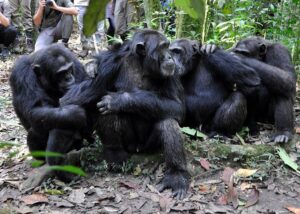
One of the most common questions travelers ask is: What is the difference between chimpanzee trekking and habituation?
During a conventional chimpanzee trek, visitors normally spend a shorter period with the chimpanzees after locating them.
The habituation experience is designed for travelers who want a longer and deeper experience in the forest.
Chimpanzee Trekking
A normal chimpanzee trek is suitable for travelers who want to experience the forest and see chimpanzees while continuing with a broader Uganda safari itinerary.
It generally involves:
Entering the forest with a trained guide, Tracking chimpanzees, Following their movements, Observing them for a designated period, Learning about their behavior and habitat
Chimpanzee Habituation
The habituation experience provides more time for observation and is particularly attractive to:
Wildlife enthusiasts, Photographers, Researchers and students, Primatologists, Conservation enthusiasts, Travelers with a strong interest in chimpanzees
If chimpanzees are one of the main reasons for your Uganda trip, habituation can provide a more immersive experience.
What Time Does the Habituation Experience Begin?
Chimpanzee habituation activities can involve spending much of the day in the forest, and participants should be prepared for an early start.
Starting early is important because chimpanzees are active during the morning hours. You may follow them as they leave their night nests and begin feeding, moving, socializing, and communicating.
Your exact schedule should be confirmed when booking because operational arrangements and park regulations can change.
What Should You Expect During the Experience?
The most important thing to understand is that chimpanzee habituation is a wildlife experience rather than a staged animal encounter.
Your day may include several different activities.
Early Morning Forest Walk
Your experience begins with an early departure into Kibale Forest.
The forest can be cool and quiet in the morning, with mist sometimes hanging among the trees. As daylight increases, birds become more active and the sounds of the forest gradually become louder.
Your guide and trackers will look for signs indicating where chimpanzees have moved.
Looking for Chimpanzee Signs
Tracking chimpanzees involves much more than simply walking until you see them.
Trackers may look for:
Fresh dung, Footprints, Feeding remains, Broken branches, Vocalizations, Movement through the canopy, Nesting sites
Experienced trackers can interpret these clues to determine the direction in which the chimpanzees have traveled.
Hearing Chimpanzees Before Seeing Them
One of the most exciting parts of the experience can be hearing chimpanzees before they become visible.
Chimpanzees are highly vocal animals. Their calls can travel through the forest, sometimes making it possible to know that a group is nearby even when the vegetation prevents a clear view.
Following these sounds can create an extraordinary sense of anticipation.
Observing Chimpanzee Behavior
Once the chimpanzees are located, you may have an opportunity to observe their natural behavior.
Depending on the day, you could see chimpanzees:
Feeding, Grooming, Resting, Playing, Climbing trees, Moving between trees, Calling to one another, Caring for young ones, Interacting with members of their community
Their behavior can change rapidly, which is one reason extended observation is so valuable.
Why the Habituation Experience Takes Longer
Chimpanzee communities do not follow a schedule designed around tourists.
They may move deep into the forest, remain high in trees, disappear into thick vegetation, or suddenly travel in another direction.
A longer experience gives visitors more opportunities to observe different behaviors and follow the chimpanzees as they move through their habitat.
This is particularly valuable for photographers and wildlife enthusiasts who want more than a brief sighting.
Is Chimpanzee Habituation Guaranteed?
No wildlife encounter can be guaranteed.
Chimpanzees are wild animals, and their movements depend on factors such as:
Food availability, Weather, Group behavior, Territorial movements, Human activity, Time of day, Forest conditions
Although Kibale is renowned for chimpanzee tracking, sightings and the quality of the encounter can vary.
This unpredictability is part of what makes the experience authentic.
How Close Can You Get to the Chimpanzees?
Visitors must maintain the required distance from chimpanzees and follow the instructions of guides and park authorities.
Chimpanzees are our close evolutionary relatives, but they are still wild animals. Approaching too closely can create stress for the animals and can also increase the risk of disease transmission between humans and chimpanzees.
Do not attempt to touch, feed, call, or provoke the chimpanzees.
Your guide will explain the appropriate behavior before and during the activity.
What About Photography?
Kibale offers excellent opportunities for wildlife photography, but photographing chimpanzees in a dense rainforest can be challenging.
You may encounter:
Low light, Dense vegetation, Chimpanzees high in trees, Fast-moving animals, Sudden changes in direction
A camera with a suitable telephoto lens can be useful.
However, photography should never take priority over the welfare of the chimpanzees or the instructions of your guide.
Avoid using flash if prohibited or if it could disturb the animals.
What Other Wildlife Can You See?
Although chimpanzees are the main attraction, Kibale Forest is an incredibly diverse ecosystem.
During your habituation experience, you may encounter other primates and forest wildlife.
Possible sightings include:
Black-and-white colobus monkeys: Often seen moving through the canopy.
Red-tailed monkeys: Recognizable by their reddish tail tips and active behavior.
Blue monkeys: Frequently encountered in the forest.
Red colobus monkeys: Another important primate species found in Kibale.
Forest birds: Kibale is an excellent destination for birdwatchers.
You may also encounter forest elephants, duikers, bushbucks, and other species, although sightings vary.
How Physically Demanding Is Chimpanzee Habituation?
Chimpanzee habituation can be physically demanding because you may spend many hours walking through a natural forest environment.
The terrain can include:
Muddy trails, Slippery ground, Tree roots, Uneven terrain, Steep sections, Dense vegetation
Your level of physical exertion depends partly on where the chimpanzees are located and how far they move during the day.
You do not need to be an elite athlete, but a reasonable level of fitness is helpful.
What Should You Wear?
Proper clothing can make a major difference to your comfort.
Consider packing:
Long trousers, Long-sleeved shirt, Comfortable hiking boots, Waterproof jacket, Hat, Lightweight backpack, Insect repellent, Drinking water, Snacks, Camera and spare batteries, Binoculars
Neutral-colored clothing is generally preferable for forest wildlife activities.
Avoid clothing that is difficult to move in or footwear with poor grip.
Do You Need a Walking Stick?
A walking stick can be useful, particularly when trails are muddy or uneven.
Local guides can advise you about the terrain on the day and whether additional support would be helpful.
What Happens if It Rains?
Kibale is a tropical rainforest, so rain is always possible.
Do not assume that rain means the experience must be cancelled.
Chimpanzees continue their natural activities in changing weather conditions, although their behavior and movements may vary.
A waterproof jacket and protection for your camera and other electronics are therefore important.
Best Time for Chimpanzee Habituation in Kibale
Kibale can be visited throughout the year.
However, weather conditions vary between seasons, and forest trails can become particularly muddy during periods of heavier rainfall.
Dry periods can make hiking conditions more manageable, but wildlife experiences remain dependent on natural conditions.
If your main objective is chimpanzee habituation, it is better to plan around your overall Uganda itinerary and book the required activity in advance rather than relying entirely on weather forecasts.
How to Prepare for the Chimpanzee Habituation Experience
Preparation can significantly improve your experience.
Book in Advance
Chimpanzee habituation permits are limited and should be arranged ahead of your safari.
Your tour operator can help confirm availability, organize permits, accommodation, transport, and other activities.
Build Your Fitness
In the weeks before your trip, consider regular walking or hiking.
Practicing on uneven terrain can be particularly helpful.
Carry Enough Water
You may spend many hours in the forest, so hydration is important.
Protect Your Electronics
Rain and humidity are common in tropical forests.
Use waterproof bags or protective covers for cameras, phones, and other electronics.
Follow Your Guide
Your guide and trackers understand the forest and chimpanzee behavior.
Always follow their instructions, particularly when approaching or observing chimpanzees.
Rules and Responsible Chimpanzee Tourism
Responsible tourism is essential for protecting Kibale’s chimpanzees.
Visitors should:
Follow park regulations, Maintain the required distance, Never feed chimpanzees, Never touch wildlife, Avoid loud or disruptive behavior, Follow instructions from guides, Avoid visiting when sick, Dispose of waste properly Avoid using flash when instructed not to, Respect the forest environment
These measures help protect both visitors and chimpanzees.
Why Choose Chimpanzee Habituation Over a Normal Trek?
The biggest attraction is the opportunity to spend more time observing chimpanzees and learning about their natural behavior.
A conventional trek can be ideal for travelers with limited time, while habituation is better suited to visitors who want to dedicate a substantial part of their day to chimpanzee observation.
The experience allows you to slow down and appreciate the forest rather than treating the chimpanzee encounter as a quick wildlife sighting.
Combining Chimpanzee Habituation with Other Uganda Safaris
Kibale is conveniently located for combining chimpanzee experiences with other destinations in western Uganda.
Popular combinations include:
Kibale and Queen Elizabeth National Park
After Kibale, travelers can continue to Queen Elizabeth National Park for game drives and a boat cruise on the Kazinga Channel.
Kibale and Bwindi
A chimpanzee experience in Kibale can be combined with gorilla trekking in Bwindi Impenetrable National Park.
This creates an exceptional primate-focused Uganda safari.
Kibale, Queen Elizabeth and Bwindi
For travelers with more time, these three destinations can form part of a comprehensive western Uganda safari featuring chimpanzees, gorillas, savannah wildlife, birds, and spectacular landscapes.
Kibale and Murchison Falls
Longer Uganda itineraries can also combine Kibale with Murchison Falls National Park for wildlife viewing and the famous Murchison Falls.
How Many Days Do You Need?
The number of days depends on your overall itinerary.
A short itinerary may include:
Day 1: Travel to Kibale
Day 2: Chimpanzee habituation experience
Day 3: Continue to your next destination
For a more comprehensive trip, you can add Queen Elizabeth National Park, Bwindi, Lake Bunyonyi, or other destinations.
A tour operator can help arrange the route according to your available time, budget, and interests.
Is Chimpanzee Habituation Worth Including on a Uganda Safari?
For travelers who have a strong interest in chimpanzees and primates, the habituation experience offers a deeper way to experience Kibale Forest.
Instead of simply searching for an animal and taking a few photographs, you have the opportunity to spend extended time watching how chimpanzees behave within their natural environment.
The experience can also provide a greater appreciation of the complexity of chimpanzee societies and the importance of conserving their forest habitat.
Book Your Kibale Chimpanzee Habituation Experience with Fuga Tours and Travel
A chimpanzee habituation experience in Kibale is an unforgettable way to explore Uganda’s rainforest and learn more about one of Africa’s most fascinating primates.
At Fuga Tours and Travel, we can help you plan a customized Uganda safari that includes chimpanzee habituation in Kibale Forest together with other attractions such as Queen Elizabeth National Park, Bwindi Impenetrable National Park, Murchison Falls, Lake Bunyonyi, or other destinations.
We can assist with planning your itinerary, arranging permits, accommodation, transportation, guiding, and other safari logistics.
Whether you are planning a dedicated chimpanzee safari, a primate adventure, a wildlife holiday, or a Uganda gorilla and chimpanzee combination, we can help create an itinerary suited to your travel goals.
Plan your Kibale Chimpanzee Habituation Experience with Fuga Tours and Travel and discover the wild side of Uganda’s remarkable primate forests.
Frequently Asked Questions About Chimpanzee Habituation in Kibale
1. What is chimpanzee habituation?
Chimpanzee habituation is the process of gradually getting wild chimpanzees accustomed to the presence of humans without feeding or domesticating them.
2. Where is the chimpanzee habituation experience found?
It takes place in Kibale Forest National Park in western Uganda.
3. How long does chimpanzee habituation take?
It is designed as a longer forest experience than ordinary chimpanzee trekking, allowing visitors substantially more time for observation.
4. Can children participate?
Age requirements and participation rules should be confirmed when booking because park regulations can change.
5. Can I take photographs?
Yes, photography is generally part of the experience, but visitors must follow their guide’s instructions and avoid disturbing the chimpanzees.
6. What happens if I do not see chimpanzees?
Chimpanzees are wild animals, so sightings cannot be guaranteed. Experienced trackers work to locate the habituated community, but wildlife movements remain unpredictable.
7. Is chimpanzee habituation difficult?
It can involve several hours of walking through uneven and sometimes muddy rainforest terrain. A reasonable level of fitness is recommended.
8. What should I carry?
Carry hiking shoes, long clothing, rain protection, drinking water, snacks, insect repellent, a camera, and other personal essentials.
9. Can I combine chimpanzee habituation with gorilla trekking?
Yes. Kibale and Bwindi can be combined in a longer western Uganda primate safari.
10. How early should I book?
Because permits and spaces are limited, advance planning is recommended, especially during busy travel periods.
Conclusion
The Chimpanzee Habituation Experience in Kibale is more than a simple wildlife walk. It is an opportunity to spend extended time in one of Uganda’s most important primate forests while observing chimpanzees in their natural environment.
From following fresh tracks and listening for distant calls to watching feeding, grooming, communication, and movement through the forest, every experience can be different.
For travelers looking for a deeper primate encounter, Kibale chimpanzee habituation can become one of the highlights of a Uganda safari.
Start planning your Kibale chimpanzee habituation adventure with Fuga Tours and Travel today.