
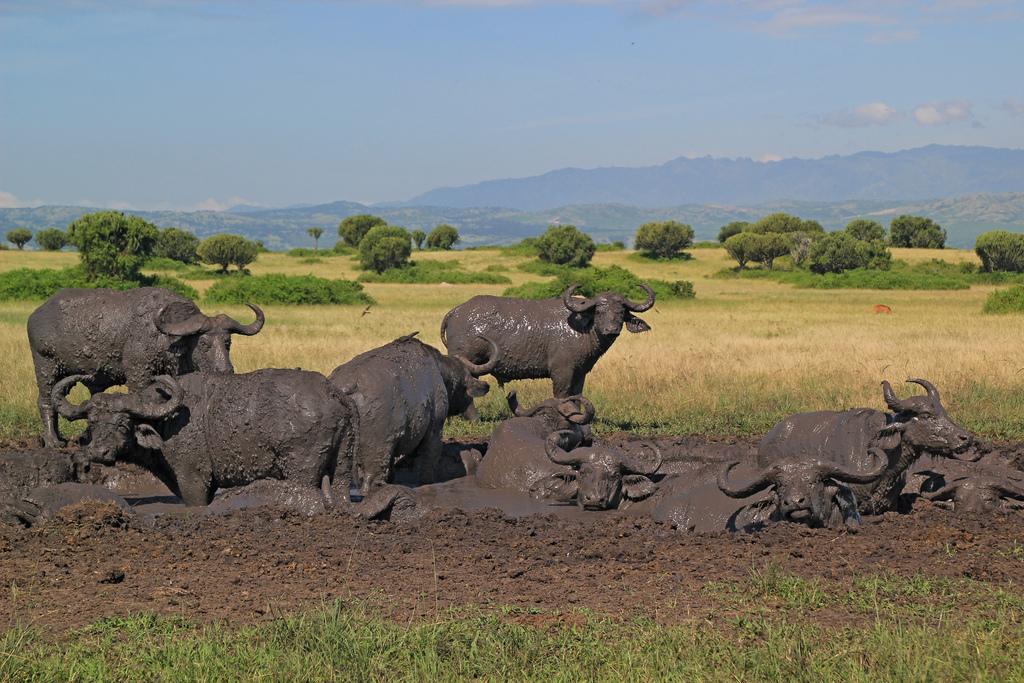
Extended-Stay Safaris: How to Plan a 3-Week Uganda and Rwanda Safari, A three-week safari in Uganda and Rwanda is the perfect choice for travelers who want more than a quick wildlife holiday. Instead of rushing from one destination to another, an extended-stay safari gives you enough time to experience East Africa’s incredible wildlife, mountain gorillas, chimpanzees, spectacular landscapes, local cultures, lakes, forests, and vibrant communities at a relaxed pace.
Uganda and Rwanda complement each other exceptionally well. Uganda offers a remarkable combination of savannah wildlife, primates, forests, mountains, lakes, and cultural experiences, while Rwanda is famous for its mountain gorillas, volcanic landscapes, Nyungwe Forest, Lake Kivu, and Akagera National Park.
With three weeks available, you can combine several of these highlights without making the journey feel like a race.
Whether you are planning a 21-day Uganda and Rwanda safari, a private family holiday, a honeymoon, a wildlife adventure, a gorilla trekking trip, or a long East African vacation, careful planning will help you get the most from your extended stay.
Many travelers visiting East Africa try to fit everything into five or seven days. While shorter safaris can be excellent, they often require long driving days and difficult choices about what to leave out.
Three weeks gives you considerably more flexibility.
An extended safari allows you to:
- Experience multiple national parks
- Go gorilla trekking
- Track chimpanzees
- Enjoy traditional savannah game drives
- Take boat cruises
- Explore tropical forests
- Visit local communities
- Enjoy cultural experiences
- Spend time around Lake Kivu or Lake Bunyonyi
- Include birdwatching
- Visit major attractions without rushing
- Add rest days between intensive activities
- Combine Uganda and Rwanda in one journey
Most importantly, you have time to appreciate each destination instead of simply passing through it.
What Can You See During Three Weeks?
A well-designed 21-day itinerary can combine several of East Africa’s most rewarding experiences.
Depending on your interests, your safari may include:
Uganda
- Entebbe
- Kampala
- Ziwa Rhino Sanctuary
- Murchison Falls National Park
- Kibale Forest National Park
- Queen Elizabeth National Park
- Bwindi Impenetrable National Park
- Mgahinga Gorilla National Park
- Lake Bunyonyi
- Lake Mburo National Park
Rwanda
- Volcanoes National Park
- Kigali
- Akagera National Park
- Nyungwe National Park
- Lake Kivu
You do not necessarily need to visit every destination. The best three-week safari is one designed around your priorities.
Best 3-Week Uganda and Rwanda Safari Itinerary
Below is an example of how you could structure a 21-day extended-stay safari.
Days 1–2: Arrival in Entebbe
Begin your adventure in Entebbe.
After arriving at Entebbe International Airport, spend your first night relaxing after your international flight.
Depending on your arrival time, you can explore some of Entebbe’s attractions, including:
- Entebbe Botanical Gardens
- Lake Victoria
- Uganda Wildlife Education Centre
- Local markets
- Mabamba Swamp for shoebill spotting
The first day should be relatively relaxed, particularly if you have traveled a long distance.
Where to stay
Choose accommodation close to Entebbe International Airport or around Lake Victoria, depending on your arrival schedule.
Days 3–5: Murchison Falls National Park
Travel north to Murchison Falls National Park, Uganda’s largest national park.
The journey can be combined with a visit to Ziwa Rhino Sanctuary if your itinerary allows.
Murchison Falls is particularly rewarding because you can combine wildlife viewing with a boat cruise and spectacular scenery.
Safari activities include:
- Game drives, Nile boat cruise, Murchison Falls visit, Birdwatching, Nature walks, Rhino tracking at Ziwa Rhino Sanctuary
During game drives, you may encounter:
- Elephants, Lions, Buffaloes,
- Giraffes, Antelopes, Leopards, Hippos Crocodiles
The Nile boat cruise is one of the highlights, taking you toward the base of the dramatic Murchison Falls.
Days 6–8: Kibale Forest – Chimpanzee Capital of Uganda
Continue west toward Kibale Forest National Park.
Kibale is one of the best destinations in Africa for chimpanzee trekking.
A chimpanzee trekking experience takes you into the forest with trained guides and trackers searching for habituated chimpanzee communities.
You may also encounter:
- Red colobus monkeys, Black-and-white colobus monkeys
- L’Hoest’s monkeys, Blue monkeys
- Mangabeys, Forest birds
Consider adding the Chimpanzee Habituation Experience
If you have enough time and want a deeper primate experience, consider the chimpanzee habituation experience.
Instead of spending only a limited period with chimpanzees, participants can spend substantially more time observing their behavior as researchers and trackers work with them.
For wildlife enthusiasts, photographers, and primate lovers, this can be one of the most memorable parts of an extended Uganda safari.
Days 9–11: Queen Elizabeth National Park
From Kibale, continue to Queen Elizabeth National Park.
This park offers an excellent combination of savannah landscapes, wildlife and waterways.
Main activities include:
- Morning game drives, Afternoon game drives,Kazinga Channel boat cruise
- Birdwatching, Nature walks, Ishasha game drives
The Kazinga Channel is especially impressive for wildlife viewing. Hippos, crocodiles, buffaloes, elephants and numerous bird species can often be seen along the water.
If your itinerary permits, travel through the Ishasha sector, famous for its tree-climbing lions.
Days 12–14: Bwindi Impenetrable National Park – Gorilla Trekking
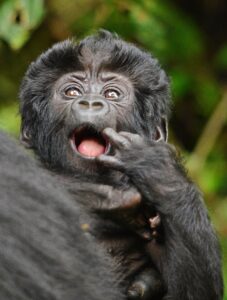
For many travelers, gorilla trekking is the centerpiece of a Uganda and Rwanda safari.
Spend several nights around Bwindi Impenetrable National Park to allow enough time for trekking and relaxation.
Bwindi has several gorilla trekking sectors, including:
- Buhoma
- Ruhija
- Rushaga
- Nkuringo
Your accommodation should ideally be located near the sector where your gorilla permit is booked.
Gorilla Trekking Day
Gorilla trekking usually begins early in the morning with a briefing before entering the forest.
The trek can be physically demanding because Bwindi is mountainous and the terrain can be steep, muddy and slippery.
Once you find the gorilla family assigned to your group, you will have a limited period to observe them according to Uganda’s wildlife regulations.
You may see:
- Silverbacks, Adult females, Juveniles
- Infants, Feeding behavior, Grooming, Play, Social interactions
Hire a Porter
Even travelers who are physically fit can benefit from hiring a porter.
A porter can help carry your backpack, provide support on difficult sections of the trail and assist you when the terrain becomes challenging.
Hiring a porter also provides direct economic benefits to local communities.
Day 15: Lake Bunyonyi – Relaxation After Gorilla Trekking
After your gorilla trek, Lake Bunyonyi is an excellent place to slow down.
Known for its scenic hills, islands and peaceful waters, Lake Bunyonyi provides a welcome break after several days of trekking and safari activities.
Activities may include:
- Canoeing, Boat trips, Birdwatching, Village visits
- Nature walks, Relaxing at your lodge
An overnight stay here also helps break up the journey toward Rwanda.
Days 16–17: Rwanda’s Volcanoes National Park
Cross into Rwanda and continue toward the volcanic region of northern Rwanda.
Volcanoes National Park is famous for its population of mountain gorillas and golden monkeys.
If you have already trekked gorillas in Uganda, you may choose a different experience in Rwanda.
Golden Monkey Trekking
Golden monkey trekking is a wonderful alternative.
These endangered primates are found in the Virunga volcanic region and are known for their distinctive golden-orange coats.
You can also explore the cultural and historical attractions around the park.
Day 18: Kigali
Continue to Kigali for a city experience.
Kigali is one of Africa’s cleanest and most organized capitals and provides a completely different atmosphere from Uganda’s national parks.
Depending on your interests, you can visit:
- Kigali Genocide Memorial
- Local markets
- Art galleries
- Craft centers
- Restaurants
- Cultural attractions
Use this day as a combination of sightseeing and relaxation.
Days 19–20: Akagera National Park
Travel east toward Akagera National Park.
Akagera provides an excellent contrast to the volcanic mountains and forests of western Rwanda.
The park’s landscape includes:
- Savannah, Wetlands
- Lakes, Woodlands, Open plains
Wildlife may include:
- Elephants, Lions, Leopards, Buffaloes
- Giraffes, Zebras, Hippos, Antelopes
Akagera is also known for boat safaris, particularly around Lake Ihema.
A game drive combined with a boat excursion can make your final days in Rwanda especially rewarding.
Day 21: Departure
Return to Kigali for your international flight or onward journey.
If your flight departs late, you may have time for a final city tour, shopping for souvenirs or enjoying a relaxed meal before heading to the airport.
Alternative Three-Week Safari Routes
Your itinerary does not have to follow the exact route above.
Option 1: Wildlife and Gorillas
Perfect for first-time visitors.
Entebbe → Murchison Falls → Kibale → Queen Elizabeth → Bwindi → Lake Bunyonyi → Rwanda → Akagera → Kigali
This route provides an excellent balance of wildlife, primates, gorillas and scenery.
Option 2: Primates and Nature
Ideal for travelers more interested in forests and primates.
Entebbe → Kibale → Queen Elizabeth → Bwindi → Lake Bunyonyi → Volcanoes → Nyungwe → Lake Kivu → Kigali
This route places greater emphasis on chimpanzees, gorillas, golden monkeys and forest experiences.
Option 3: Wildlife-Focused Extended Safari
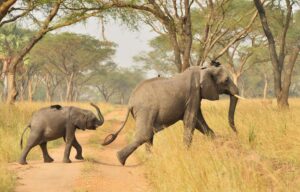
For travelers who want more game viewing:
Entebbe → Murchison Falls → Kibale → Queen Elizabeth → Lake Mburo → Akagera → Kigali
You can add gorilla trekking if it is one of your priorities.
Uganda or Rwanda: Which Should You Spend More Time In?
With three weeks, you can comfortably combine both countries.
However, the ideal number of nights in each country depends on your interests.
Spend more time in Uganda if you want:
- More national parks, Chimpanzee trekking, Gorilla trekking
- Big-game safaris, Birdwatching, Cultural experiences
- Longer road adventures, More diverse landscapes
Spend more time in Rwanda if you want:
- Gorilla trekking, Golden monkey trekking, Volcano hiking
- Akagera wildlife, Nyungwe Forest, Kigali
- Lake Kivu, A compact travel experience
Uganda generally offers more geographical variety, while Rwanda makes an excellent complementary destination.
Gorilla Permits: Plan Early
Gorilla trekking is one of the most important elements to organize before your trip.
Gorilla permits are limited, and availability can influence the entire itinerary.
When planning an extended safari, decide first:
- Whether you want to trek in Uganda or Rwanda
- Your preferred trekking date
- Your preferred trekking sector
- Your accommodation level
- Whether you want one or more gorilla experiences
Once the gorilla trekking date is confirmed, the rest of the itinerary can be built around it.
How Much Does a Three-Week Uganda and Rwanda Safari Cost?
The total cost depends heavily on your travel style.
Your budget can include:
- Gorilla permits, Chimpanzee permits, Accommodation
- Safari vehicle, Professional driver-guide, Park entrance fees, Game drives
- Boat cruises, Meals, Airport transfers, Border crossing arrangements
- Fuel, Community activities, Flights, Travel insurance, Visa costs
- Tips, Personal expenses
Budget Safari
Budget travelers can reduce costs by selecting comfortable but simple accommodation and carefully designing the route.
Midrange Safari
A midrange safari provides a good balance between comfort and cost.
You can stay in quality lodges and tented camps while still maintaining reasonable safari costs.
Luxury Safari
Luxury travelers can choose premium lodges, private experiences, upgraded vehicles and additional activities.
For a three-week safari, the cost can vary significantly depending on the number of travelers, accommodation category and activities selected.
The best way to obtain an accurate price is to request a customized quotation based on your exact travel dates and preferences.
Budgeting Tips for a Three-Week Safari
An extended safari does not necessarily need to be unnecessarily expensive.
1. Travel as a private group
If you are traveling with family or friends, the cost of the safari vehicle and guide can be shared among travelers.
2. Mix accommodation categories
You do not have to stay in luxury lodges every night.
Consider combining:
- Budget accommodation
- Midrange lodges
- Premium lodges for special nights
3. Avoid unnecessary backtracking
A carefully planned route saves both time and fuel.
4. Book major permits early
Gorilla and chimpanzee permits should be planned well ahead.
5. Combine nearby destinations
For example, Kibale and Queen Elizabeth can be combined efficiently because they are relatively close compared with crossing the country unnecessarily.
Border Crossing Between Uganda and Rwanda
Crossing between Uganda and Rwanda by road can make an extended safari particularly convenient.
Your safari operator should help you understand the relevant border procedures and documentation requirements before departure.
Common crossing points may include the Katuna/Gatuna border in the southwest, depending on the route.
Carry:
- Valid passport, Appropriate visa or immigration authorization, Yellow fever vaccination documentation where required
- Travel insurance details, Accommodation information, Safari itinerary
Immigration and entry requirements can change, so travelers should confirm current requirements before departure.
Accommodation During a Three-Week Safari
Accommodation should be selected according to both comfort and location.
For gorilla trekking, staying close to your trekking sector is particularly important.
For other destinations, choose lodges that provide easy access to park activities.
A three-week itinerary can combine different accommodation styles.
Budget
Suitable for travelers prioritizing experiences over luxury.
Midrange
A popular option for couples, families and first-time safari travelers.
Luxury
Ideal for honeymooners, anniversary trips and travelers looking for premium comfort.
You can also combine accommodation categories to keep the overall cost manageable.
What to Pack for a 21-Day Uganda and Rwanda Safari
Pack for different environments because Uganda and Rwanda include forests, mountains, savannahs and cities.
Essential safari clothing
- Lightweight trousers, Long-sleeved shirts, T-shirts
- Fleece or warm jacket, Waterproof jacket, Comfortable walking shoes
- Hiking boots, Hat, Sunglasses, Lightweight rain gear
Gorilla and chimpanzee trekking gear
- Waterproof hiking boots, Long trousers, Long-sleeved shirts
- Gardening gloves, Small backpack, Walking poles, Waterproof backpack cover
Other useful items
- Binoculars, Camera, Extra batteries, Power bank, Universal travel adapter
- Insect repellent, Sunscreen, Reusable water bottle, Personal medications, Small flashlight
Pack light where possible because you will be moving between several destinations.
Best Time for a Three-Week Uganda and Rwanda Safari
Uganda and Rwanda can be visited throughout the year.
However, many travelers prefer the relatively drier periods because trekking trails and some roads can be easier to navigate.
The wetter seasons can also be rewarding.
Rain can make trekking more challenging, but forests become lush and green, waterfalls are impressive, and birding can be excellent.
There is no single perfect month for every traveler.
Your preferred activities should determine your travel dates.
Who Should Consider an Extended-Stay Safari?
A three-week safari is particularly suitable for:
Wildlife enthusiasts
You have more opportunities to explore different habitats and national parks.
Birdwatchers
Uganda is exceptionally rewarding for birdwatching, and additional time allows you to visit multiple habitats.
Primate travelers
Chimpanzees, mountain gorillas, golden monkeys and other primates can all be incorporated.
Honeymooners
A slower itinerary allows couples to combine adventure with relaxing lodge stays.
Families
Three weeks can reduce the pressure of constantly changing destinations, particularly when rest days are included.
Photographers
More time means more opportunities for wildlife sightings, landscapes and cultural photography.
Why Slow Travel Makes Sense in Uganda and Rwanda
An extended safari is not simply about seeing more places.
It is about seeing them better.
Instead of waking up every morning and immediately driving several hours to another destination, you can build the trip around a comfortable rhythm.
For example:
Safari day → relaxation day → trekking day → cultural experience → wildlife day
This approach can make the entire holiday more enjoyable.
It also gives you time to interact with local communities, learn about conservation and appreciate the landscapes between destinations.
Responsible Tourism During Your Extended Safari
A longer stay also gives travelers more opportunities to support local communities.
Consider:
- Hiring local guides where appropriate, Using community-owned tourism services
- Buying locally produced crafts, Respecting wildlife regulations, Avoiding single-use plastics
- Supporting conservation initiatives, Respecting local customs
- Following park rules, Maintaining a safe distance from wildlife
Responsible tourism helps ensure that Uganda and Rwanda remain extraordinary destinations for future generations.
Why Book a Three-Week Uganda and Rwanda Safari With a Local Tour Operator?
Planning a 21-day safari independently can be complicated.
A local safari company can help coordinate:
- Gorilla permits
- Chimpanzee permits
- Accommodation
- Safari vehicle
- Driver-guide
- Park activities
- Border crossings
- Airport transfers
- Game drives
- Boat cruises
- Cultural experiences
- Changes to the itinerary
More importantly, a local operator understands road conditions, travel times and the practical realities of moving between destinations.
Plan Your Extended Uganda and Rwanda Safari With Fuga Tours and Travel
A three-week Uganda and Rwanda safari should be more than a list of destinations. It should be a carefully designed journey that balances wildlife, adventure, relaxation, culture and unforgettable experiences.
Fuga Tours and Travel can help you design a private Uganda and Rwanda safari around your interests, preferred accommodation level, budget and travel dates.
Whether your priority is gorilla trekking, chimpanzee trekking, Big Five wildlife, birdwatching, hiking, cultural experiences, honeymoon travel or a combination of everything, your itinerary can be customized to suit your travel style.
Ready to plan your 21-day Uganda and Rwanda adventure?
Contact Fuga Tours and Travel to start planning your extended-stay safari.
Let your three weeks in Uganda and Rwanda become a journey of wildlife, primates, forests, mountains, culture and unforgettable East African experiences.