
Gorilla Trekking Rules and Etiquette in Uganda: What UWA Requires, Gorilla trekking in Uganda is one of Africa’s most memorable wildlife experiences. Walking through the forests of Bwindi Impenetrable National Park or Mgahinga Gorilla National Park and spending time near a habituated mountain gorilla family is a privilege that comes with important responsibilities.
The Uganda Wildlife Authority (UWA) has established rules governing gorilla tracking to protect visitors, guides, and, most importantly, the mountain gorillas. UWA states that visitors are required to follow its tracking Standard Operating Procedures (SOPs), which may be revised periodically.
This guide explains the major gorilla trekking rules and etiquette that travelers should understand before visiting Uganda.
What Is Gorilla Trekking in Uganda?
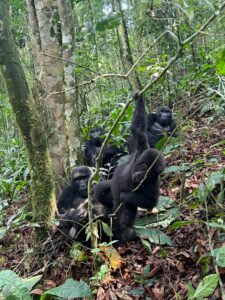
Gorilla trekking involves hiking through Uganda’s protected forests in search of a habituated mountain gorilla family. Once the family is located, visitors are allowed a limited period to observe them before returning through the forest.
Uganda’s gorilla trekking takes place in:
Bwindi Impenetrable National Park, Mgahinga Gorilla National Park
According to UWA, a trek may take approximately 2–7 hours, depending on the location of the gorilla family and forest conditions, while the actual observation period is limited to one hour for standard gorilla tracking.
Because mountain gorillas are wild animals and are susceptible to human diseases, following the rules is essential
Gorilla Trekking Rules Required by UWA
Maintain a 10-Metre Distance from the Gorillas

One of the most important UWA rules is maintaining a minimum distance of 10 metres (about 32.8 feet) from the gorillas.
Visitors should not deliberately move closer to a gorilla to obtain a better photograph.
Sometimes a gorilla may move closer to the visitors. In such situations, follow the instructions of your ranger guide rather than attempting to touch, approach, or interact with the animal.
The 10-metre rule is designed to reduce the possibility of disease transmission and minimize stress or disturbance to the gorillas.
Why the distance matters
Mountain gorillas are closely related to humans and can be vulnerable to human respiratory illnesses. Keeping a safe distance helps protect both the animals and visitors.
Do Not Trek if You Are Sick
UWA specifically requires visitors not to visit the gorillas if they have a cold or another infectious illness.
This is one of the most important conservation rules.
Even an illness that seems minor to a traveler could potentially pose a serious health risk to a gorilla.
If you become sick shortly before your trek, inform your tour operator that is Fuga tours and travel and UWA staff rather than hiding your symptoms
Diseases are a serious conservation concern
Mountain gorillas share many biological similarities with humans. Respiratory infections can therefore be particularly concerning when humans come into close contact with them.
For this reason, disease prevention is an important part of responsible gorilla tourism.
Gorilla Trekking Has a Minimum Age of 15
According to UWA’s published gorilla tracking guidelines, the minimum age for gorilla tracking and viewing is 15 years.
Families traveling with children should therefore check the age requirement before making arrangements for a gorilla trek.
This is especially important when planning a family safari because a child who is below the minimum age may not be permitted to participate in the gorilla tracking activity.
A Maximum of Eight Visitors Is Allowed per Gorilla Group
UWA’s published gorilla tracking rules specify a maximum of eight visitors per gorilla group.
The restriction helps reduce:
Human pressure on the gorillas, Noise in the forest, Disease-transmission risks, Environmental impact, Disturbance to natural gorilla behavior
It also creates a more controlled wildlife-viewing experience.
Your Gorilla Visit Is Limited to One Hour
Standard gorilla tracking allows visitors one hour with the gorilla group.
The one-hour period begins according to the instructions of the ranger guides once the gorilla family has been located.
Although one hour may sound short, it can be an extraordinary wildlife experience.
During this time, visitors should concentrate on observing the gorillas responsibly rather than trying to get as many photographs as possible.
Do Not Use Flash Photography
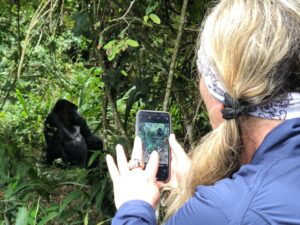
Flash photography is not permitted during gorilla tracking.
Before entering the forest, check your camera or smartphone settings and disable the flash.
Flash photography can disturb wildlife and is unnecessary in most forest conditions.
A camera with good low-light capability can be useful, but always prioritize the instructions of your ranger over photography.
Responsible photography etiquette
When photographing gorillas:
Do not use flash, Do not move closer simply for a better photograph, Do not block other visitors, Keep your movements slow, Follow your ranger’s instructions, Avoid excessive noise, Do not attempt to attract a gorilla’s attention.
The best gorilla photograph is one obtained without disturbing the animal.
Do Not Eat or Drink While You Are with the Gorillas
UWA’s published rules state that smoking, eating and drinking are not permitted during gorilla tracking.
This means you should not open snacks or drinks while you are observing the gorillas.
Eat and drink before entering the forest or follow your guide’s instructions regarding breaks during the trek.
This rule also helps prevent food-related interactions between people and wildlife.
Do Not Smoke During Gorilla Tracking
Smoking is prohibited during gorilla tracking.
Apart from the wildlife implications, visitors should respect the forest environment and avoid any behavior that could create a fire or pollution risk.
If you smoke, plan accordingly before your trek and follow all park regulations.
Cover Your Mouth When Coughing or Sneezing
If you need to cough or sneeze while near the gorillas, UWA instructs visitors to cover their face and turn away from the gorillas.
This is particularly important because gorillas can catch respiratory infections from humans.
If you feel unwell before the trek, tell your guide or tour operator.
Never Touch the Gorillas
Even if a gorilla approaches you, do not attempt to touch it.
Gorillas may sometimes come closer to visitors, particularly curious juveniles. This does not mean that visitors should reach out.
Your guide and ranger are responsible for managing the encounter.
Remain calm, avoid sudden movements and follow their instructions.
A gorilla approaching a visitor does not give permission for physical contact.
Do Not Chase or Follow a Gorilla
Visitors should never chase a gorilla to obtain a photograph or a closer view.
If a gorilla moves away, allow it to move naturally.
Your ranger guide will position the group appropriately and help determine where visitors should stand.
Responsible gorilla tourism means observing wildlife rather than controlling its behavior.
Keep Your Voice Low
The forest is a natural environment, and excessive noise can disturb wildlife.
Visitors should speak quietly and listen carefully to their guides.
Avoid:
Shouting, Loud conversations, Playing music, Making unnecessary noises, Calling out to gorillas
A quiet group also has a better chance of observing natural behaviors.
Never Throw Anything at the Gorillas
Never throw:
Food, Stones, Sticks, Leaves, Bottles, Other objects
at or toward gorillas.
Do not attempt to get their attention by making noises or throwing objects.
The purpose of gorilla trekking is to observe natural behavior, not to make the animals perform for visitors.
Do Not Leave Litter in the Forest
UWA’s park regulations prohibit littering, and its gorilla tracking rules specifically instruct visitors not to leave litter in the forest.
Carry your rubbish with you until you reach an appropriate disposal point.
This includes:
Plastic wrappers, Water bottles, Tissues, Food packaging, Batteries, Camera-related waste
Leave only footprints
A responsible trekker should leave the forest exactly as they found it—or as close to that as possible.
Do not pick flowers, damage vegetation or remove natural objects from the park. UWA’s wider park regulations prohibit picking flowers and destroying vegetation.
Human Waste Must Be Handled Properly
UWA’s published gorilla tracking rules state that human waste should be buried 30 cm (12 inches) deep.
Because gorilla trekking takes place in a natural forest environment, visitors should always follow their ranger’s instructions if they need to use the toilet during the trek.
Do not leave human waste exposed.
Stay With Your Trekking Group
Do not wander away from your group without permission.
The forest can be difficult to navigate, and your ranger guides are responsible for maintaining visitor safety and managing the gorilla encounter.
If you need to stop, rest or move for any reason, tell your guide.
Always Follow the Ranger Guide’s Instructions
Your ranger guide is not simply there to help you find the gorillas.
Rangers are responsible for managing the encounter and ensuring visitors follow the established conservation procedures.
You should therefore:
Listen carefully to the briefing., Follow instructions about where to stand., Maintain the required distance., Remain calm around the animals., Ask before changing position., Follow instructions concerning photography., Leave the area when instructed.
UWA states that its staff are responsible for enforcing the tracking SOPs.
Gorilla Trekking Etiquette: How Responsible Travelers Should Behave
The official rules are only part of responsible gorilla trekking. Good etiquette also helps make the experience better for other visitors and protects the quality of the wildlife encounter.
Be Patient
You may spend several hours hiking before finding the gorillas.
Do not become frustrated if the trek takes longer than expected.
Gorillas are wild animals, and their movements cannot be scheduled like a tourist attraction.
Respect Other Visitors
You may be trekking with people from different countries and backgrounds.
Give everyone an opportunity to observe and photograph the gorillas.
Avoid standing directly in front of another visitor for a long period.
If the group is large enough to require rotation or repositioning, follow your guide’s instructions.
Do Not Turn the Trek Into a Photo Competition
It can be tempting to spend the entire hour taking photographs.
However, gorilla trekking is more than photography.
Take a few meaningful photographs, then put the camera down and watch the animals.
Observe:
Family interactions Feeding, Grooming, Juvenile behavior, Communication, Resting, Movement through the vegetation
These natural behaviors are often more memorable than photographs
What Should You Carry for a Gorilla Trek?
Although exact packing needs vary depending on the season and trekking sector, useful items include:
Essential documents
Carry your:
Gorilla trekking permit, Identification/passport as required, Relevant payment documentation, Travel insurance information
UWA’s published rules specifically advise trekkers to carry their payment receipts and permits.
Recommended trekking equipment
Consider carrying:
Sturdy hiking boots, Waterproof jacket, Long trousers, Long-sleeved shirt, Gardening or hiking gloves, Hat, Insect repellent, Drinking water, Small backpack, Camera without flash, Walking stick, Waterproof protection for electronics
What NOT to Do During Gorilla Trekking
For a quick reminder, avoid these behaviors:
Do not trek when you have an infectious illness.
Do not approach closer than the required distance.
Do not touch gorillas.
Do not use flash photography. Do not eat or drink while with the gorillas.
Do not smoke during tracking.
Do not shout at the gorillas.
Do not chase wildlife.
Do not throw objects.
Do not litter.
Do not damage vegetation.
Do not wander away from your group.
Do not ignore ranger instructions.
Why Gorilla Trekking Rules Are So Important
Gorilla trekking rules are not designed simply to make tourism more complicated.
They exist because mountain gorillas are vulnerable to disturbance, disease and excessive human interaction.
Responsible tourism helps maintain a balance between:
Tourism Conservation Community Benefits Gorilla Protection
Uganda’s gorilla tourism takes place within protected national parks, and UWA manages these experiences under conservation guidelines.
When visitors follow the rules, they contribute to a tourism model in which people can experience mountain gorillas while minimizing unnecessary pressure on the animals.
Gorilla Trekking Rules at a Glance
| Rule | UWA Requirement |
|---|---|
| Minimum trekking age | 15 years |
| Maximum visitors per gorilla group | 8 people |
| Distance from gorillas | 10 metres |
| Standard viewing time | 1 hour |
| Flash photography | Not permitted |
| Smoking | Not permitted during tracking |
| Eating/drinking with gorillas | Not permitted |
| Trekking while infectious/sick | Not permitted |
| Coughing/sneezing | Cover face and turn away |
| Littering | Prohibited |
| Human waste | Bury 30 cm deep where required |
| Ranger instructions | Must be followed |
These requirements are based on UWA’s published gorilla tracking rules and tracking guidelines; UWA notes that its tracking SOPs may be revised periodically, so travelers should confirm the latest requirements before their trek.