
Uganda Shilling vs Rwandan Franc: A Complete Currency Guide for Travelers, Planning a Uganda and Rwanda safari and wondering about the difference between the Ugandan Shilling and the Rwandan Franc? Understanding the currencies of both countries is an important part of preparing for your East African adventure.
Uganda and Rwanda are neighboring countries with many shared tourism experiences, including gorilla trekking, chimpanzee trekking, wildlife safaris, bird watching, cultural experiences and scenic adventures. However, they use different national currencies.
Uganda uses the Ugandan Shilling (UGX), while Rwanda uses the Rwandan Franc (RWF or FRw).
For international travelers visiting both destinations, knowing how these currencies work can make it easier to budget for accommodation, meals, transportation, souvenirs, tips and other personal expenses.
At Figa Tours and Travel, we help travelers plan memorable Uganda and Rwanda safaris while providing practical information to make their journeys easier. In this guide, we explain everything you need to know about the Uganda Shilling and Rwandan Franc before your trip.
Uganda Shilling vs Rwandan Franc at a Glance
| Feature | Uganda | Rwanda |
|---|---|---|
| Official currency | Ugandan Shilling | Rwandan Franc |
| Currency code | UGX | RWF |
| Common abbreviation | USh | FRw |
| Country | Uganda | Rwanda |
| Central bank | Bank of Uganda | National Bank of Rwanda |
| Main use | Everyday transactions in Uganda | Everyday transactions in Rwanda |
The Bank of Uganda publishes official foreign-exchange rates, which travelers can use as a reference when checking currency movements.
The National Bank of Rwanda regulates and supervises foreign-exchange activities in Rwanda.
What Is the Ugandan Shilling?
The Ugandan Shilling (UGX) is the official currency of Uganda.
Travelers visiting destinations such as Kampala, Entebbe, Jinja, Murchison Falls, Kibale, Queen Elizabeth National Park, Bwindi Impenetrable National Park, Mgahinga and Kidepo Valley may use Ugandan Shillings for everyday purchases.
Ugandan Shillings can be useful for:
Local restaurants, Markets, Snacks and drinks, Souvenirs, Local transportation, Tips, Small purchases, Community activities, Personal expenses during a safari
The Bank of Uganda is Uganda’s central bank and is responsible for monetary policy and supervision of financial institutions.
What Is the Rwandan Franc?
The Rwandan Franc (RWF or FRw) is the official currency of Rwanda.
Travelers visiting Kigali, Volcanoes National Park, Nyungwe National Park, Akagera National Park, Lake Kivu and other destinations will encounter the Rwandan Franc when paying for everyday goods and services.
Rwandan Francs are useful for:
Local restaurants, Markets, Souvenirs, Local transportation, Drinks, Snacks, Tips, Small purchases, Community experiences
The National Bank of Rwanda identifies the Rwandan Franc as Rwanda’s national currency and regulates the country’s foreign-exchange market.
Is the Uganda Shilling the Same as the Rwandan Franc?
No.
The Uganda Shilling and Rwandan Franc are completely different currencies.
If you are traveling from Uganda to Rwanda, you should not assume that your Ugandan Shillings will be accepted for ordinary purchases in Rwanda.
Likewise, travelers should not expect Rwandan Francs to be widely accepted for everyday purchases once they enter Uganda.
This is particularly important when taking a combined Uganda and Rwanda safari.
Uganda Shilling to Rwandan Franc Exchange Rate
Exchange rates between UGX and RWF change regularly.
For example, a live reference rate on 22 September 2026 indicated approximately:
100,000 UGX = 37,462 RWF
However, this should only be treated as an indicative market reference. The amount you receive at a bank or foreign-exchange bureau can differ because of buying and selling rates, fees and other charges.
The Bank of Uganda publishes indicative official foreign-exchange rates, while Rwanda’s foreign-exchange market is supervised by the National Bank of Rwanda.
Important tip for travelers
Always check the current exchange rate on the day you exchange money rather than relying on an old conversion found online.
Which Currency Should You Carry in Uganda?
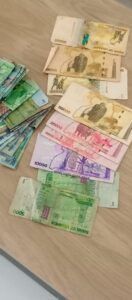
When traveling around Uganda, it is useful to have some Ugandan Shillings for everyday spending.
You may need local currency when:
Buying snacks, Purchasing souvenirs, Visiting local markets, Paying for small services, Buying drinks, Tipping service providers, Paying for minor personal expenses
If your safari package with Fuga Tours and Travel already includes accommodation, transportation, meals and activities, you may only need local currency for your personal spending.
Which Currency Should You Carry in Rwanda?
When traveling through Rwanda, carrying some Rwandan Francs is useful.
You may use them for:
Local shopping, Markets, Restaurants, Drinks, Souvenirs, Tips, Local transportation, Small personal purchases
Rwanda’s National Bank advises the public to use licensed foreign-exchange providers and to check the exchange rates displayed by the provider. It also advises customers to request a receipt for foreign-exchange transactions.
Can I Use US Dollars in Uganda and Rwanda?
US Dollars can be useful for international travelers, particularly for tourism-related services.
However, you should not depend entirely on US Dollars for everyday spending.
A better approach is to carry:
Local currency bank card emergency funds.
In Rwanda, the National Bank states that monetary obligations and transactions are generally expressed and settled in Rwandan Francs, although specific authorized businesses and circumstances can accept foreign currency under applicable rules.
Therefore, having Rwandan Francs available is a practical option for everyday purchases.
Can I Use Ugandan Shillings in Rwanda?
It is better not to rely on Ugandan Shillings in Rwanda.
Once you cross from Uganda into Rwanda, you should plan to use Rwandan Francs for local transactions.
If you are traveling on a combined safari, you can discuss your route with Fuga Tours and Travel and plan when and where you are likely to need each currency.
Can I Use Rwandan Francs in Uganda?
Similarly, Rwandan Francs should not be your main currency for everyday purchases in Uganda.
Once you enter Uganda, it is more practical to have Ugandan Shillings.
Keeping the two currencies separate can also prevent confusion when paying for goods and services.
Where Should Travelers Exchange Money?
Travelers should exchange money through banks and licensed foreign-exchange providers.
In Rwanda, foreign-exchange businesses are regulated by the National Bank of Rwanda, and customers are advised to verify that a forex bureau has a valid license.
When exchanging money:
- Check the exchange rate.
- Ask about any additional charges.
- Use a licensed provider.
- Count your money carefully.
- Request a receipt.
- Keep your receipt until you have completed your trip.
Avoid exchanging large amounts of money with individuals you do not know.
Should You Exchange Money at the Airport?
Airport currency exchange can be convenient when you first arrive, especially if you need money for immediate expenses.
However, travelers should compare the exchange rate and fees before exchanging a large amount.
If you only need money for your first meal, transport or small expenses, you can exchange a limited amount and then compare rates at other licensed providers later.
Using ATMs in Uganda and Rwanda
International debit and credit cards can be useful during a Uganda or Rwanda safari.
ATMs are generally easier to find in major cities such as:
Kampala, Entebbe, Kigali, Other major towns
However, access to banking services can become more limited as you travel into remote safari areas.
For example, before heading into destinations such as Bwindi, Mgahinga, Kidepo or remote areas around national parks, it is sensible to make sure you have sufficient cash for your expected personal expenses.
Should I Carry Cash on a Uganda Safari?
Yes.
Even if you have a bank card, carrying some cash is recommended.
Cash can be useful for:
Tips, Small purchases, Markets, Drinks, Snacks, Souvenirs, Unexpected expenses
You do not need to carry your entire travel budget in cash.
A practical strategy is to combine:
Cash + card + emergency backup.
Currency Tips for Gorilla Trekking
If you are traveling to Uganda or Rwanda for gorilla trekking, it is particularly important to prepare your money before traveling into remote areas.
In Uganda, popular gorilla trekking destinations include:
Bwindi Impenetrable National Park, Mgahinga Gorilla National Park
In Rwanda, gorilla trekking takes place in:
Volcanoes National Park
Your major safari expenses may already be covered by your tour package, depending on the itinerary you book.
However, you may still need money for:
Tips, Drinks, Souvenirs, Porter services, Community experiences, Personal purchases
Fuga Tours and Travel can help you understand which expenses are included in your safari package and which expenses you should budget for separately.
Currency Tips for a Uganda-Rwanda Combined Safari
A combined safari requires travelers to think about two currencies.
For example, your itinerary could include:
Kampala → Kibale → Queen Elizabeth → Bwindi → Rwanda → Volcanoes National Park → Kigali
During the Ugandan part of the journey, you will mainly use UGX.
After entering Rwanda, RWF becomes the local currency for everyday transactions.
Our practical tips:
1. Don’t carry excessive amounts of both currencies.
Only exchange what you reasonably expect to use.
2. Keep currencies separate.
Use different wallet compartments or envelopes.
3. Carry a bank card.
This provides an additional payment option where cards are accepted.
4. Keep emergency money separate.
Do not keep all your cash in one place.
5. Check exchange rates before exchanging large amounts.
Exchange rates can change over time.
How to Avoid Currency Problems While Traveling
A little preparation can save you from unnecessary stress.
Use licensed money changers
Always use reputable banks or licensed forex bureaus.
Check the exchange rate
Do not accept an exchange rate without checking it first.
Count your money
Count your cash before leaving the exchange counter.
Ask for a receipt
A receipt provides proof of the transaction.
Don’t display large amounts of cash
Keep your money secure and only carry what you need.
Separate currencies
Keep UGX, RWF and other foreign currencies in clearly separated compartments.
What About Old Rwandan Franc Banknotes?
Travelers should also be aware that Rwanda has announced changes affecting certain older Rwandan Franc banknotes.
In a March 2026 announcement, the National Bank of Rwanda stated that certain older FRW 500, 1,000, 2,000 and 5,000 banknotes would cease to be legal tender 12 months after 2 March 2026. The announcement also provided exchange arrangements for the affected notes.
For travelers visiting Rwanda during 2026, this is another reason to obtain Rwandan currency through legitimate financial institutions and avoid accepting questionable or unfamiliar old notes.
How Much Money Should You Carry?
There is no fixed amount that every traveler needs.
Your personal budget depends on:
Length of your safari, Type of accommodation, Meals included in your package, Shopping, Tipping, Optional activities, Number of destinations, Card availability
If Fuga Tours and Travel has already arranged your accommodation, transportation, meals and major activities, your personal spending budget may be much smaller than that of a traveler organizing everything independently.
Before departure, ask for a clear itinerary showing what is included and what is excluded.
Do Travelers Need to Tip in Uganda and Rwanda?
Tipping is generally a personal decision, and practices can vary depending on the service and circumstances.
Travelers may choose to tip:
Safari guides, Drivers, Lodge staff, Porter Other service providers
If you plan to tip, carrying smaller denominations of local currency can make the process easier.
Your Fuga Tours and Travel safari consultant can also provide practical guidance about tipping during your particular itinerary.
Frequently Asked Questions About Uganda and Rwanda Currency
What is Uganda’s currency?
Uganda’s official currency is the Ugandan Shilling (UGX).
What is Rwanda’s currency?
Rwanda’s official currency is the Rwandan Franc (RWF or FRw).
Are UGX and RWF the same?
No. They are two different national currencies.
Can I use US Dollars in Uganda?
US Dollars can be useful in tourism, but travelers should carry some Ugandan Shillings for everyday purchases.
Can I use US Dollars in Rwanda?
US Dollars may be accepted in certain authorized tourism-related circumstances, but travelers should have Rwandan Francs for ordinary local spending.
Can I use Ugandan Shillings in Rwanda?
Do not rely on UGX for everyday purchases in Rwanda. Exchange an appropriate amount into Rwandan Francs.
Can I use Rwandan Francs in Uganda?
It is better to obtain Ugandan Shillings for your everyday expenses once you are in Uganda.
Should I carry cash on safari?
Yes. Carrying some cash is useful, especially when visiting remote areas where card facilities may be limited.
Does the exchange rate change?
Yes. Exchange rates fluctuate, so check current rates before exchanging significant amounts of money. The Bank of Uganda publishes daily indicative rates, while Rwanda’s foreign-exchange market is regulated by the National Bank of Rwanda.
Plan Your Uganda and Rwanda Safari with Fuga Tours and Travel
Understanding the difference between the Ugandan Shilling and Rwandan Franc is a simple but important part of planning your East African adventure.
Whether you are interested in a Uganda gorilla trekking safari, Rwanda gorilla trekking safari, Uganda and Rwanda combined safari, chimpanzee trekking, Big Five wildlife safari, birding safari, honeymoon safari or cultural tour, preparing your finances in advance can make your trip more comfortable.
At Fuga Tours and Travel, we help travelers plan unforgettable journeys across Uganda and Rwanda, including transportation, accommodation, gorilla trekking, wildlife experiences, chimpanzee trekking and other exciting activities.
Ready to explore Uganda and Rwanda? Contact Fuga Tours and Travel today and let us help you plan your safari, understand your travel costs and prepare for an unforgettable East African adventure.