
Rwakobo Rock
Cottages built into a rocky outcrop near the park gate, with zebra and impala below.
Lake Mburo National Park is the closest savannah park to Kampala, and the best place in Uganda to see zebras and impala or to go on safari on foot, by bike or on horseback.
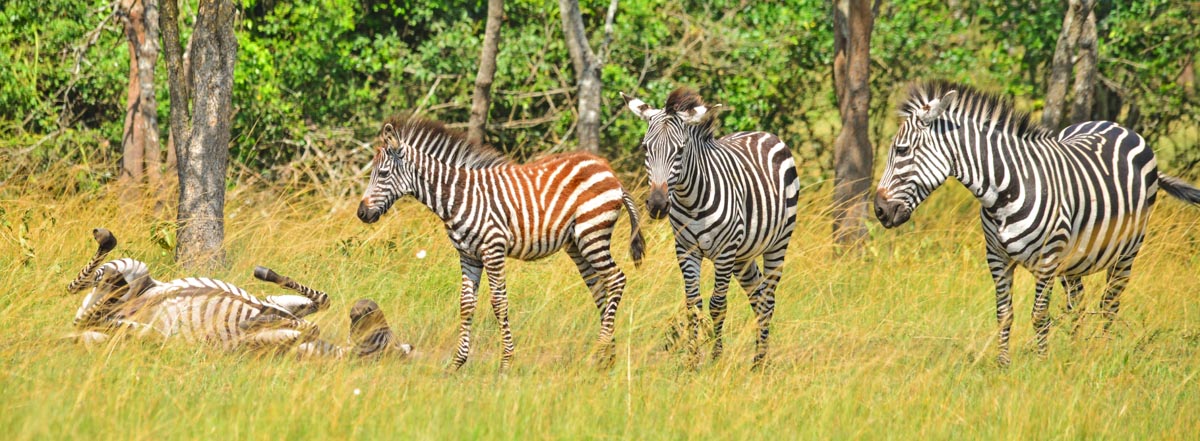
Lake Mburo National Park covers about 370 km² of rolling acacia savannah, rocky ridges and wetlands around Lake Mburo, one of 13 lakes in a wetland system that links the area. It lies about 230 km (4 hours) from Kampala, directly on the road to Bwindi. That makes it the natural first or last night of a gorilla safari, and a good one-night introduction to game viewing.
| Location | Kiruhura district, western Uganda, between Masaka and Mbarara |
| Size | About 370 km² |
| Established | 1983 |
| Habitat | Acacia savannah, rocky ridges, forest galleries, swamps and five lakes within the park |
| Wildlife | About 68 mammal species and around 350 birds |
| Famous for | Zebras, impala, eland, walking, horseback and cycling safaris |
Most of our gorilla safaris spend one night at Lake Mburo on the way to or from Bwindi, which splits an otherwise 9-hour drive in two. It is also an easy two-day trip from Kampala or Entebbe for travellers with limited time. See Lake Mburo and gorilla safari.
The park is open all year. The dry seasons (June–August and December–February) concentrate animals near the lakes, while the green months are beautiful and quiet.
Lake Mburo is the best place in western Uganda to see plains zebras, which gather in large herds on the grasslands around the lake. Impala, found in Uganda only here and in Kidepo, are common, and the park has the country's largest population of eland, Africa's biggest antelope. Buffalo, topi, oribi, Defassa waterbuck, bushbuck, warthogs and Bohor reedbuck are regularly seen, and Rothschild's giraffes were reintroduced in 2015. Hippos and crocodiles live in the lake. Predators include leopards, spotted hyenas, jackals and servals. The absence of lions and elephants is what makes walking, cycling and horseback safaris possible. See wildlife safaris.
About 350 species have been recorded, and the park is known for species that are hard to find elsewhere. The African finfoot, a shy waterbird, is best looked for on the lake by boat. The red-faced barbet, a savannah species, is a Lake Mburo speciality. Swamp species include the papyrus gonolek, white-winged warbler and papyrus yellow warbler, and the Rubanga forest walk adds forest birds. The shoebill is occasionally seen in the swamps. See birding safaris.
Guided by an armed UWA ranger, usually early in the morning, walking safaris explore the savannah around the salt lick at Rwonyo or the hills above the lake. You approach zebras, eland and impala on foot, which is a very different feeling from a vehicle.
Run from stables outside the park, these rides range from one hour to full days, and suit beginners and experienced riders. Horses can approach zebras and antelopes more closely than a vehicle or people on foot.
Two-hour boat trips on Lake Mburo give close views of hippos, crocodiles, fish eagles, kingfishers and, with luck, the African finfoot.
Guided mountain-bike rides on park trails, among zebras and impala.
These give good chances of leopards, hyenas, bushbabies and nightjars.
This fits naturally into gorilla safaris: see our 8-day gorilla trekking and wildlife tour, 12-day tour and Lake Mburo and gorilla safari.
Lake Mburo was once a controlled hunting area and then a game reserve, before becoming a national park in 1983. Its creation displaced Banyankole cattle keepers, and much of the park's wildlife was lost in the following years. Since the 1990s, UWA has worked with local communities through revenue sharing, community conservation and tourism jobs. Today the park is surrounded by ranches, and wildlife often moves between the park and the neighbouring farmland.
The park lies about 230 km west of Kampala along the Masaka–Mbarara highway. There are two gates. Nshara gate is near Lyantonde, and Sanga gate is about 13 km from the highway. Both are reached by murram roads in good condition. Allow about 4 hours from Kampala or Entebbe, and 1 hour from Mbarara. From Bwindi's southern sectors, it is about 5 hours. On the way you cross the equator at Kayabwe, a popular stop for photos and the water-draining demonstration, and pass through the long-horned Ankole cattle country.
Lake Mburo is open all year. During the dry months (June–August and December–February), grass is short and animals gather near the lakes and salt licks, which makes game viewing easier. The rains bring green landscapes, fewer visitors and excellent birding. Walking and horseback safaris run all year, and early mornings are best.
With no lions or elephants, the park is especially good for families. Children enjoy seeing zebras on foot, the boat trip among hippos, and horse riding (subject to the stables' age and size rules). The short drive from Entebbe makes it an easy two-day trip. See family safaris.
UWA charges daily park entry and separate fees for boat trips, walking safaris, night drives and cycling. Horseback safaris are paid to the private stables. On our tours, fees for the listed activities are included.
Related reading: Lake Mburo, Uganda's hidden gem and Uganda national parks.
Lake Mburo is smaller than Queen Elizabeth or Murchison and has no lions or elephants, so it isn't a Big Five park. Its strengths are different: zebras and eland you won't see in the southern parks, freedom to explore on foot, horseback or bicycle, and a location that splits the long drive to the gorillas. Most visitors combine it with Bwindi and Queen Elizabeth. See Queen Elizabeth and Bwindi.
About a fifth of the park is wetland. Lake Mburo is the largest of five lakes inside the park, linked by swamps and channels to a wider system of 13 lakes in the area. Papyrus swamps along the lakeshores shelter the sitatunga, a shy, water-loving antelope with splayed hooves for walking on floating vegetation, as well as swamp birds such as the papyrus gonolek and the white-winged warbler. The Warukiri and Rwonyo areas on the lakeshore are good places to watch hippos and waterbirds in the late afternoon.
Lions are occasionally recorded but have no resident population. The main predators are leopards and hyenas.
Yes. Guided walking safaris with an armed ranger are a highlight, as are horseback and cycling safaris.
About 230 km, or roughly 4 hours by road.
Yes. Two-hour boat trips run from Rwonyo jetty, with hippos, crocodiles and birds such as the African finfoot.
Zebras, impala, eland, buffalo, topi, giraffes, hippos, crocodiles, leopards on night drives, and about 350 bird species, including the African finfoot.
Yes, especially as a stop on the way to or from Bwindi. It is the best place in Uganda for walking and horseback safaris.
One night on a gorilla route, or two nights to combine walking, horseback, boat and night activities.
Yes. Stables offer short, gentle rides for beginners, as well as longer rides for experienced riders.
Yes. Rothschild's giraffes were reintroduced from Murchison Falls in 2015 and have settled well.
Cottages built into a rocky outcrop near the park gate, with zebra and impala below.
Tented rooms on a rocky hill bordering the park, with horseback safaris.
This 8 Days Gorilla Tracking and Wildlife Tour takes you Lake MBuro National Park, for a game drive and a boat ride…
12-day Uganda trip with Murchison Falls, Kibale chimp trekking, Queen Elizabeth wildlife, Bwindi gorilla trekking, Lake Bunyonyi & Lake Mburo National Parks.
This 13-day Uganda tour covers Murchison Falls, Kibale chimps, Queen Elizabeth, gorillas in Bwindi, Lake Bunyonyi, Lake Mburo and adventure activities in…
Lake Mburo, Queen Elizabeth, Bwindi and Volcanoes in one trip.