
Chimpanzee Trekking Rules and Etiquette in Uganda: What Every Visitor Should Know, Uganda is one of Africa’s outstanding destinations for chimpanzee trekking, offering travelers the opportunity to enter tropical forests and observe our closest living relatives in their natural environment.
From the famous Kibale National Park to other chimpanzee habitats such as Budongo Forest and Semuliki, chimpanzee trekking provides a remarkable combination of wildlife, forest adventure and conservation education.
However, chimpanzees are wild animals, not pets. They are highly intelligent, social and powerful primates, and responsible tourism requires visitors to follow established rules and etiquette throughout the experience.
Understanding the chimpanzee trekking rules in Uganda before your safari helps protect the animals, keeps visitors safe and ensures that future generations can continue enjoying these extraordinary encounters.
This guide explains the most important chimpanzee trekking rules and etiquette in Uganda, what to expect on the trail, how to behave around chimpanzees and how you can make your experience more responsible.
Why Are Chimpanzee Trekking Rules Important?
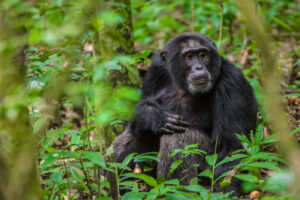 Chimpanzees share approximately 98% of their genes with humans, making them particularly vulnerable to some human diseases. Uganda Wildlife Authority identifies disease as one of the potential threats facing chimpanzees, including concerns about pathogens shared between people and chimpanzees.
This is why chimpanzee tourism must be carefully managed.
The rules are designed to:
Protect chimpanzees from human diseases, Protect visitors from wild animals, Reduce stress and disturbance to chimpanzee communities, Maintain natural animal behavior, Prevent visitors from getting too close, Control the number of people around chimpanzees, Support long-term conservation, Improve the quality of the visitor experience
Following the rules is therefore not simply about complying with park regulations. It is an important part of responsible wildlife tourism.
Always Follow Your Guide’s Instructions
The most important rule during chimpanzee trekking is simple:
Listen to your guide and follow instructions at all times.
Your ranger or guide understands chimpanzee behavior, the forest environment and the procedures governing wildlife encounters.
Your guide may tell you:
Where to stand, When to move When to remain quiet How far to stay from the chimpanzees, When photography is appropriate, When to leave the area, How to respond if chimpanzees approach the trail
Do not ignore instructions because you want a closer photograph or a better view.
Your guide’s priority is to protect both visitors and chimpanzees.
Keep the Required Distance From Chimpanzees
Visitors should never deliberately approach chimpanzees.
When chimpanzees are located, your guide will position the group at an appropriate distance and determine how visitors should observe them.
The distance is important because:
It reduces stress for the animals, It reduces the possibility of disease transmission, It prevents dangerous close encounters, It allows chimpanzees to behave naturally
If a chimpanzee moves closer to you, do not attempt to touch it, feed it or move toward it.
Let the animal decide where it wants to move while following your guide’s instructions.
Never Touch a Chimpanzee
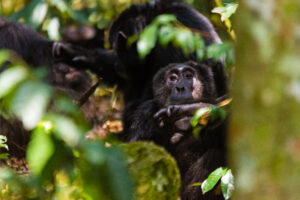
No matter how close a chimpanzee appears, never attempt to touch one.
Chimpanzees are wild animals.
Even a seemingly calm chimpanzee can react unexpectedly.
Touching wildlife can also create serious health concerns because humans and chimpanzees can transmit diseases to each other.
The best encounter is one in which visitors observe the animals without interfering with their behavior.
Never Feed Chimpanzees
Do not give food to chimpanzees.
Chimpanzees have a natural diet and are capable of finding food in their forest environment.
Feeding wildlife can:
Alter natural behavior, Encourage animals to approach humans, Create dependency, Increase human-wildlife conflict, Increase the risk of disease transmission, Create dangerous situations
Never offer fruit, snacks, water or any other food to a chimpanzee.
Do Not Make Loud Noises
The forest is not a place for shouting.
When you locate chimpanzees, keep your voice low and avoid unnecessary noise.
Avoid:
Shouting, Screaming, Playing loud music, Making repeated animal calls, Laughing loudly near the animals, Trying to attract chimpanzees’ attention
Chimpanzees communicate through a wide variety of vocalizations, gestures and body movements.
Quiet observation allows you to witness more natural behavior.
Never Try to Attract a Chimpanzee for a Photograph
Getting the perfect wildlife photograph should never take priority over the animal’s welfare.
Do not:
Call a chimpanzee toward you, Throw objects, Make unusual noises, Wave food, Whistle repeatedly, Move closer to force a better photograph
Instead, wait patiently.
Your guide will help you find an appropriate position for viewing and photography.
Do Not Use Flash Photography Unless Specifically Permitted
Chimpanzees live in forest environments where light conditions can be challenging.
Before using your camera flash, ask your guide.
If flash photography is not permitted, turn it off.
Even when photographing is allowed, remember that the objective is to observe wildlife without unnecessarily disturbing it.
A good camera does not justify breaking wildlife-viewing rules.
Do Not Use Your Phone to Play Sounds
Modern smartphones make it easy to play animal sounds, videos and recordings.
Avoid using your phone to imitate chimpanzee calls or attract their attention.
The animals should not be manipulated for photographs or entertainment.
Let the chimpanzees behave naturally.
Do Not Block the Chimpanzees’ Movement
Chimpanzees may travel through the forest canopy or along the ground.
If a chimpanzee is moving toward or past your group, do not deliberately position yourself in its path.
Never surround an animal.
Instead, follow the guide’s instructions and allow the chimpanzee enough space to move naturally.
Do Not Chase Chimpanzees
Chimpanzee trekking involves following animals through their natural habitat, but this does not mean chasing them.
If the chimpanzees move away, your tracking team may follow their trail according to approved procedures.
Visitors should never run after an animal.
Chimpanzees can move quickly through trees and dense vegetation. Trying to keep up without guidance can be unsafe and can disturb the animals.
Never Throw Objects at Chimpanzees
Never throw stones, sticks, fruit or other objects toward chimpanzees.
Even something that seems harmless can frighten or provoke a wild animal.
If a chimpanzee is high in a tree or difficult to see, allow your guide and trackers to manage the encounter.
Do Not Leave the Designated Group
Chimpanzee trekking is a guided activity.
Stay with your group unless your guide gives you specific instructions.
Do not:
Wander away alone, Take shortcuts through the forest, Separate yourself to follow a chimpanzee, Enter restricted areas, Leave the established trail without permission
Forests can be confusing, and wildlife encounters can change quickly.
Staying with your group makes the experience safer and easier to manage.
Do Not Litter in the Forest
Everything you bring into the forest should come back out with you.
Never leave:
Plastic bottles, Food wrappers, Tissues, Batteries, Cigarette packets, Plastic bags, Camera accessories, Other waste
Even small pieces of rubbish can harm wildlife and damage the forest environment.
Leave only footprints and take only photographs and memories.
Do Not Smoke During the Trek
Smoking should not be part of your chimpanzee trekking experience.
Apart from being inappropriate in a forest environment, cigarette butts create litter and can pose fire risks.
Follow the park’s rules regarding smoking and restricted activities.
Do Not Trek if You Are Sick
Because chimpanzees are susceptible to human diseases, health precautions are extremely important.
If you are feeling unwell before your trek, inform your tour operator, guide or park authorities.
In particular, symptoms such as:
Fever, Persistent cough, Flu-like symptoms, Diarrhea, Respiratory illness, Other infectious symptoms
should be taken seriously.
Do not hide illness simply because you have already paid for your chimpanzee permit.
Protecting chimpanzees sometimes means choosing not to participate when you are sick.
Maintain Good Personal Hygiene
Good hygiene is important when visiting great apes.
Follow any hygiene instructions provided by your guides or park authorities.
Depending on the current conservation protocols, visitors may be required or advised to use hand hygiene measures or other protective measures.
These procedures can change as conservation authorities respond to disease risks, so always follow the latest instructions given during your briefing.
Do Not Eat Near the Chimpanzees
Avoid eating while you are directly observing chimpanzees unless your guide specifically directs otherwise.
Food can attract animals and may encourage unnatural interactions.
If you need a snack during a long trekking experience, ask your guide when and where it is appropriate to eat.
This is particularly important during longer experiences such as the Chimpanzee Habituation Experience, where visitors can spend much longer periods in the forest.
Be Patient
Chimpanzee trekking is wildlife watching, not a zoo visit.
There is no guarantee that chimpanzees will immediately appear in front of you.
Your trackers may need to follow:
Footprints, Vocalizations, Feeding signs, Nesting locations, Droppings, Broken branches, Other signs of chimpanzee movement
The search is part of the adventure.
Rather than becoming frustrated, enjoy the forest and look for other wildlife along the way.
Respect Other Visitors
Good trekking etiquette also applies to your fellow travelers.
Avoid:
Pushing ahead, Blocking another person’s view, Standing in front of photographers, Speaking loudly, Ignoring the guide’s instructions, Taking more than your fair share of viewing space
Everyone has paid for the opportunity to experience the forest.
Sharing the experience respectfully makes the trek better for everyone.
Respect the Forest
Chimpanzee trekking is not only about seeing chimpanzees.
You are entering an ecosystem containing trees, birds, insects, monkeys and many other organisms.
Avoid:
Picking flowers, Breaking branches, Removing plants, Collecting forest materials, Disturbing insects unnecessarily, Carving names into trees
The forest is part of the wildlife experience and should be treated with respect.
What Happens During a Chimpanzee Trek?
Understanding the process can make it easier to follow the rules.
A typical chimpanzee trekking experience may include:
Step 1: Registration
Visitors arrive at the designated visitor center or tracking point.
Step 2: Briefing
The guide explains:
Safety procedures, Chimpanzee behavior, Trekking etiquette, Group arrangements, Photography expectations, Conservation rules
Step 3: Entering the Forest
The group begins walking with guides and trackers.
Step 4: Searching for Chimpanzees
Trackers use signs and vocalizations to locate the chimpanzee community.
Step 5: Observation
Once the chimpanzees are located, visitors observe them while following the guide’s instructions.
Step 6: Returning
After the permitted viewing period, the group leaves the chimpanzees and returns through the forest.
At Kibale, Uganda Wildlife Authority states that chimpanzee tracking takes place throughout the year.
Chimpanzee Tracking vs. Chimpanzee Habituation Experience
Uganda also offers a more immersive Chimpanzee Habituation Experience.
The two activities are related but different.
Chimpanzee Tracking
Chimpanzee tracking generally involves searching for an established chimpanzee community and observing the animals for the permitted period.
The emphasis is on finding and observing the chimpanzees.
Chimpanzee Habituation Experience
The habituation experience allows visitors to accompany researchers and habituators while chimpanzees gradually become accustomed to human presence.
Uganda Wildlife Authority describes the habituation experience as an activity in which tourists spend the day with chimpanzees during the habituation process.
Because this experience can involve much more time in the forest, travelers should be prepared for a longer and more immersive wildlife adventure.
Can You Take Photos During Chimpanzee Trekking?
Yes, photography is an important part of the experience, but it must never interfere with animal welfare or park regulations.
Useful photography tips include:
Keep your camera ready, Use a suitable telephoto lens when available, Avoid sudden movements, Follow your guide’s positioning instructions, Turn off flash if instructed, Be patient, Do not move closer simply for a better photograph
Remember that the best photograph is one captured without disturbing the animal.
What Should You Wear for Chimpanzee Trekking?
The forest can be wet, muddy and challenging.
Consider wearing:
Sturdy waterproof hiking boots, Long trousers, Long-sleeved shirt, Lightweight waterproof jacket, Comfortable hiking socks, Hat, Gardening or hiking gloves, Insect repellent
You should also carry:
Drinking water, Snacks where permitted, Camera, Extra batteries or power bank, Small backpack, Rain protection
Good preparation can make the trek much more comfortable.
What Should You Avoid Bringing?
Avoid carrying unnecessary items into the forest.
In particular, do not bring anything that could create litter or encourage wildlife interaction.
Keep your belongings secure and minimize unnecessary noise.
Your safari company can provide a detailed packing list before your trek.
Why Disease Prevention Matters During Chimpanzee Trekking
One of the most important reasons for responsible chimpanzee tourism is disease prevention.
Chimpanzees are genetically very close to humans, and diseases can move between humans and great apes.
UWA specifically identifies disease as one of the threats facing chimpanzees in Uganda.
This means a simple rule such as keeping your distance is about much more than personal space.
It can help protect an entire chimpanzee community.
That is why responsible visitors should take health precautions seriously.
What If a Chimpanzee Comes Very Close?
This is one of the questions many first-time visitors ask.
If a chimpanzee approaches you:
Do not panic.
Instead:
Remain calm, Do not attempt to touch it, Do not feed it, Do not run after it, Follow your guide’s instructions. Avoid sudden movements, Allow the guide to manage the encounter.
Remember that you are visiting the chimpanzees’ home.
You should adapt to their behavior rather than trying to make them adapt to yours.
Is Chimpanzee Trekking Safe?
Chimpanzee trekking is a professionally guided wildlife activity, but visitors are observing wild animals and should always follow safety instructions.
Chimpanzees are strong, intelligent and unpredictable wild animals.
A recent UWA notice following an incident involving a chimpanzee outside its normal forest setting emphasized that people should not approach, feed or attempt to handle chimpanzees.
During a properly managed trekking experience, the guide and tracking team are responsible for helping visitors maintain appropriate behavior and distance.
The safest approach is simple:
Listen to your guide and never attempt to interact directly with a wild chimpanzee.
Responsible Chimpanzee Trekking: 10 Golden Rules
For an easy reminder, remember these ten rules:
- Follow your guide’s instructions.
- Keep the required distance.
- Never touch chimpanzees.
- Never feed chimpanzees.
- Do not make unnecessary noise.
- Do not chase or surround chimpanzees.
- Do not litter.
- Do not trek when infectious illness could put chimpanzees at risk.
- Respect other visitors and the forest.
- Leave the animals behaving naturally.
Where Can You Go Chimpanzee Trekking in Uganda?
Uganda offers several opportunities to experience chimpanzees.
Kibale National Park
Kibale is one of Uganda’s best-known destinations for chimpanzee trekking and is particularly famous for its primate diversity.
The Uganda Wildlife Authority describes Kibale as a major primate destination and lists chimpanzee tracking and habituation among its experiences.
Budongo Forest
Budongo, within the broader Murchison Falls conservation landscape, is another important destination for chimpanzee experiences.
Semuliki
Semuliki also offers chimpanzee habituation and tracking opportunities. UWA states that chimpanzee tracking and habituation take place throughout the year there.
Other chimpanzee conservation and tourism experiences are also developing in Uganda, so travelers should confirm the current activity arrangements when planning their safari.
Why Choose Uganda for a Chimpanzee Trekking Safari?
Uganda offers the opportunity to combine chimpanzee trekking with many other wildlife experiences.
For example, travelers can combine chimpanzee trekking with:
Gorilla trekking, Big Five safaris, Queen Elizabeth National Park, Murchison Falls National Park, Lake Mburo National Park, Bird watching, Cultural experiences, Nature walks, Golden monkey trekking, Rwenzori hiking
This makes Uganda particularly attractive for travelers who want a multi-experience African safari.
Final Thoughts: Respect the Chimps, Respect the Forest
Chimpanzee trekking is much more than simply finding an animal and taking photographs.
It is an opportunity to enter a protected forest and observe one of our closest living relatives in its natural environment.
The experience becomes more meaningful when travelers understand that they are guests in the chimpanzees’ habitat.
By keeping your distance, remaining quiet, avoiding food and direct interaction, following your guide’s instructions, maintaining good health precautions and protecting the forest, you contribute to responsible tourism and chimpanzee conservation.
Uganda Wildlife Authority continues to manage chimpanzee tracking and habituation experiences as part of its broader wildlife conservation work.
Plan Your Chimpanzee Trekking Safari in Uganda with Fuga Tours and Travel
Ready to experience the forests of Uganda and meet chimpanzees in the wild?
A well-planned chimpanzee safari can combine trekking with wildlife viewing, cultural experiences, bird watching and other primate adventures and in this case Fuga Tours and Travel is here to make your experience happen
Plan your Uganda chimpanzee trekking adventure with a trusted local safari operator which is Fuga Tours and Travel prepare to experience the remarkable world of Uganda’s great apes responsibly.