
Shoebill Birding Tours in Uganda: An Unforgettable Wetland Birding Experience. Uganda is one of Africa’s most rewarding birding destinations, and few birdwatching experiences are as exciting as searching for the Shoebill. Often regarded as one of Africa’s most remarkable birds, the Shoebill is a prehistoric-looking wetland species famous for its enormous shoe-shaped bill, tall stature, slow movements, and unforgettable appearance.
For bird lovers, photographers, wildlife enthusiasts, and travelers looking for an unusual African adventure, Shoebill birding tours in Uganda offer an excellent opportunity to explore wetlands, swamps, lakes, and riverine habitats while searching for this rare and iconic bird.
Uganda’s extensive wetlands provide important habitats for Shoebills, with Mabamba Swamp near Lake Victoria being one of the country’s best-known destinations for Shoebill encounters. Other wetland areas can also provide opportunities depending on water levels, season, habitat conditions, and local sightings.
Why Choose a Shoebill Birding Tour in Uganda?
A Shoebill birding safari is different from a conventional wildlife safari. Instead of concentrating mainly on lions, elephants, buffaloes, and other large mammals, the experience takes you into Uganda’s wetlands in search of specialized and often elusive bird species.
The Shoebill is particularly fascinating because of its appearance and behavior. It can stand for long periods while remaining remarkably still, waiting patiently for prey before making a sudden and powerful strike.
A dedicated Shoebill tour can combine birdwatching with beautiful wetland scenery, boat excursions, photography, cultural experiences, and visits to other Ugandan wildlife destinations.
1, Where to See Shoebills in Uganda
Mabamba Swamp
Mabamba Swamp is one of the most popular destinations for Shoebill birding in Uganda. Located on the shores of Lake Victoria, not far from Entebbe, the wetland is characterized by channels, papyrus vegetation, shallow water, and extensive marshland.
The most exciting way to explore Mabamba is by traditional motorized canoe or boat, allowing visitors to navigate the narrow channels in search of Shoebills.
Experienced local boat guides know the swamp well and can help visitors identify promising areas where Shoebills are likely to occur.
Mabamba is also home to numerous other wetland birds, making it an excellent destination for both specialist birders and travelers who simply want to experience Uganda’s fascinating birdlife.
2. What Does the Shoebill Look Like?
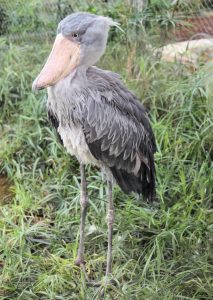
The Shoebill is immediately recognizable.
It is a large, tall bird with:
A massive shoe-shaped bill, Long legs suited to wetland habitats, Broad wings ,Grayish plumage, A large head A distinctive hooked tip on its bill, A powerful, prehistoric appearance.
The bird’s enormous bill is one of its most impressive features. It is specially adapted for catching prey in shallow wetlands.
Because of its unusual appearance, the Shoebill is sometimes described as looking like a bird from prehistoric times.
3. Shoebill Behavior and Feeding
One of the most fascinating aspects of Shoebill birding is observing the bird’s hunting behavior.
Shoebills often stand motionless in shallow water or among wetland vegetation. They may remain still for long periods before suddenly lunging at prey.
Their diet can include fish and other aquatic animals. Depending on the habitat and opportunity, Shoebills may also take amphibians, reptiles, and other suitable prey.
Watching a Shoebill move from complete stillness into a rapid hunting strike can be an unforgettable wildlife experience.
4. The Best Way to Explore Mabamba Swamp
A boat-based birding excursion is one of the highlights of a Shoebill tour at Mabamba.
As the boat moves slowly through the wetland channels, you can search the papyrus edges and open marsh areas for birds.
Your guide may help you spot:
Shoebills, African fish eagles, Pied kingfishers, African jacanas, Egrets, Herons, Cormorants, Ibises, Kingfishers Weavers, Swallows, Various wetland specialists
The quiet environment also makes it easier to appreciate the sounds and atmosphere of the swamp.
Best Time for Shoebill Birding in Uganda
Shoebills can be encountered in Uganda throughout the year, but birding conditions can vary depending on rainfall, water levels, vegetation, accessibility, and local bird movements.
For many visitors, the drier periods can provide favorable conditions for exploring wetlands because some areas may be easier to navigate and birds can be concentrated around suitable feeding habitats.
However, birding is naturally unpredictable. Seeing a Shoebill is never guaranteed, and even experienced guides cannot control where a wild bird will be on a particular day.
This uncertainty is part of the excitement of birdwatching.
Early Morning Birding
Early morning is generally an excellent time for birdwatching.
Bird activity is often higher during the cooler hours of the day, and the softer morning light can also be ideal for photography.
For visitors staying around Entebbe or Kampala, an early start can make it possible to enjoy a Shoebill excursion and return later in the day.
For serious birdwatchers, however, spending more time in the area can provide opportunities to explore additional habitats and observe a wider range of species.
Shoebill Photography Tours
The Shoebill is a dream subject for wildlife photographers.
Its large size, distinctive bill, dramatic posture, and wetland environment create excellent photographic opportunities.
When photographing Shoebills, patience is essential. Instead of approaching too closely, photographers should allow the bird to behave naturally.
A good birding guide can help position the boat at a respectful distance while providing opportunities for photographs without unnecessarily disturbing the bird.
What Other Birds Can You See?
One of the advantages of booking a Shoebill birding tour is that the trip is rarely only about one species.
Uganda has an impressive bird list, and wetland habitats can support many fascinating species.
Depending on the location, you may encounter:
African Fish Eagle
The African Fish Eagle is one of Uganda’s most recognizable birds. Its distinctive call and striking white head make it a favorite among visitors.
African Jacana
The African Jacana is adapted to walking across floating vegetation. Its long toes help distribute its weight across aquatic plants.
Pied Kingfisher
This black-and-white kingfisher is commonly associated with aquatic environments and can often be seen hovering before diving for fish.
Herons and Egrets
Wetlands provide important feeding grounds for different herons and egrets, making them common additions to a birding itinerary.
Cormorants
These waterbirds are often seen around lakes and wetlands, where they hunt for fish.
Combining Shoebill Birding with a Uganda Safari
One of the best ways to experience Uganda is to combine Shoebill birding with a broader safari.
A traveler arriving through Entebbe could begin with a Shoebill excursion at Mabamba Swamp before continuing to other destinations.
Possible combinations include:
Mabamba Swamp Murchison Falls National Park
Combine wetland birding with game drives and the spectacular Murchison Falls landscape.
Mabamba Swamp Kibale National Park
Enjoy Shoebill birding before traveling west for chimpanzee trekking and forest birding.
Mabamba Swamp Queen Elizabeth National Park
Combine birdwatching with wildlife viewing and a boat cruise on the Kazinga Channel.
Mabamba Swamp Bwindi Impenetrable National Park
Create a diverse birding and primate safari combining wetland birding with mountain gorillas and forest birds.
Mabamba Swamp Lake Mburo National Park
Combine Shoebill searching with savannah wildlife, zebras, antelopes, and birdwatching.
Shoebill and Gorilla Safari
For international visitors interested in both birds and primates, Uganda offers an opportunity to combine two extraordinary experiences.
A Shoebill and gorilla trekking safari can begin around Entebbe with a Mabamba Swamp excursion before continuing to southwestern Uganda.
After exploring Uganda’s wetlands, travelers can proceed to Bwindi Impenetrable National Park for gorilla trekking.
This combination provides a remarkable contrast between Uganda’s wetland ecosystems and its ancient montane forests.
Shoebill and Chimpanzee Safari
Birdwatchers who also enjoy primates can combine Shoebill birding with chimpanzee trekking in Kibale National Park.
Kibale is famous for its chimpanzee population and exceptional forest biodiversity. The forest also provides opportunities to see numerous bird species.
This makes a Shoebill and chimpanzee safari an attractive option for travelers who want both specialist birding and primate experiences.
Shoebill Birding for Serious Birdwatchers
Uganda is an excellent destination for dedicated birdwatchers because different ecosystems can be combined within one safari.
A serious birding itinerary can include wetlands, tropical forests, lakes, savannahs, and montane habitats.
Some destinations that can complement a Shoebill-focused trip include:
Mabamba Swamp, Bwindi Impenetrable National Park, Kibale National Park, Queen Elizabeth National Park Murchison Falls National Park, Semuliki National Park, Lake Mburo National Park, Budongo Forest
Each habitat offers a different birding experience.
How Long Should a Shoebill Birding Tour Take?
A Shoebill excursion can be organized as a half-day or full-day activity, depending on the itinerary.
For travelers based around Entebbe, a dedicated Mabamba Swamp excursion may fit comfortably into a short Uganda itinerary.
However, serious birders may prefer a longer safari because additional time increases the opportunity to explore different habitats and search for a wider variety of species.
A longer itinerary also allows the birding experience to be combined with Uganda’s primate and wildlife attractions.
What to Pack for a Shoebill Safari
Proper preparation can make your birding experience more comfortable.
Consider packing:
1, Binoculars Camera and telephoto lens
2. Lightweight field guide
3. Neutral-colored clothing
4. Comfortable walking shoes
5. Hat
7. Sunglasses
8. Sunscreen
9. Insect repellent
10. Rain jacket
11. Drinking water
12. Waterproof bag for electronic equipment
Birdwatchers should also carry enough batteries and memory cards because unexpected sightings can happen at any time.
Why Book a Local Birding Guide?
A knowledgeable local guide can make a significant difference to your experience.
Local guides understand the wetland environment and may know the areas where Shoebills and other birds are frequently encountered.
They can also help identify bird calls, explain bird behavior, navigate waterways, and position the boat appropriately for viewing and photography.
For specialist birding, consider working with a guide who has strong knowledge of Uganda’s bird species rather than relying solely on a general safari guide.
Responsible Shoebill Birding
Responsible tourism is essential when visiting wetlands.
Shoebills and other wetland birds should be observed without unnecessary disturbance.
Visitors should:
Keep a respectful distance from birds., Avoid loud noises., Follow the guide’s instructions., Never attempt to feed wild birds., Avoid throwing objects at birds to make them move., Dispose of waste responsibly., Respect local communities and boat operators., Support conservation-oriented tourism.
Responsible birding helps ensure that Uganda’s wetlands remain valuable habitats for future generations.
Book Your Shoebill Birding Tour in Uganda
A Shoebill birding tour in Uganda is an exceptional experience for anyone interested in birds, wildlife photography, nature, and wetland ecosystems.
From the peaceful waterways of Mabamba Swamp to Uganda’s tropical forests and savannah landscapes, a birding safari can be customized around your interests, available time, and travel budget.
Whether you are a dedicated birdwatcher searching specifically for the Shoebill or a first-time visitor hoping to add a unique wildlife experience to your Uganda safari, exploring Uganda’s wetlands can become one of the highlights of your journey.
Contact Fuga Tours and Travel to plan a customized Uganda birding safari, including Shoebill birding, forest birdwatching, chimpanzee trekking, gorilla trekking, wildlife viewing, and cultural experiences.
Frequently Asked Questions About Shoebill Birding Tours in Uganda
Where is the best place to see a Shoebill in Uganda?
Mabamba Swamp near Lake Victoria is one of Uganda’s best-known destinations for searching for Shoebills.
Can I see a Shoebill on a day trip from Entebbe?
Yes. Mabamba Swamp is accessible from the Entebbe area, making a Shoebill excursion suitable for travelers with limited time.
What is the best time to see a Shoebill?
Shoebills can be seen throughout the year, although conditions vary seasonally. Early morning is generally a productive period for birdwatching.
Is seeing a Shoebill guaranteed?
No. The Shoebill is a wild bird, so sightings cannot be guaranteed. Experienced local guides can, however, improve your chances by knowing suitable habitats and recent sighting areas.
What should I bring for Shoebill birding?
Binoculars, a camera with a telephoto lens, comfortable clothing, sun protection, insect repellent, rain protection, and waterproof equipment protection are recommended.
Can I combine Shoebill birding with gorilla trekking?
Absolutely. Uganda makes it possible to combine a Mabamba Swamp birding excursion with gorilla trekking in Bwindi or Mgahinga, creating a diverse wildlife itinerary.
Experience Uganda’s Shoebill Birding Adventure
The Shoebill is more than just another bird on a checklist. Its extraordinary appearance, patience, hunting behavior, and wetland habitat make encountering one a memorable African wildlife experience.
With its remarkable biodiversity and variety of ecosystems, Uganda is an excellent destination for birdwatchers looking beyond conventional safari experiences.
Plan your Shoebill birding tour in Uganda and discover one of Africa’s most fascinating wetland birds.