
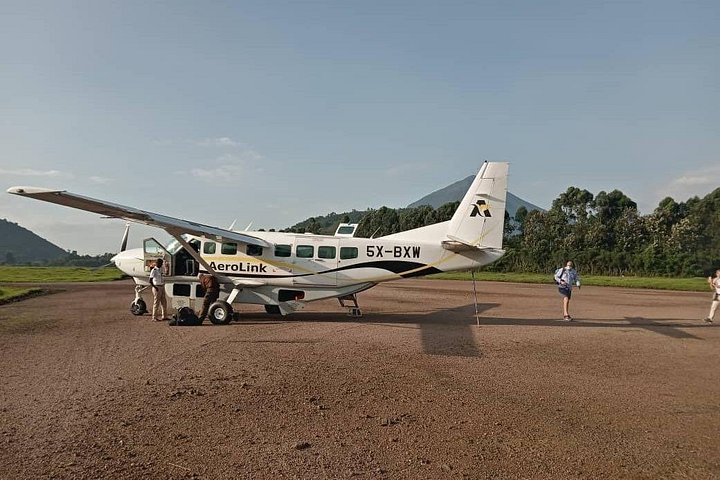
Fly-In vs Overland Safari in Uganda: Which Should You Choose? Planning a safari in Uganda is an exciting experience, but one important decision can significantly shape your trip: Should you choose a fly-in safari or an overland safari?
Uganda is a remarkably diverse safari destination. From the savannah plains of Murchison Falls and Queen Elizabeth National Parks to the remote wilderness of Kidepo Valley, the misty mountains of Bwindi Impenetrable National Park, and the primate-rich forests of Kibale, there is a lot to explore.
For some travelers, flying between destinations offers comfort, speed, and more time in the parks. For others, traveling by road is part of the adventure, providing opportunities to see Uganda’s countryside, communities, landscapes, and attractions along the way.
So, which is better: a fly-in safari or an overland safari in Uganda?
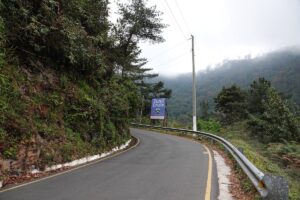
The answer depends on your budget, travel style, available time, destinations, comfort preferences, and the kind of experience you want.
This guide explains the differences between fly-in and overland safaris in Uganda and helps you choose the option that best suits your trip.
What Is a Fly-In Safari in Uganda?
A fly-in safari involves using scheduled or chartered domestic flights to travel between Uganda’s major safari destinations instead of completing the entire journey by road.
Depending on your itinerary, you may fly from the Entebbe or Kampala area toward destinations such as:
- Murchison Falls National Park
- Kidepo Valley National Park
- Queen Elizabeth National Park
- Bwindi Impenetrable National Park
- Mgahinga Gorilla National Park
- Kibale Forest National Park
- Other safari areas served by Uganda’s domestic air network
After landing at an airstrip near the destination, your safari vehicle and local guide can meet you and continue with game drives, trekking activities, transfers, or lodge transportation.
Fly-in safaris are particularly attractive for travelers who want to cover long distances without spending many hours on the road.
What Is an Overland Safari in Uganda?
An overland safari involves traveling between destinations primarily by road in a safari vehicle.
This is the traditional and most popular way to explore Uganda.
Your safari vehicle becomes part of the experience as you travel through different regions of the country, passing villages, farms, forests, mountains, lakes, towns, and changing landscapes.
For example, a road safari could connect:
Entebbe → Ziwa Rhino Sanctuary → Murchison Falls → Kibale Forest → Queen Elizabeth National Park → Bwindi → Lake Bunyonyi → Entebbe
The exact route can be customized depending on the attractions and activities included in your safari.
For travelers who want to experience Uganda beyond the national parks, overland travel offers something that flying cannot fully replicate: the journey itself becomes part of the safari.
Fly-In vs Overland Safari: Quick Comparison
| Factor | Fly-In Safari | Overland Safari |
|---|---|---|
| Travel time | Much faster | Longer |
| Cost | Usually higher | Generally more affordable |
| Comfort | Very convenient | Comfortable but involves longer drives |
| Scenery | Limited to destinations | Extensive countryside viewing |
| Flexibility | Good for selected routes | Excellent for customized itineraries |
| Remote destinations | Very useful | Possible but involves long drives |
| Family travel | Convenient for some families | Good for families who enjoy road trips |
| Luxury travel | Excellent | Excellent with a private vehicle |
| Adventure | Focuses more on destination | Journey and destination are both part of the adventure |
| Short trips | Excellent | Can be less efficient |
| Photography | More time at destinations | More opportunities along the road |
| Cultural experiences | More limited during transfers | More opportunities to interact with communities |
Why Choose a Fly-In Safari in Uganda?
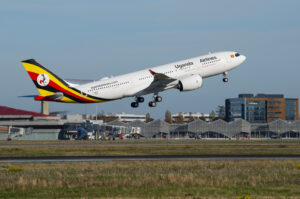
1. Save Valuable Travel Time
One of the biggest advantages of flying is the amount of time you save.
Uganda’s safari destinations are spread across the country. Some journeys by road can take several hours, particularly when traveling between distant regions.
Instead of spending most of a day driving, a domestic flight can get you much closer to your destination in considerably less time.
This is especially valuable for travelers with limited vacation time.
For example, if you only have five or six days in Uganda and want to combine several major destinations, flying can make your itinerary much more efficient.
Spend More Time on Safari
A major reason travelers choose fly-in safaris is simple: more time in the destination and less time in transit.
Instead of using an entire day for a long road transfer, you may arrive at your destination with enough time for an afternoon game drive or another activity, depending on flight schedules and lodge arrangements.
This can make a significant difference during a short Uganda safari.
Ideal for Luxury Travelers
Fly-in safaris are particularly attractive to luxury travelers who prioritize convenience and comfort.
A typical luxury fly-in safari may combine:
- Domestic flights, Luxury lodges, Private safari vehicles
- Private guides, Game drives, Boat cruises, Gorilla trekking
- Chimpanzee trekking, Personalized meals and services
Rather than spending several hours on long road transfers, travelers can move efficiently between destinations.
Excellent for Kidepo Valley National Park
Kidepo Valley is one of Uganda’s most remote safari destinations.
Its remote location is part of its charm, but reaching it by road can require a significant amount of travel time.
For travelers who have limited time but still want to experience Kidepo, flying can be an excellent option.
A fly-in safari allows you to spend more of your vacation exploring the park rather than using multiple days on road transfers.
Useful for Combining Distant Destinations
Flying becomes particularly attractive when your itinerary covers destinations that are geographically far apart.
For example, travelers may want to combine:
Kidepo + Murchison Falls + Bwindi
or
Kidepo + Queen Elizabeth + Bwindi
Such itineraries can involve considerable road travel.
Domestic flights can reduce the amount of time spent traveling between these regions.
Disadvantages of a Fly-In Safari
Fly-in safaris are convenient, but they are not perfect for every traveler.
Higher Cost
The biggest disadvantage is usually the price.
You are paying for:
- Domestic flights
- Airport or airstrip transfers
- Safari transportation
- Lodge accommodation
- Guide services
- Game drives
- Other activities
When compared with a private overland safari, adding several domestic flights can significantly increase the overall cost.
For budget-conscious travelers, road travel may offer better value.
Less Exposure to Uganda’s Countryside
When you fly, you miss much of what happens between destinations.
Uganda has beautiful countryside, including:
- Tea plantations
- Coffee-growing areas
- Rolling hills
- Lakes
- Forests
- Rural communities
- Small towns
- Agricultural landscapes
- Traditional markets
An overland safari allows you to see these places from the road.
Less Flexibility During Transfers
Flights operate according to schedules and availability.
If you are traveling by road, you can often make stops along the way.
You may stop for:
- A local market
- A scenic viewpoint
- A cultural experience
- Lunch
- Photography
- A community visit
- A roadside attraction
This flexibility is one of the advantages of an overland safari.
Why Choose an Overland Safari in Uganda?
It Is Often More Affordable
For many travelers, an overland safari is the most practical option.
A private safari vehicle can transport you between multiple destinations without requiring domestic flights for every long transfer.
This can help keep the overall safari cost manageable.
Overland travel is particularly attractive for:
- Budget travelers
- Couples
- Families
- Friends traveling together
- First-time Uganda visitors
- Travelers planning longer safaris
Experience Uganda Beyond the National Parks
One of the greatest benefits of an overland safari is experiencing the country itself.
Uganda is more than its national parks.
During a road journey, you may see:
- Rural villages
- Farmers working in the fields
- Coffee plantations
- Tea estates
- Banana plantations
- Cattle farms
- Local trading centers
- Mountain landscapes
- Lakes and wetlands
These experiences help travelers understand Uganda beyond wildlife.
Better for Photography
If you enjoy photography, traveling by road gives you countless opportunities to stop and capture Uganda’s landscapes.
You can photograph:
- Mountain ranges, Villages
- Wildlife near the road, Landscapes
- Local people and activities, with appropriate permission, Markets
- Plantations, Lakes, Scenic viewpoints
The road journey can therefore become part of your photographic adventure.
More Flexible Itineraries
Overland safaris allow tour operators and guides to build highly customized routes.
For example, you could combine:
Murchison Falls + Kibale + Queen Elizabeth + Bwindi
and include additional stops along the way.
You can also adjust the itinerary according to your interests.
Wildlife enthusiasts may prioritize game drives.
Birdwatchers may add important birding locations.
Culture enthusiasts may include community experiences.
Adventure travelers may add hiking, boat trips, chimpanzee trekking, or other activities.
Disadvantages of an Overland Safari
Long Driving Times
The biggest disadvantage is travel time.
Some destinations are far apart, and road conditions can vary.
A long transfer can take several hours and may be tiring, particularly if you are trying to fit many destinations into a short trip.
This is why itinerary design is extremely important.
A good safari operator should avoid creating an itinerary that puts unnecessary long drives back-to-back.
Road Conditions Can Affect Travel
Uganda has a mixture of paved and unpaved roads.
Major highways are generally more convenient, while roads inside or around some national parks can be rough, especially during rainy periods.
Safari vehicles are designed to handle these conditions, but travelers should still expect some bumps and slower sections.
Less Ideal for Very Short Safaris
If you only have three or four days, spending a large portion of your trip driving may not be the best use of your time.
For a short safari, flying may make more sense if the budget allows it.
Which Is Better for Gorilla Trekking?
For travelers coming to Uganda primarily for gorilla trekking, the decision depends on the rest of your itinerary.
Bwindi and Mgahinga are located in southwestern Uganda, far from Entebbe and Kampala.
An overland journey can take much of a day, depending on the route and road conditions.
However, the road trip can be rewarding because you can combine the journey with destinations such as:
- Lake Mburo National Park
- Equator crossing
- Lake Bunyonyi
- Kabale
- Kisoro
- Cultural experiences
For travelers who have enough time, an overland gorilla safari can therefore provide a richer overall Uganda experience.
For those with limited time or a luxury travel preference, flying closer to the gorilla trekking region can be more convenient.
Which Is Better for Chimpanzee Trekking?
For chimpanzee trekking in Kibale Forest, both options can work well.
An overland safari allows you to combine Kibale with other western Uganda attractions.
A popular route might include:
Entebbe → Kibale → Queen Elizabeth → Bwindi
This provides opportunities for chimpanzee trekking, game drives, boat cruises, and gorilla trekking.
Flying may be preferable when Kibale is only one part of a larger itinerary involving distant destinations.
Fly-In vs Overland for Families
Families should consider the age of their children and their tolerance for long drives.
For younger children, long road journeys can sometimes become tiring.
A fly-in safari may reduce transfer time and make the trip easier.
However, families with older children may actually enjoy an overland safari because the journey provides opportunities to see Uganda’s landscapes and wildlife.
A private vehicle is particularly useful for families because the itinerary can be adjusted around their needs.
Fly-In vs Overland for Couples and Honeymooners
For honeymooners, a fly-in safari can provide a more relaxed and luxurious experience.
Imagine starting your honeymoon in Entebbe, flying toward the wilderness, staying in an intimate lodge, enjoying private game drives, and then continuing to Bwindi for gorilla trekking.
This can minimize long road transfers.
However, an overland honeymoon can also be incredibly romantic, particularly when it includes beautiful destinations such as:
Lake Mburo → Bwindi → Lake Bunyonyi → Queen Elizabeth
The best option depends on whether the couple prioritizes convenience or the experience of traveling through Uganda.
Fly-In vs Overland for Budget Travelers
If keeping costs low is a major priority, an overland safari will often be the better choice.
You can reduce transportation costs by:
- Traveling with a private group
- Sharing selected transfers where appropriate
- Choosing midrange accommodation
- Designing a logical route
- Avoiding unnecessary backtracking
- Spending several nights in each destination
A well-planned road safari can provide excellent value without sacrificing the quality of the wildlife experience.
Fly-In vs Overland for Luxury Travelers
Luxury travelers often benefit from a combination of both.
For example:
Fly into a remote destination → enjoy a luxury safari → fly to another region → continue with a private vehicle.
This approach provides convenience while still allowing travelers to explore Uganda by road when the journey itself is worthwhile.
A hybrid safari can therefore be an excellent choice for high-end travelers.
The Hybrid Safari: Why Not Combine Both?
You do not necessarily have to choose only one.
A hybrid safari combines domestic flights with overland transportation.
This can be one of the best ways to explore Uganda.
Option 1: Fly-In + Overland
Entebbe → Kidepo by air
Spend several days exploring Kidepo.
Then fly or travel toward another region and continue by safari vehicle.
Option 2: Overland + Fly-Out
Entebbe → Murchison Falls → Kibale → Queen Elizabeth → Bwindi
After gorilla trekking, take a domestic flight back toward Entebbe rather than driving the entire distance again.
Option 3: Fly-In + Fly-Out
For travelers with limited time and a higher budget:
Entebbe → Safari destination by air → Gorilla region by air → Entebbe by air
This maximizes time at the destinations.
How Much Time Do You Need for an Overland Uganda Safari?
Your available time should strongly influence your decision.
3–4 Days
Consider flying if you want to visit a distant destination.
5–7 Days
An overland safari can work very well if you choose destinations located along a logical route.
8–14 Days
Overland travel becomes particularly attractive because you have enough time to explore several destinations without rushing.
15–21+ Days
An extended overland safari can be an excellent way to experience Uganda in depth.
You can combine wildlife, primates, mountains, culture, birding, lakes, and adventure activities.
Which Option Gives You the Best Wildlife Experience?
It is important to understand that flying does not automatically mean better wildlife viewing.
The quality of your wildlife experience depends on:
- Where you go
- How many nights you stay
- The season
- Your guide
- Your safari vehicle
- Game-drive timing
- Your itinerary
- Your patience
- The specific wildlife you want to see
A traveler who flies into a national park but stays only one night may have a less rewarding safari than someone who drives there and stays three nights.
Time spent in the park matters more than how you arrive.
How to Choose Between Fly-In and Overland Safari
Ask yourself these questions before booking.
How much time do I have?
If your vacation is short, flying may help you maximize your time.
If you have two or three weeks, overland travel becomes much more practical.
What is my budget?
If you are working with a tighter budget, consider an overland safari.
If convenience is more important than cost, a fly-in safari may be worth the additional expense.
Do I enjoy road trips?
If you enjoy scenic drives, photography, and discovering local communities, choose overland travel.
If you prefer to get to your lodge quickly, consider flying.
4. Which destinations am I visiting?
The farther apart your destinations are, the more attractive flying becomes.
5. Am I traveling with children?
Families should consider the age and patience of children when deciding between long road journeys and flights.
6. Am I planning a luxury safari?
A fly-in or hybrid itinerary can provide an especially comfortable luxury experience.
Best Choice by Traveler Type
Choose a Fly-In Safari If You:
- Have limited time
- Prefer comfort and convenience
- Have a higher safari budget
- Want to minimize long drives
- Are visiting remote destinations
- Are planning a luxury safari
- Want to maximize time inside national parks
Choose an Overland Safari If You:
- Have more time
- Want better value for money
- Enjoy road trips
- Want to see Uganda’s countryside
- Enjoy photography
- Want cultural experiences along the way
- Prefer a flexible itinerary
- Are planning a multi-destination safari
Choose a Hybrid Safari If You:
- Want the best of both options
- Have a moderate-to-high budget
- Want to reduce the longest road transfers
- Want to experience Uganda by road
- Are combining distant destinations
- Want a comfortable but comprehensive itinerary
Sample Fly-In Uganda Safari
A luxury traveler with limited time might consider:
Day 1: Arrival in Entebbe
Day 2: Fly to safari destination and afternoon game drive
Day 3: Full-day game drive
Day 4: Fly toward southwestern Uganda
Day 5: Gorilla trekking
Day 6: Relaxation and cultural experience
Day 7: Fly back toward Entebbe and departure
The exact itinerary would depend on flight schedules, park access, accommodation, and trekking availability.
Sample Overland Uganda Safari
A traveler with more time could consider:
Day 1: Arrival in Entebbe
Day 2: Transfer toward Murchison Falls
Day 3: Game drive and Nile boat cruise
Day 4: Transfer to Kibale Forest
Day 5: Chimpanzee trekking
Day 6: Transfer to Queen Elizabeth National Park
Day 7: Game drive and Kazinga Channel boat cruise
Day 8: Transfer to Bwindi
Day 9: Gorilla trekking
Day 10: Transfer toward Lake Bunyonyi or another destination
Day 11: Return toward Entebbe
This type of itinerary provides a broader experience of western Uganda.
Tips for Planning Your Uganda Safari
Plan Around Your Priority Activities
If gorilla trekking is the main reason for your trip, build your itinerary around the trekking date.
The same applies to chimpanzee trekking and other activities that require advance arrangements.
Avoid Too Many Destinations
Trying to visit every major park in a short trip can turn your safari into a transportation tour.
It is often better to spend two or three nights in a destination than constantly move between locations.
Consider a Private Safari Vehicle
A private safari vehicle provides flexibility, especially for overland trips.
You can stop for photographs, adjust departure times, and spend more time at attractions that interest you.
Choose the Right Vehicle
For overland safaris, a comfortable 4×4 safari vehicle is particularly useful.
A well-equipped safari vehicle provides better comfort and visibility during game drives and can handle different road conditions.
Work With a Local Safari Operator
A local Uganda safari company can help you decide whether flying, driving, or combining both makes the most sense.
They can also coordinate accommodation, permits, domestic flights, airport transfers, safari vehicles, guides, and activities.
So, Which Should You Choose?
There is no single answer for every traveler.
Choose a fly-in safari if your priority is saving time, maximizing comfort, and reaching remote destinations efficiently.
Choose an overland safari if your priority is value, flexibility, scenery, cultural experiences, and experiencing Uganda beyond the national parks.
Choose a hybrid safari if you want the best of both worlds.
For many travelers, the hybrid option can be particularly attractive. You can drive through the parts of Uganda where the journey is enjoyable and fly when the distance would otherwise consume too much of your vacation.
Ultimately, the best Uganda safari is not simply the one that gets you to the park fastest. It is the one that matches your time, budget, interests, comfort level, and travel style.
Plan Your Uganda Fly-In or Overland Safari with Fuga Tours and Travel
Planning a safari in Uganda can involve many moving parts, from choosing the right national parks and accommodation to arranging safari vehicles, domestic flights, permits, guides, and transfers.
At Fuga Tours and Travel, we can help you design a Uganda safari around your priorities, whether you prefer a comfortable fly-in adventure, a scenic overland journey, or a combination of both.
Whether your dream is to see the Big Five, trek mountain gorillas in Bwindi, encounter chimpanzees in Kibale, explore the wilderness of Kidepo, cruise the Kazinga Channel, or combine Uganda with Rwanda, your itinerary can be tailored to your interests and available time.
Ready to plan your Uganda safari? Contact Fuga Tours and Travel to discuss your preferred travel style, budget, destinations, and safari duration.
Frequently Asked Questions
Is a fly-in safari in Uganda better than an overland safari?
Not necessarily. A fly-in safari is better for travelers who value speed and convenience, while an overland safari is better for travelers who want to experience Uganda’s countryside and save on transportation costs.
Is flying between Uganda’s national parks expensive?
Fly-in safaris generally cost more because they involve domestic air transportation in addition to safari services. However, the extra cost can be worthwhile for travelers with limited time.
How long are road transfers on a Uganda safari?
Travel times vary considerably depending on the destinations, road conditions, traffic, and stops. Some transfers take a few hours, while journeys between distant regions can take most of a day.
Can I combine flying and driving on a Uganda safari?
Yes. A hybrid safari is an excellent option. You can fly between distant destinations and use a safari vehicle for local exploration and shorter overland transfers.
Is overland travel safe in Uganda?
Safari operators use experienced drivers and suitable vehicles for safari routes. As with any road journey, travel conditions vary, so choosing an experienced local safari operator is important.
Which is better for a Uganda honeymoon?
For honeymooners who prioritize comfort and luxury, a fly-in or hybrid safari can be excellent. Couples who enjoy scenic journeys and have more time may prefer an overland safari.
Which is better for gorilla trekking?
Both can work. Overland travel allows you to combine gorilla trekking with destinations such as Lake Mburo, the Equator, or Lake Bunyonyi. Flying can reduce travel time for travelers on shorter or luxury itineraries.
Is a private safari better for overland travel?
A private safari provides greater flexibility because you can customize departure times, stops, activities, and destinations around your interests.
What is the best safari option for a first-time visitor to Uganda?
For first-time visitors with enough time, an overland or hybrid itinerary can provide a more complete introduction to Uganda. Travelers with limited time may benefit more from flying.
Final Takeaway
Fly-In Safari: Best for speed, comfort, luxury, and limited vacation time.
Overland Safari: Best for value, flexibility, scenery, culture, and a deeper countrywide experience.
Hybrid Safari: Best for travelers who want a balance between convenience and exploration.
Whatever option you choose, Uganda offers an extraordinary combination of wildlife, primates, landscapes, culture, adventure, and unforgettable encounters.
Start planning your Uganda safari with Fuga Tours and Travel and let us help you choose the right way to explore the Pearl of Africa.