
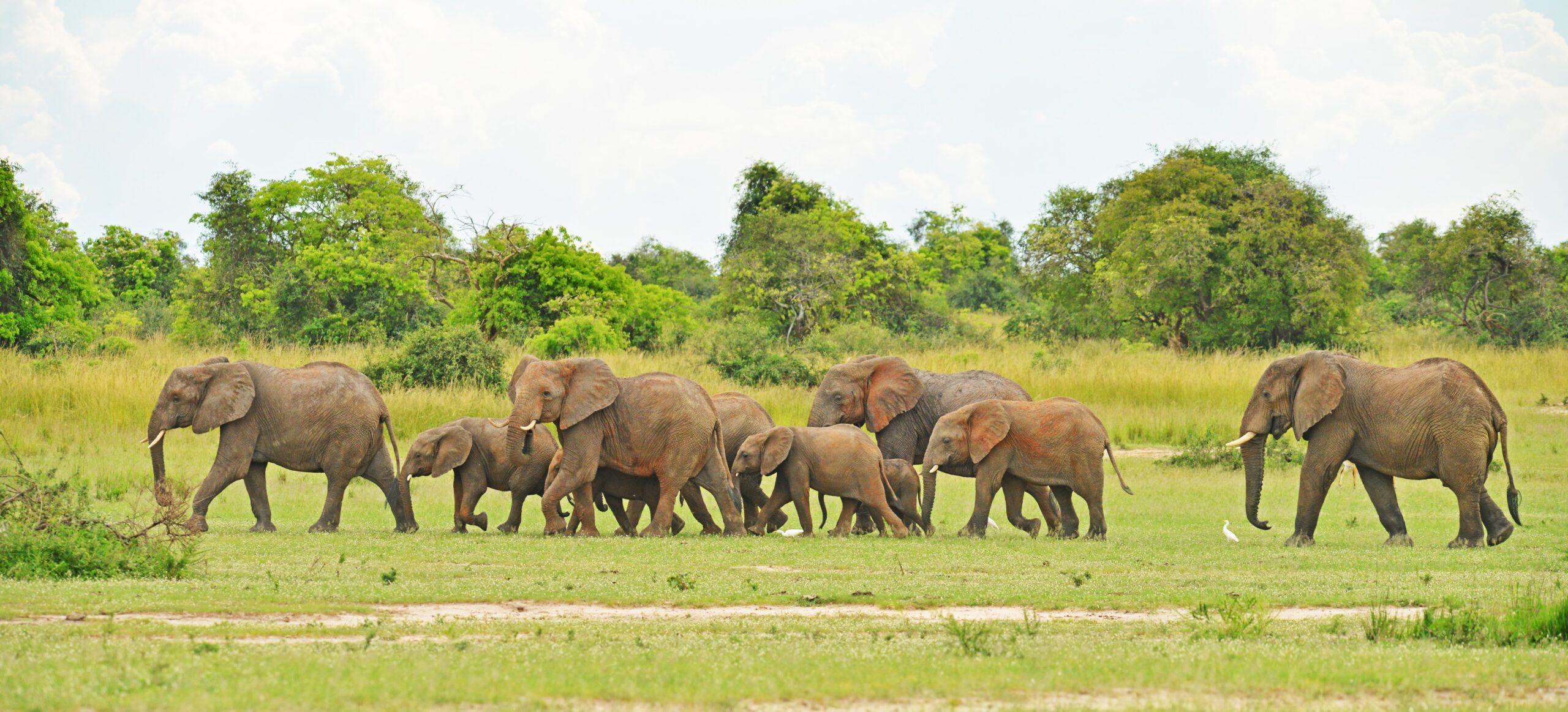
Accessible Safari in Uganda: A Complete Guide for Travelers with Mobility Challenges, Uganda is one of East Africa’s most rewarding safari destinations, offering mountain gorillas, chimpanzees, elephants, lions, giraffes, hippos, spectacular landscapes and unforgettable cultural experiences. But for travelers with mobility challenges, planning a safari requires more than simply choosing a national park and booking a vehicle.
The good news is that an accessible safari in Uganda is possible with careful planning.
Not every safari activity or trail is suitable for wheelchair users or travelers with limited mobility. Uganda’s wildlife destinations range from relatively accessible savannah parks with vehicle-based game drives to steep rainforest environments where walking can be extremely demanding. The key is to build an itinerary around your individual mobility needs, choose appropriate accommodation and transport, and communicate your requirements to your safari operator well before arrival.
Uganda Wildlife Authority manages major destinations including Murchison Falls, Queen Elizabeth, Bwindi Impenetrable, Kibale, Lake Mburo, Kidepo Valley and Mgahinga National Parks.
This guide explains the best accessible safari options in Uganda, activities to consider, destinations that may present challenges, accommodation considerations and how to plan a comfortable Uganda safari with limited mobility.
What Does an Accessible Safari in Uganda Mean?
An accessible safari is not necessarily a safari where every location is completely wheelchair accessible.
Instead, it means designing the journey around the traveler’s physical abilities and reducing unnecessary barriers wherever possible.
Depending on your needs, this may include:
- A suitable 4×4 safari vehicle
- Assistance getting into and out of the vehicle
- Ground-floor accommodation
- Rooms with easier bathroom access
- Shorter walking distances
- Regular rest stops
- Flexible game-drive schedules
- Boat safaris with suitable boarding arrangements
- Assistance from guides and support staff
- Choosing destinations with relatively gentle terrain
- Flying between destinations instead of taking long road journeys
- Alternative activities when a particular trail is unsuitable
Accessibility therefore needs to be considered from airport arrival to airport departure, not just during the game drive.
Uganda’s tourism infrastructure is improving, but accessibility varies considerably between properties, parks and activities. Travelers should therefore have their specific requirements confirmed before booking rather than assuming that a property described as “accessible” will meet their individual needs.
Best Uganda Safari Destinations for Travelers with Limited Mobility
Some Ugandan destinations are considerably easier to experience with limited mobility than others.
For many travelers, the best accessible safari itinerary focuses on Murchison Falls National Park, Queen Elizabeth National Park and Lake Mburo National Park, with other destinations added depending on individual abilities.
Murchison Falls National Park
Murchison Falls National Park is one of the strongest choices for a mobility-friendly Uganda safari.
The park combines extensive savannah landscapes with vehicle-based game viewing and a spectacular Nile boat cruise.
Why Murchison Falls works well
Much of the safari experience takes place from a vehicle, meaning visitors do not have to walk long distances to see wildlife.
During game drives, you may encounter:
- Elephants, Giraffes, Lions, Buffaloes
- Jackson’s hartebeest, Uganda kob Antelopes
- Hippos Crocodiles Numerous bird species
The Nile boat cruise is another major attraction. Instead of walking through difficult terrain, travelers can remain seated while viewing hippos, crocodiles, elephants and birds along the river.
The combination of game drives and boat cruising makes Murchison Falls particularly attractive for travelers who want extensive wildlife viewing without physically demanding trekking.
Accessible travel tip
Ask your safari operator to confirm:
- Vehicle entry and seating arrangements, Whether a wheelchair can be stored safely
- Assistance with vehicle transfers, Boat boarding arrangements, The distance between your room and dining area, Whether your accommodation has suitable bathroom facilities
Queen Elizabeth National Park
Queen Elizabeth National Park is another excellent destination for travelers with mobility limitations.
The park offers extensive game-drive opportunities across open savannah landscapes and one of Uganda’s most famous wildlife experiences: the Kazinga Channel boat cruise.
Wildlife you can see
A safari can include sightings of:
- Elephants
- Buffaloes
- Lions
- Uganda kob
- Warthogs
- Hippos
- Waterbuck
- Leopards, with luck
- Numerous waterbirds
The Kazinga Channel boat cruise is particularly suitable because much of the experience can be enjoyed while seated.
You can watch hippos resting in the water, crocodiles along the shoreline and elephants approaching the channel without undertaking a strenuous hike.
Queen Elizabeth is also an excellent destination for travelers who want a slower-paced safari, because the itinerary can be structured around game drives, boat cruising, scenic viewpoints and lodge relaxation.
Lake Mburo National Park
Lake Mburo is another destination worth considering for an accessible Uganda safari.
It is relatively compact compared with some of Uganda’s larger parks, making it possible to enjoy wildlife experiences without spending every day covering extremely long distances.
The park is known for:
- Zebras, Impalas, Elands, Buffaloes
- Warthogs, Giraffes, Hippos
- Various antelope species, Excellent birdlife
A traditional game drive can provide a rewarding experience without requiring visitors to walk long distances.
Depending on individual mobility, your itinerary can also include scenic stops around the park and nearby cultural experiences.
Ziwa Rhino Sanctuary
For travelers who want to add rhinos to their Uganda safari, Ziwa Rhino Sanctuary can be an interesting stop between Entebbe/Kampala and Murchison Falls.
However, rhino tracking is a walking activity, so it should be discussed in advance with your safari planner.
If walking is difficult or impossible, ask whether an alternative viewing arrangement is available for your particular circumstances.
This illustrates an important principle of accessible safari planning:
An accessible itinerary should be personalized rather than assuming that every activity is suitable for every traveler.
Bwindi Impenetrable National Park: Is Gorilla Trekking Possible?
This is one of the most important questions for travelers with mobility limitations.
The answer requires careful planning.
Gorilla trekking in Bwindi takes place in a mountainous rainforest environment characterized by uneven ground, slopes, mud, roots and narrow trails. Even travelers without mobility limitations can find the trek physically demanding.
Therefore, standard gorilla trekking should not be described as wheelchair accessible.
However, mobility-limited travelers should not automatically assume that seeing Uganda’s mountain gorillas is impossible.
Special arrangements may sometimes be made through local support teams and the safari operator, including porter-assisted carrying systems or adapted trekking arrangements. Recent travel guidance describes sedan-chair-style support for travelers who cannot walk the entire route.
Because arrangements and availability can vary, this should be discussed and confirmed before booking the gorilla permit and well before the trekking date.
Important questions to discuss
Before considering a mobility-assisted gorilla experience, discuss:
- Your exact mobility limitations, Whether you use a manual or powered wheelchair, Whether you can transfer from a wheelchair, Whether you can sit for extended periods, Whether you can manage uneven movement
- Your preferred trekking sector, Porter/support requirements, Emergency arrangements
- Accommodation accessibility, Additional costs, Weather and trail conditions
Never assume that an adaptation automatically makes the trek easy.
Bwindi remains a mountainous rainforest, and conditions can change significantly after rainfall.
Choosing the Right Bwindi Sector
If gorilla trekking is an important part of your trip, sector selection becomes especially important.
Bwindi has several trekking sectors, including:
- Buhoma
- Ruhija
- Rushaga
- Nkuringo
The terrain and accommodation environment differ between these areas.
For travelers with mobility limitations, your safari company should discuss the available options with you rather than simply assigning a sector.
Buhoma may be worth discussing for travelers seeking a potentially more manageable arrangement, but nosector should be assumed to be completely wheelchair accessible.
The most appropriate sector can depend on the gorilla family assigned, trail conditions, weather and the traveler’s individual needs.
Kibale Forest: Chimpanzee Tracking and Alternatives
Kibale National Park is famous for chimpanzee trekking.
However, chimpanzee trekking is still a forest walking experience.
The trails can become muddy, slippery and uneven, particularly during wet weather. Travelers with significant mobility limitations may therefore find conventional chimpanzee tracking challenging.
Alternative experiences
Instead of focusing exclusively on chimpanzee trekking, an accessible itinerary could include:
- Forest-edge experiences, Scenic lodge experiences, Cultural visits
- Community activities, Birdwatching where terrain permits
- A relaxed safari in Queen Elizabeth National Park, The Kazinga Channel cruise
Your tour operator can determine which activities best match your physical abilities.
Safari Vehicles for Travelers with Mobility Challenges
Transport is one of the most important parts of an accessible safari.
A standard safari vehicle may not be suitable for everyone.
Before booking, explain whether you:
- Use a wheelchair, Use walking sticks, Need assistance climbing steps, Can transfer into a vehicle seat
- Need additional legroom, Need to remain in your wheelchair, Have a folding manual wheelchair
- Use a powered wheelchair, Need assistance during transfers
A private safari vehicle is generally preferable because it gives the itinerary greater flexibility.
For example, your driver-guide can:
- Stop whenever necessary, Adjust the duration of game drives, Avoid unnecessary walking
- Allow additional boarding time, Make more frequent rest stops, Modify departure times, Respond to changing physical needs
Should You Choose a Safari Van or 4×4 Land Cruiser?
For travelers with mobility challenges, vehicle selection should be based on accessibility rather than appearance or luxury alone.
Ask your safari operator about:
Vehicle access
How high is the step into the vehicle?
Seating
Can the traveler sit comfortably for several hours?
Transfers
Can the traveler safely transfer from a wheelchair to the safari seat?
Wheelchair storage
Is there enough space for the wheelchair without compromising passenger comfort?
Assistance
Can the driver-guide provide reasonable boarding assistance?
Private use
Will the vehicle be exclusively for your group?
These questions should be answered before the safari begins.
Accessible Accommodation in Uganda
Accommodation is sometimes more important than the national park itself.
A lodge may advertise itself as comfortable or luxurious but still have:
- Steep paths, Numerous steps, Raised entrances, Uneven stone walkways
- Bathrooms with high thresholds, Bathtubs rather than walk-in showers, Restaurants located far from rooms
This is why travelers should ask for specific accessibility information, rather than simply asking whether a hotel is “disabled friendly.”
Ask about:
- Ground-floor rooms, Step-free entrances, Door width, Bathroom door width
- Shower type, Grab bars, Toilet height, Bed height
- Distance from room to restaurant, Distance from room to vehicle parking, Pathway surfaces, Emergency access
Accessibility can vary even between individual rooms at the same lodge.
Flying Versus Driving on an Accessible Uganda Safari
Long road journeys can be tiring for anyone, particularly travelers with mobility limitations.
Uganda’s major safari destinations can involve substantial driving distances.
For some travelers, domestic or charter flights may significantly reduce physical and travel fatigue.
For example, instead of spending an entire day on the road, a traveler may fly closer to a safari destination and continue by vehicle.
Advantages of flying
- Less time sitting in a vehicle, Fewer road transfers, More time at the destination
- Reduced fatigue, Easier itinerary pacing
However, travelers using wheelchairs or other mobility equipment should communicate their requirements to the airline or flight operator in advance.
The Best Accessible Safari Activities in Uganda
Not every safari activity requires walking.
Some of the most suitable options include:
Game drives
Game drives are among the best accessible safari experiences because wildlife viewing takes place from a vehicle.
Boat safaris
Boat cruises on the Kazinga Channel and Nile can provide excellent wildlife viewing while travelers remain seated for much of the experience.
Birdwatching
Uganda is one of Africa’s outstanding birding destinations.
A private vehicle can be used to reach birding locations, with short walks added only when appropriate.
Scenic viewpoints
Some viewpoints can be incorporated into an itinerary depending on their accessibility.
Cultural experiences
Community and cultural experiences can sometimes be adapted to the visitor’s mobility needs.
Lodge-based relaxation
A safari does not need to be an exhausting schedule.
Sometimes the best accessible safari includes afternoons at the lodge, enjoying the scenery, meals, gardens or surrounding wildlife.
Activities That May Be Difficult for Travelers with Limited Mobility
Some Uganda experiences require additional consideration.
These include:
- Gorilla trekking, Chimpanzee trekking, Golden monkey trekking, Mountain hiking, Rwenzori trekking
- Mount Elgon hiking, Long forest walks, Some nature trails
- Walking-based cultural experiences, Certain boat embarkation points
This does not necessarily mean they are impossible.
It means that individual assessment and advance planning are essential.
When Is the Best Time for an Accessible Safari in Uganda?
Uganda can be visited throughout the year, but weather should be considered when planning activities involving mobility limitations.
Rain can make:
- Forest trails muddy, Dirt roads slippery, Lodge pathways difficult
- Outdoor boarding areas challenging
For travelers who want to minimize difficult ground conditions, it can be sensible to discuss travel dates with a local safari operator and choose a period that fits the intended destinations and activities.
However, weather is never completely predictable.
Traveling With a Wheelchair in Uganda: Practical Tips
If you use a wheelchair, consider the following before departure.
Tell your safari operator exactly what you need
Don’t simply say, “I am disabled.”
Instead explain:
“I use a manual wheelchair, can transfer independently, can manage one or two steps with assistance, and need a room with a walk-in shower.”
Specific information allows the operator to plan more effectively.
Bring essential mobility equipment
If you rely on specialized equipment, consider bringing spare parts where practical.
Carry essential medication in your hand luggage
Do not place essential medication entirely in checked baggage.
Allow extra time
Boarding vehicles, checking into accommodation and transferring between activities may take longer.
Choose a private safari
A private safari provides considerably more flexibility than a shared group itinerary.
Avoid overly ambitious itineraries
Trying to visit six destinations in one week may be exhausting.
A slower safari can be far more enjoyable.
Why Private Safaris Are Often Better for Mobility-Limited Travelers
A private safari allows the itinerary to revolve around the traveler rather than the other way around.
For example, if you need an extra hour in the morning, the driver can adjust the departure.
If you need a rest day, the itinerary can be modified.
If a particular activity is unsuitable, an alternative can be arranged.
A private safari can therefore offer:
- Flexible departure times, Personalized game drives, More rest stops
- Flexible meal times, Private transport, Personalized accommodation
- Activity alternatives, More assistance
For travelers with mobility challenges, flexibility is often more valuable than simply having a packed itinerary.
A carefully planned itinerary might look like this:
Day 1: Arrival in Entebbe
Arrival and transfer to an accessible hotel.
Rest after the international flight.
Day 2: Entebbe – Murchison Falls
Travel toward Murchison Falls, with regular breaks.
Alternatively, consider flying to reduce road travel.
Day 3: Murchison Falls Game Drive
Morning game drive followed by a relaxed afternoon at the lodge.
Day 4: Nile Boat Cruise
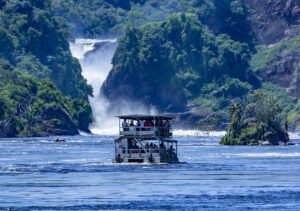
Enjoy the Nile launch cruise and wildlife viewing from the river.
Day 5: Transfer to Queen Elizabeth National Park
Take a relaxed transfer with regular rest stops or consider an appropriate flight option.
Day 6: Queen Elizabeth National Park
Enjoy a game drive and the spectacular Kazinga Channel boat cruise.
Day 7: Return to Entebbe
Return to Entebbe or continue to another destination depending on your flight schedule.
This is only an example. A suitable itinerary should be customized around the traveler’s mobility, stamina, interests and medical or equipment requirements.
Can Wheelchair Users See the Big Five in Uganda?
Yes, an accessible safari can provide opportunities to see many of Uganda’s major wildlife species.
Depending on the parks visited, travelers may encounter:
- Lions
- Leopards
- Elephants
- Buffaloes
- Rhinos
Game drives are particularly suitable because wildlife viewing is vehicle-based.
For rhinos, Ziwa Rhino Sanctuary can potentially be incorporated into an itinerary, although the exact experience should be discussed according to the traveler’s walking ability.
Accessible Safari for Seniors With Limited Mobility
Accessible safari planning is not only for wheelchair users.
Older travelers may have:
- Reduced walking endurance, Knee problems, Back problems
- Balance difficulties, Difficulty with stairs, Reduced stamina
A safari can therefore be designed with shorter walks, fewer strenuous activities, comfortable lodges and plenty of rest.
Uganda’s game drives and boat safaris make it possible to enjoy an extraordinary wildlife experience without turning every day into a physical challenge.
Questions to Ask Your Uganda Safari Operator
Before booking, ask:
- Is the safari vehicle suitable for my mobility needs?
- Can my wheelchair fit inside or be safely stored?
- Can I transfer into the vehicle?
- Does the lodge have ground-floor accommodation?
- How many steps lead to the room?
- Is the bathroom suitable for me?
- Can I access the restaurant without stairs?
- How far is my room from the vehicle?
- Can the itinerary include regular rest stops?
- Can I take a private safari?
- Are boat boarding arrangements suitable?
- Which activities can be replaced if I cannot walk?
- If I want gorilla trekking, what accessibility arrangements are possible?
- What happens if weather makes an activity difficult?
- Can you confirm the accessibility arrangements in writing before arrival?
A professional safari operator should be willing to discuss these details openly.
Accessible Safari Does Not Mean Missing Out
One of the biggest misconceptions about accessible travel is that travelers with mobility limitations must settle for a reduced safari experience.
That is not necessarily true.
You can still experience:
- Elephants crossing the road, Lions resting beneath trees, Hippos filling the Kazinga Channel
- Giraffes moving across the savannah, Buffalo herds, Nile crocodiles, Spectacular African sunsets
- Uganda’s incredible birdlife, Local communities and cultures, The sound of the African wilderness
The difference is that the safari needs to be designed around your abilities.
Why Plan Your Accessible Uganda Safari With Fuga Tours and Travel?
At Fuga Tours and Travel, we understand that every traveler has different needs.
When planning an accessible Uganda safari, we can help you build an itinerary around your mobility requirements, interests and comfort level.
We can help with:
- Private safari planning
- Suitable safari vehicles
- Accommodation selection
- Flexible itineraries
- Game drives
- Boat safari experiences
- Airport transfers
- Domestic flight planning
- Gorilla trekking discussions
- Porter/support arrangements where available
- Rest stops during long journeys
- Alternative activities
- Personalized travel advice
Most importantly, we encourage travelers to tell us their requirements before booking so that we can discuss what is realistically possible.
Accessibility should be planned from the beginning—not discovered after you arrive.
Final Thoughts: Is Uganda Suitable for Travelers With Mobility Challenges?
Yes, Uganda can be an excellent safari destination for travelers with limited mobility, provided the trip is carefully planned.
The easiest experiences are generally vehicle-based game drives and selected boat cruises in destinations such as Murchison Falls and Queen Elizabeth National Parks. Lake Mburo can also be a good addition for travelers looking for a relatively relaxed wildlife experience.
Forest trekking destinations such as Bwindi and Kibale require considerably more planning and may not be suitable for every traveler. Gorilla trekking in particular involves challenging terrain, although specialized support arrangements may make an experience possible for some visitors.
The most important rule is simple:
Do not book an “accessible safari” based on a label alone. Describe your exact mobility needs and have the vehicle, accommodation, activities and support arrangements confirmed before you travel.
With the right itinerary, the right accommodation, suitable transportation and a flexible approach, travelers with mobility challenges can experience the wildlife, landscapes and hospitality that make Uganda one of Africa’s most fascinating safari destinations.
Ready to Plan an Accessible Uganda Safari?
Whether you use a wheelchair, walk with assistance, have limited stamina or simply want a relaxed safari with minimal walking, Fuga Tours and Travel can help you design a Uganda safari around your needs.
From the savannahs of Murchison Falls to the wildlife-rich plains of Queen Elizabeth National Park and the possibility of a carefully planned gorilla experience, Uganda offers many ways to experience the country’s remarkable wildlife.
Contact Fuga Tours and Travel today to discuss your mobility requirements and start planning a comfortable, private and memorable Uganda safari.